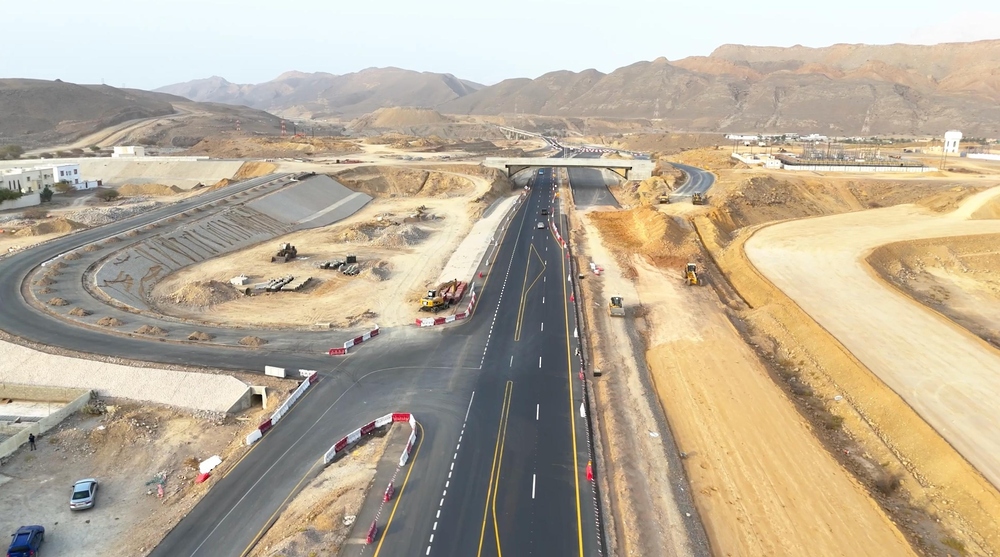

Muscat: The Ministry is currently carrying out around 61 road projects in various governorates, including the construction of new roads, rehabilitation of existing routes, dualisation works, maintenance projects, and the completion of several strategic links aimed at improving connectivity, supporting logistics, boosting tourism, and strengthening economic development in line with Oman Vision 2040.
Dr. Saif bin Saeed Al Sinani, Director General of Planning at the Ministry of Transport, Communications and Information Technology, said that around 22 projects had crossed 70 per cent completion by mid-2026.
He said 2026 is an exceptional year for the roads sector in terms of the number of projects completed or planned for completion. During the first half of the year, the Ministry opened several key projects, including the Sultan Taimur Street dualisation project, Al Farouq Street dualisation project, Itin Tunnel intersection project, road paving works in the Wilayat of Muqshin, rehabilitation of the Tawi Atir-Wadi Rakah-Jabjat road, and the Al Aflaj road paving project in the Wilayat of Al Mudhaibi. Several infrastructure repair projects in areas affected by tropical weather conditions were also completed.
Read More
- Oman, 18 other countries condemn Colombia’s Jerusalem embassy opening
- Oman’s agriculture and fisheries output rises 3.3% to RO 623.5 million in first half
- Oman warns of hazardous floating containers after ship sinks off Musandam
- Indian Navy’s INS Sudarshini docks in Salalah on final overseas stop of transoceanic voyage
- ‘Serving Oman is an honour we cherish’: PDO’s Managing Director Dr Aflah Al Hadhrami reflects on Royal recognition
According to Dr. Al Sinani, the second half of the year will see the completion of a number of important road projects. These include the Turki bin Saeed road from Al Kamil to Sur, rehabilitation of the Sultan Thuwaini bin Saeed road from Bidbid to Nizwa, the road leading to Hail Al Jabal and Riyad Al Jabal farm in Al Jabal Al Akhdar, the Aqaba Afari road between Samail and Izki, the Aqaba Wadi Bani Khalid project, the Harweeb-Al Mazyouna-Mitan road, Al Mughsail bridge project, Taqah-Madinat Al Haq road rehabilitation, Saih Al Khairat-Shisr road, Al Maamoura-Taqah road, improvement of Aqaba Anatoukh in Dhalkut, and the coastal dirt road between Rakhyut and Dhalkut in Dhofar.
The Ministry also plans to open parts of several ongoing projects during the second half of 2026. These include six kilometres of the Sohar Free Zone Link project, 30 kilometres of the road to Al Namaa Poultry Company in Dhank, six kilometres of the Al Hazm-Al Rustaq road rehabilitation project, 12 kilometres of the Gas Company roundabout to Bilad Sur roundabout dualisation project, seven kilometres of Sultan Taimur bin Faisal Road in North and South Al Batinah, 10 kilometres of the Izki-Nizwa dual carriageway, and 28 kilometres of the Al Abila-Al Fayyad road in Al Buraimi.
Dr. Al Sinani said the Ministry is also preparing to begin several approved projects under the Eleventh Five-Year Plan. These include the first phase of the dual carriageway leading to the Empty Quarter in Al Dhahirah, completion of the Sant-Wadi Al A’la road, rehabilitation of roads and construction of box culverts in Jabal Al Akhdar, and paving of roads leading to the villages of Al Aqdah, Shannah and Sayh Jarin in North Al Sharqiyah.
He added that procedures are being completed for awarding and starting the Sinaw-Mahout-Duqm road project in Al Wusta Governorate. The 132-kilometre road will extend from Al Jubah roundabout in Mahout to the borders of the Special Economic Zone at Duqm near Nafun. Procedures are also being finalised for the expansion of the Muscat Expressway, with work expected to begin by the end of the year.
In Musandam, the Sultan Faisal bin Turki Road project, linking Dibba and Khasab with a connection to Lima, has exceeded 73 per cent completion. Dr. Al Sinani described it as one of the most vital projects in the governorate due to its role in strengthening connectivity and supporting tourism and economic activity.
Work is also continuing on the Sultan Said bin Taimur Road, particularly the 400-kilometre stretch from Haima in Al Wusta to Thumrait in Dhofar, along with the remaining 37-kilometre section before Haima. The project is expected to serve as a strategic link between Dhofar and the rest of Oman, supporting tourism and logistics. Parts of the road are expected to open in the first half of next year, while the full project is scheduled for completion in the second half of 2028.
Dhofar Governorate is witnessing several major road projects, including the 33-kilometre Raysut-Al Mughsail dualisation project, the 46-kilometre Saih Al Khairat-Shasr road, the 86-kilometre Shasr-Bithna Al Hashman road, the 210-kilometre Harweeb-Al Mazyouna-Mitan road, and 170 kilometres of paved roads in Muqshin. The Ministry is also improving Al Shuwaimiya mountain pass and rehabilitating several roads, including Hafouf-Dhalkut-Khadhrafi, Anatoukh mountain pass, Al Maamoura-Taqah road, and Taqah-Madinat Al Haq road.
In Muscat Governorate, the Ministry has started developing Al Mouj Street and 18 November Street. The project includes widening the road to three lanes in each direction and converting roundabouts into traffic intersections to improve traffic flow and support tourism and economic activity.
In South Al Sharqiyah, work is progressing on the Sultan Turki bin Said Road linking Al Kamil, Al Wafi and Sur. The 52-kilometre project has reached 91 per cent completion and is expected to be completed by the end of this year. Remaining works on the dualisation of the road between the Gas Company roundabout and Bilad Sur roundabout will also be completed.
In North Al Sharqiyah, ongoing projects include the design and implementation of the Wadi Bani Jabir road, completion of the Ismailia-Mahlah-Ghabra Al Tam road in Dima Wa Al Taiyyin, road links in Al Qabil, and the recently completed Al Aflaj road paving project in Al Mudhaibi.
The Izki-Nizwa dual carriageway, which extends for more than 30 kilometres, has reached 33 per cent completion and is expected to be completed in 2029. The Ministry is also implementing the 32-kilometre Jebel Shams road project, a road branching from Sultan Said bin Taimur Road in Manah to Nakheel Oman Company, rehabilitation works on Sultan Thuwaini bin Said Road, and several roads in Al Jabal Al Akhdar and Samail.
In Al Buraimi, work is continuing on the 42-kilometre Al Abila-Al Fayyad road project. In Al Dhahirah, a 70-kilometre asphalt road is being constructed to Al Namaa Poultry Company in Dhank as part of projects supporting Oman’s food security system.
In North and South Al Batinah, the Ministry is completing the first phase of Sultan Taimur bin Faisal Road linking coastal wilayats, implementing the Barka market link, Al Suwaiq link and Al Suwaiq bridge, parts of which are expected to open in the second half of the year. It is also rehabilitating the Al Hazm-Al Rustaq road, creating a link to Khazaen Economic City, and repairing infrastructure damaged by tropical storms in Wadi Bani Awf and Wadi Al Sahtan.
North Al Batinah is also witnessing the implementation of the Sohar Free Zone Link, associated service roads, the Liwa link, asphalt road links in Shinas, and repair works on bridges along the Sohar-Al Buraimi road.
Dr. Al Sinani stressed that the Ministry attaches great importance to maintaining the road network through regular maintenance programmes to ensure sustainability and improve operational efficiency. He said more than RO 230 million has been approved for periodic maintenance agreements, damage repairs, and improving roads affected by weather and climatic conditions in the Sultanate.





