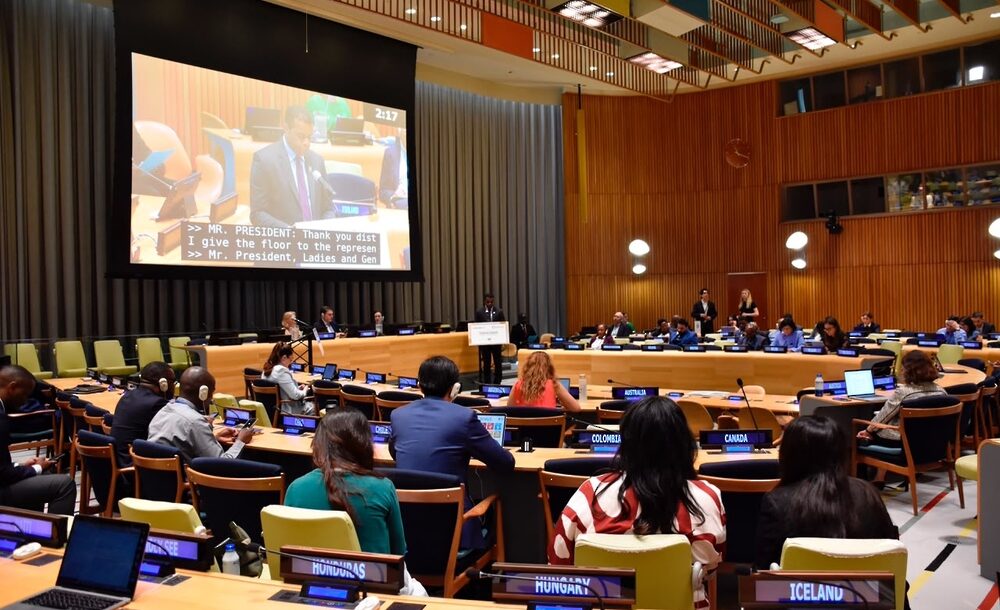

NEW YORK – The forum is being held at the UN Headquarters under the auspices of the Economic and Social Council (ECOSOC).
Addressing the forum, Counsellor Abdul Halim bin Mubarak Al Rawahi, a member of Oman’s Permanent Mission to the United Nations, said the Sultanate remains firmly committed to integrating the Sustainable Development Goals (SDGs) into Oman Vision 2040 and its national development strategies.
He highlighted that the country’s Eleventh Five-Year Plan (2026–2030) focuses on economic diversification, digital transformation, and investment in human capital, aligning with the final phase of implementing the 2030 Sustainable Development Agenda.
Read More
- Oman opens ‘Splendour of Silver’ exhibition at Belarus arts festival in Vitebsk
- Extreme heat sees Oman temperatures approach 50°C
- Her Highness the Honourable Lady offers condolences in Doha
- Oman Tax Authority warns against using personal accounts for business transactions
- Oman’s commerce ministry invites verified e-stores to boost visibility on social media
Al Rawahi said Oman continues to strengthen the sustainable management of water resources through investments in desalination projects, the reuse of treated wastewater, and improved water resource management to enhance water security amid growing climate challenges.
He also underscored the Sultanate’s progress in expanding renewable energy and green hydrogen projects, while pursuing its goal of achieving net-zero carbon emissions by 2050. He stressed the importance of increasing access to financing and facilitating technology transfer to ensure a fair and equitable global energy transition.
Referring to the global outlook, Al Rawahi noted that the forum comes at a critical juncture, with only a few years remaining to achieve the 2030 Agenda. He said the international community continues to face multiple challenges, including conflicts, slowing economic growth, climate change, and widening financial and digital divides, making it imperative to renew political commitment, accelerate implementation, and strengthen international cooperation.
He added that industry, innovation, and digital transformation remain central to Oman’s economic diversification efforts. These include developing infrastructure, promoting the digital economy, supporting small and medium-sized enterprises (SMEs), and encouraging research and innovation to improve productivity and competitiveness.
Al Rawahi further highlighted Oman’s efforts to promote balanced regional development through decentralisation policies and improved urban planning and public services.
He said the Sultanate considers international partnerships a cornerstone of sustainable development and continues to improve its investment environment, strengthen fiscal sustainability, and modernise its national statistical system to support evidence-based policymaking and monitor progress towards achieving the SDGs.
Emphasising the close link between peace and development, Al-Rawahi said Oman’s foreign policy remains rooted in dialogue, mediation, and peaceful coexistence, reflecting the country’s belief that security and stability are essential prerequisites for sustainable development.
He concluded by reaffirming that accelerating implementation of the 2030 Agenda requires stronger development financing, greater technology transfer, enhanced capacity-building, and reforms to the international development cooperation system that better address the priorities of developing countries. Oman, he said, will continue working closely with the United Nations and international partners to promote inclusive, equitable, and sustainable development for the benefit of all.





