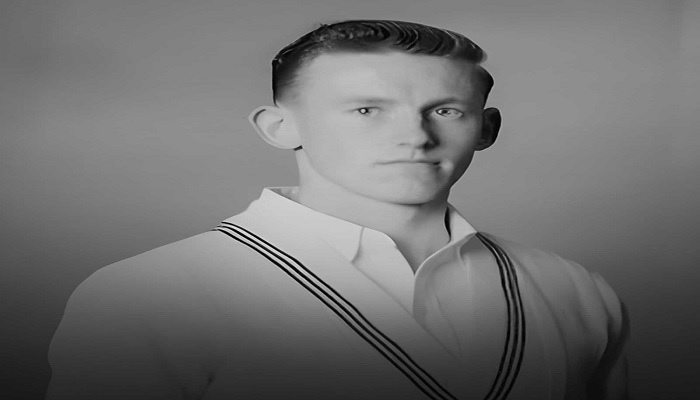

Wellington : Former New Zealand fast bowler Bob Blair, whose courage in the aftermath of one of the country’s worst rail disasters became one of cricket’s most enduring stories, has died on his 94th birthday.
Blair represented New Zealand in 19 Tests between 1953 and 1964, claiming 43 wickets at an average of 35.23, according to ESPNcricinfo.
While his achievements with the ball earned him a respected place in New Zealand cricket history, it was his remarkable display of resilience during the Johannesburg Test against South Africa in December 1953 that defined his legacy.
Read More
- Liverpool fight back from two goals down to beat Villarreal 4-3 in Champions League thriller
- Arshdeep Singh just five wickets away from becoming first Indian with 150 T20I scalps
- Schedule unveiled for ICC Women’s U19 T20 World Cup 2027
- Boland shines as South Africa struggle against Australia
- Portuguese FA suspends Cristiano Ronaldo for 30 days, imposes €255 fine
The tragic circumstances unfolded during the Tangiwai rail disaster on Christmas Eve in 1953, when a railway bridge collapsed beneath the Wellington-to-Auckland express train, killing 151 people. Among the victims was Blair’s fiancee, Nerissa Love.
Two days later, during the second Test in Johannesburg, Blair remained at the team hotel grieving while New Zealand continued its innings. When the ninth wicket fell, spectators and players alike assumed the innings was over. In an unforgettable moment, Blair emerged from the pavilion and walked to the crease to join Bert Sutcliffe, who had earlier returned to bat despite suffering a severe head injury from a bouncer by South African fast bowler Neil Adcock.
The pair added a courageous 33 runs for the final wicket. Blair scored six before being stumped, while Sutcliffe remained unbeaten on 80 in an innings widely regarded as one of the bravest in Test history. Blair’s appearance at the crease became a symbol of determination and sportsmanship in the face of personal tragedy.
The story continues to be commemorated through the Tangiwai Shield, awarded to the winner of the Test series between New Zealand and South Africa. Introduced in 2024, the trophy honours the bond forged between the two nations through the events of 1953.
Paying tribute, New Zealand Cricket interim chief executive Graham Parks said Blair’s story had left an indelible mark on cricket in both countries and embodied the courage and camaraderie that make sport special.
Blair also enjoyed a distinguished first-class career, taking 537 wickets at an average of 18.54 in 119 matches, primarily for Wellington.
Following his retirement in 1964, he worked as a coach across Australia, Zimbabwe, South Africa, Northern Ireland and England before settling in Cheshire with his wife Barbara.
As a mark of respect, New Zealand’s Black Caps will wear black armbands on the opening day of the third Test against England in Nottingham.





