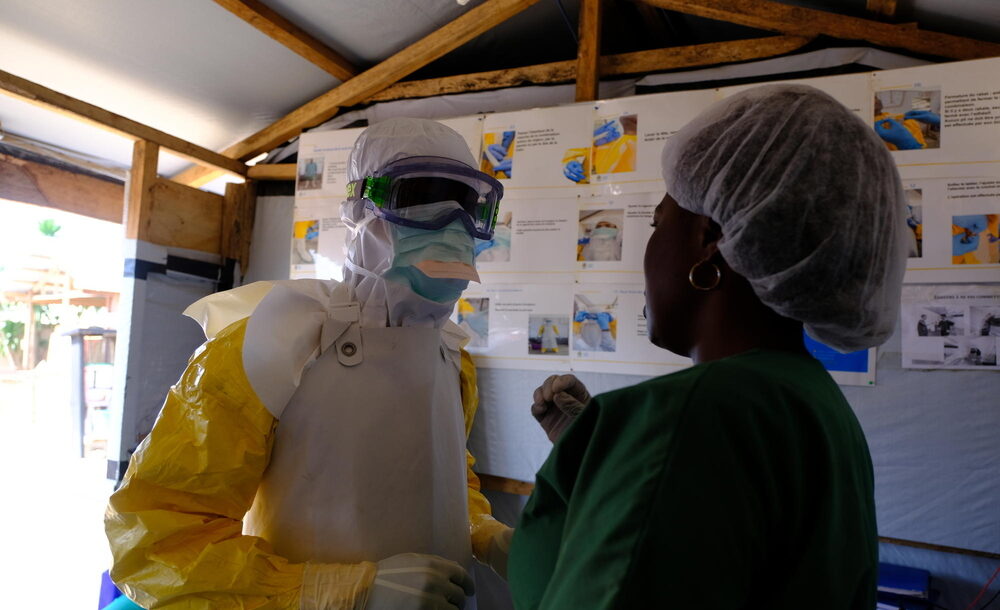

GENEVA: The WHO said Director-General Tedros Adhanom Ghebreyesus determined that the outbreak, caused by the Bundibugyo strain of the Ebola virus, met the criteria for an international public health emergency, although it did not qualify as a pandemic-level emergency.
The organisation said the declaration aims to place neighbouring countries on high alert and mobilize international support to contain the spread of the disease.
According to the WHO, as of Saturday, authorities had recorded eight laboratory-confirmed cases, 246 suspected cases, and 80 suspected deaths in Ituri province in the Democratic Republic of Congo across at least three health zones. The province shares borders with Uganda and South Sudan.
Read More
- IndiGo cancels Riyadh flights until October 31, 3 other Saudi routes until October 27 amid evolving security situation
- UAE closes all beaches in Umm Al Quwain after tanker oil spill detected
- Earthquake of Magnitude 7.0 Strikes Tibet; 16 Dead, 32 injured
- Nigeria reports first imported Ebola Bundibugyo case in Abuja: WHO
- US midterm voting begins in Texas as Democrats target historic gains
The WHO also reported two laboratory-confirmed Ebola cases in Uganda’s capital, Kampala, including one death. Officials said there was no clear epidemiological link between the two cases, which were detected within a 24-hour period between May 15 and May 16 among travellers arriving from the Democratic Republic of Congo.
Ebola is a severe viral disease transmitted through direct physical contact and exposure to infected bodily fluids.
According to Robert Koch Institute, Ebola fatality rates can reach up to 90 percent without immediate medical treatment and containment measures.
The report noted that more than 11,000 people died during the 2014–2016 Ebola outbreak in West Africa, one of the deadliest epidemics in history.
The latest Ebola outbreak in Congo dates back to September last year, when 45 people died in Kasai province during what authorities described as the country’s 16th Ebola outbreak since 1976.





