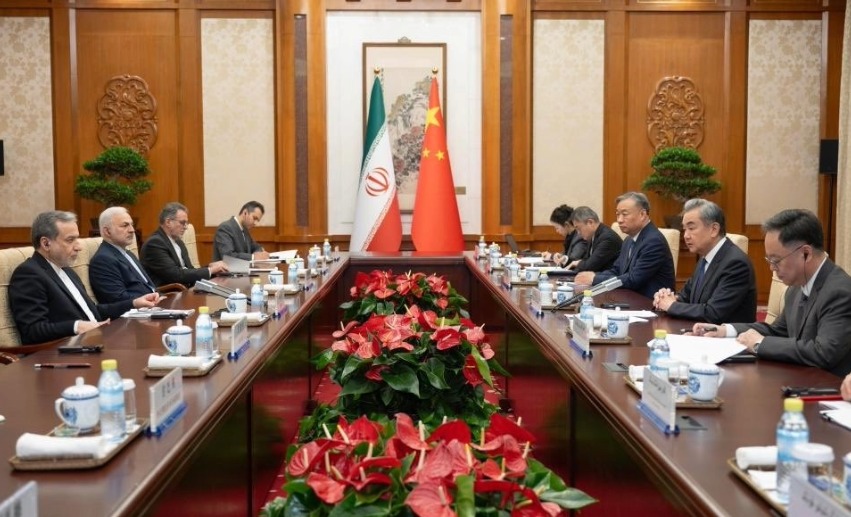

BEIJING : Araghchi’s visit comes just a week before US President Donald Trump is scheduled to meet Chinese President Xi Jinping in Beijing on May 14 and 15 for a high-level summit.
During talks with Chinese Foreign Minister Wang Yi, Araghchi described China as a “close friend” of Iran and stressed that ties between the two nations would grow stronger under the current geopolitical climate.
Speaking about ongoing negotiations with Washington aimed at ending the US-Israeli war on Iran, Araghchi said Tehran would continue defending its “legitimate rights and interests” and would only accept a “fair and comprehensive agreement”.
Read More
- IndiGo cancels Riyadh flights until October 31, 3 other Saudi routes until October 27 amid evolving security situation
- UAE closes all beaches in Umm Al Quwain after tanker oil spill detected
- Earthquake of Magnitude 7.0 Strikes Tibet; 16 Dead, 32 injured
- Nigeria reports first imported Ebola Bundibugyo case in Abuja: WHO
- US midterm voting begins in Texas as Democrats target historic gains
The conflict, which began on February 28, has heavily impacted regional energy infrastructure and disrupted global oil and gas supplies. Iran effectively shut down the Strait of Hormuz following the outbreak of hostilities, triggering sharp increases in fuel and fertiliser prices worldwide and sparking fears of a global recession.
According to a statement from China’s foreign ministry, Wang urged both Iran and the United States to reopen the vital shipping route “as soon as possible” and called for an immediate halt to fighting.
“China considers that a complete cessation of fighting must be achieved without delay, that it is even more unacceptable to restart hostilities, and that continuing to negotiate remains essential,” the statement said.
This marks Araghchi’s first visit to China since the war began. China has remained one of Tehran’s closest allies throughout the conflict, with Araghchi and Wang reportedly holding at least three telephone discussions since tensions escalated.
Meanwhile, in Washington, US Secretary of State Marco Rubio urged Beijing to pressure Tehran into lifting what he described as Iran’s “chokehold” on the Strait of Hormuz, a strategic passage through which nearly one-fifth of the world’s oil and gas supplies move.
Following an April ceasefire, the United States imposed a blockade on Iranian ports in an attempt to force Tehran to accept Washington’s conditions in ongoing peace negotiations.
The conflict has further strained ties between Washington and Beijing after the US sanctioned several Chinese companies accused of purchasing billions of dollars worth of Iranian oil.
For all the latest news from Oman and GCC, follow us on Twitter, Instagram and LinkedIn, like us on Facebook and subscribe to our YouTube page, which is updated daily.





