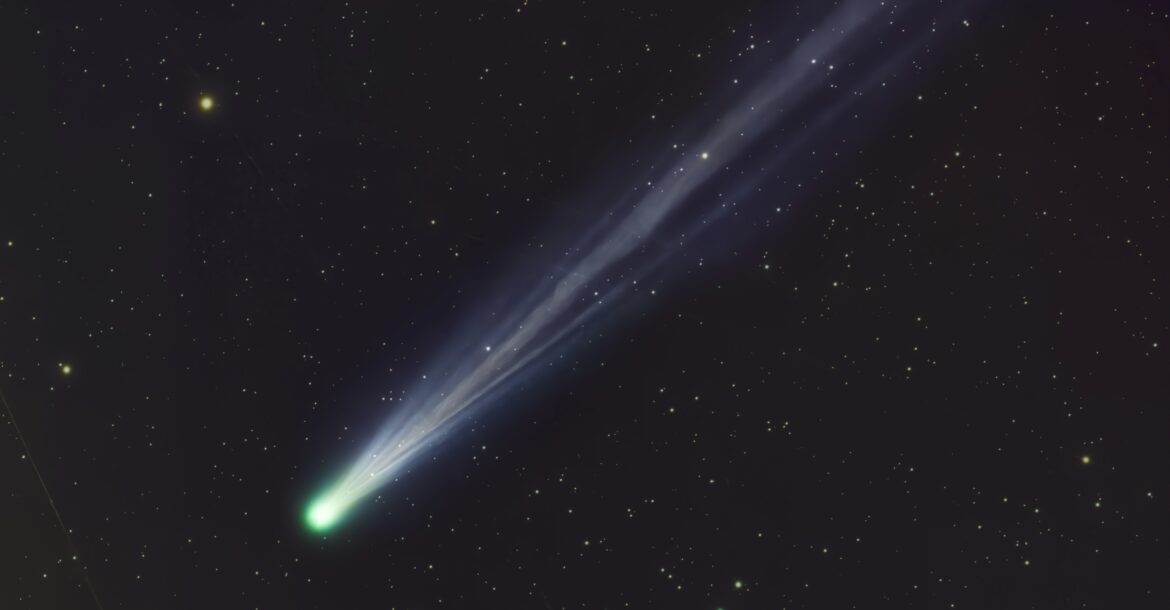

MUSCAT – Astronomical photographer Yahya Al Kindi, a member of the society, explained that the observation followed several days of careful planning and multiple field attempts, amid challenging weather conditions that affected visibility across various regions of the country.
Al Kindi noted that he spent three days searching for a suitable observation site, given the comet’s extremely low position on the eastern horizon before sunrise – conditions that require a clear and cloudless sky.
The first attempt took place in the Wilayat of Mahout, in the Al Ghadan area. However, cloud cover at around 4 am prevented clear observation of the comet, prompting continued monitoring of weather conditions to identify an alternative location.
Read More
- Oman, UK sign letters of intent on space and AI in education
- His Majesty Sultan Haitham expresses confidence in stronger Oman–UK ties
- His Majesty Sultan Haitham, British PM discuss stronger ties and regional security
- Oman, UK unveil over £1 billion investment plans, deepen security and trade ties
- HH Sayyid Theyazin attends British Omani Society’s golden jubilee reception in London
After closely tracking weather patterns, Al Kindi travelled to the Wilayat of Duqm, selecting Wadi Gharim, near Wadi Dharf, as a new observation site. At approximately 4:30 am, he successfully observed and photographed the comet, benefiting from improved weather and clearer skies. He also confirmed that the comet had been observed earlier, on April 19, from the Khalouf area.
Al Kindi explained that comet C/2025 R3 (PANSTARRS) is a newly discovered celestial object believed to have originated from the distant Oort Cloud, a vast region surrounding the solar system and a major source of comets.
The comet reached its perihelion (closest point to the Sun) on April 19, 2026, and is expected to make its closest approach to Earth later in April.
He added that the comet follows a very long, nearly parabolic orbit, meaning it may only pass through the inner solar system once every thousands—or even millions—of years before returning to deep space or potentially leaving the solar system altogether.





