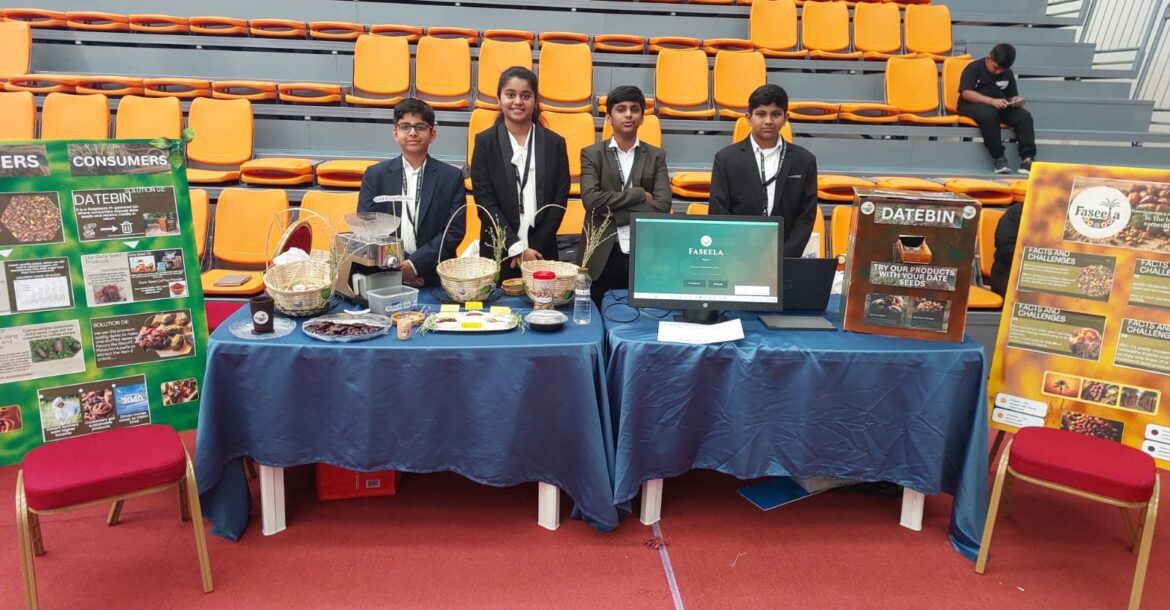

MUSCAT – A team of young innovators from Indian School Muscat has won the Most Innovative Green Project Award at the Oman Hackathon 2026, held on April 11 at Middle East College in collaboration with Mazoon University College and the Kerala Engineering Forum.
Team FASEELA—comprising Mohammed Maaz Quadri (Class 10E), Aarohi Hegde (Class 10M), Anurag Sashidar (Class 8B), and Basaayir Rehman (Class 9H)—secured top honours under the guidance of Dr. Vikas Rao, Professor at Middle East College.
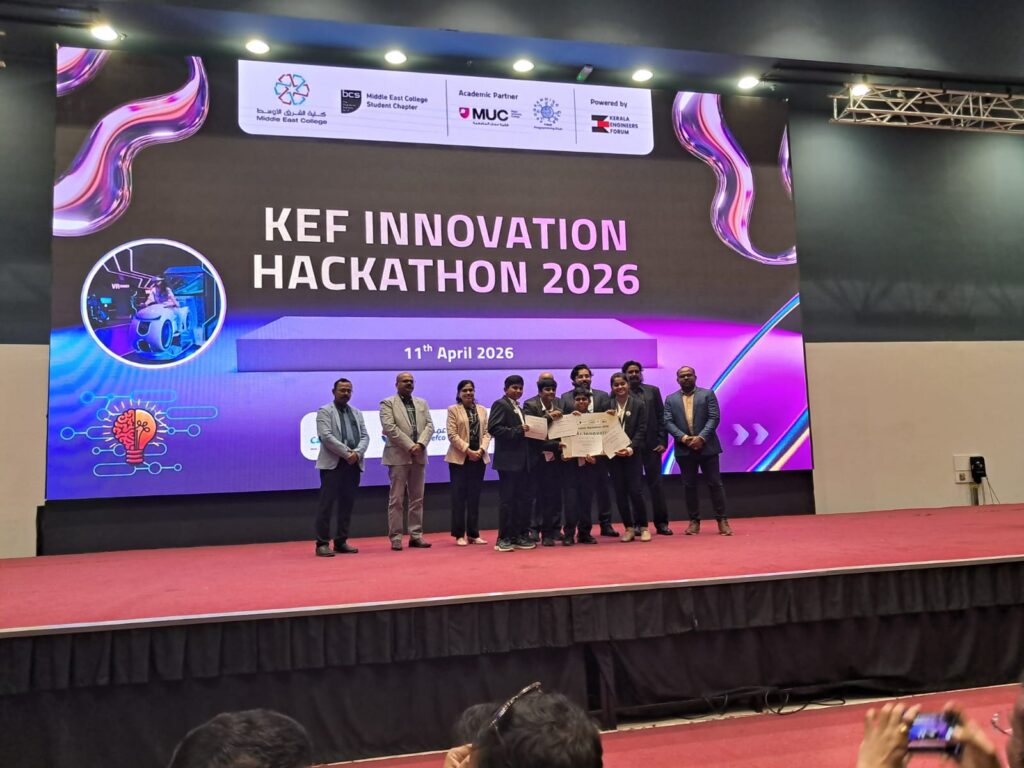
Held under the theme “Join the Next-Gen Tech Showdown,” the annual hackathon brought together around 60 teams from across Oman, offering a platform for students to present innovative and impactful solutions focused on sustainability and technology.
Read More
- Oman warns of surge in car rental fraud as criminals use forged documents, disable trackers
- Oman signs MoC with UTAS to advance research on meteorites and geopark development
- House fly menace in Muscat: Residents, restaurants report widespread infestations
- Kerala expats in Oman celebrate Vishu; restaurants packed across Muscat
- Oman’s Foreign Minister, UN envoy discuss regional developments and peace efforts
The team’s winning project, titled “Code for the Earth,” addresses a pressing agricultural challenge in Oman—date waste. While the Sultanate produces nearly 400,000 tonnes of dates annually, around 25 per cent—approximately 70,000 tonnes—is lost due to spoilage, low demand, or poor quality. In addition, large volumes of palm leaves are burned, contributing to air pollution, and an estimated 40,000 to 50,000 tonnes of date seeds remain unused.
Aligned with Oman Vision 2040, the team developed FASEELA, a sustainable platform based on the principle that no part of the date palm should go to waste. The solution enables farmers to market dates in innovative, value-added formats while repurposing surplus produce into new products.
As part of the model, dates are refined, de-seeded, and enhanced with modern flavours to appeal to younger consumers. The team also introduced a smart collection system—the “Dates Bin”—powered by Raspberry Pi technology, allowing users to deposit date seeds and earn reward points redeemable on the platform.
The project further integrates eco-friendly production methods, including biodegradable packaging made from palm leaves and date seeds. Lower-grade dates are converted into date sugar and bioethanol, a renewable fuel, while date seeds are processed into oil and powder for use in skincare products.
In an additional sustainability push, the team proposed supplying compostable bio-plastic cups made from starch and date seed powder to coffee shops. These cups can decompose naturally within 180 days, significantly reducing environmental waste.
The name FASEELA, meaning the first palm sapling, reflects a vision of renewal—supporting farmers, reducing waste, and promoting environmental conservation.
Through their innovation, the students have demonstrated how technology and sustainability can come together to build a greener future for Oman and beyond.





