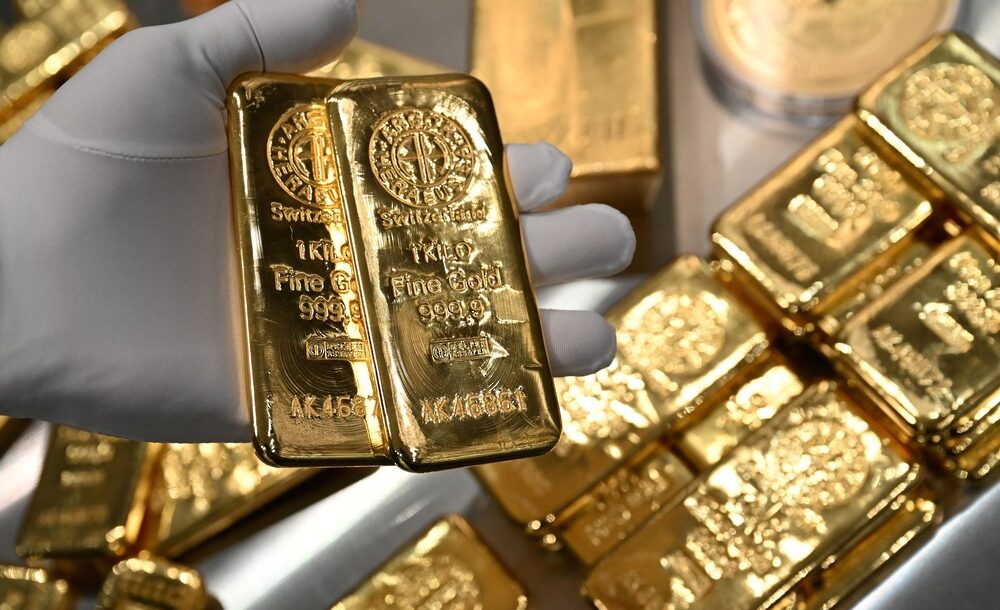

WASHINGTON : Gold prices climbed above US$5,500 (A$7,900) per ounce for the first time on Thursday, smashing previous records, before retreating to around US$5,068 (A$7,282) by the end of Friday. Silver, meanwhile, outpaced gold during the rally, touching more than US$120 (A$172) per ounce last week, one of its strongest runs in decades, before sliding sharply to US$98.50 (A$141.50).
The surge was driven by mounting global uncertainty, including rising geopolitical tensions, trade war threats, mixed signals on interest rates, and concerns over a shifting world order. In such conditions, investors typically flock to assets perceived as safe havens.
Friday’s sudden downturn was triggered by market reactions to early reports of Donald Trump nominating Kevin Warsh as chair of the US Federal Reserve, a move closely watched by global financial markets due to the Fed’s influence on interest rates and economic stability.
Read More
- Local institutions fuel liquidity as Muscat Stock Exchange clocks strong weekly gains
- Oman Air launches direct flights to Taif, expanding Saudi network
- Gold, Silver and US stock markets see massive volatility as markets swing nearly USD 9 trillion
- Oman’s OMRAN Group appoints Ayad Ali Al Balushi as CEO
- Alizz Islamic Bank partners with the Central Bank of Oman and the Islamic Financial Services Board for the 17th IFSB Summit in Oman
Central banks worldwide have continued buying gold at a rapid pace, reinforcing its reputation as a store of value during uncertain times. But institutional demand has not been the only force at play. Retail investors, individuals trading smaller amounts, have also significantly influenced recent market movements.
Many everyday investors have turned to gold and silver as both a hedge against uncertainty and a momentum play, buying in as prices climbed. This trend has been amplified by the popularity of gold and silver exchange-traded funds (ETFs), which allow investors to gain exposure without holding physical bullion.
While gold dominated headlines through much of 2025, silver emerged as the standout performer. Before Friday’s fall, silver prices had surged more than 60% in a single month, compared with gold’s still-strong rise of around 30%.
Silver’s appeal extends beyond its safe-haven status. Industrial demand, particularly from clean energy technologies, has been a major driver. Around 30% of global silver demand comes from the solar industry, with each solar panel containing roughly 20 grams of the metal. Electric vehicles use 25 to 50 grams per unit, while AI data centres rely on silver for semiconductors.
Compounding this demand is a persistent supply shortage. The silver market has been in deficit for five consecutive years, with consumption outpacing production. Because most silver is mined as a byproduct of other metals, supply cannot be easily scaled up.
Retail investor activity highlights this momentum. CommSec, one of Australia’s largest online investment platforms with about three million customers, has seen a sharp rise in precious metals trading. Bloomberg data shows gold ETF trades on CommSec rose 47% over the past year, with net buying reaching A$158 million.
Silver, however, saw even more dramatic action. Despite attracting a lower total investment of A$104 million, silver trading activity surged by 1,000% compared with the previous year.
For all the latest news from Oman and GCC, follow us on Twitter, Instagram and LinkedIn, like us on Facebook and subscribe to our YouTube page, which is updated daily.





