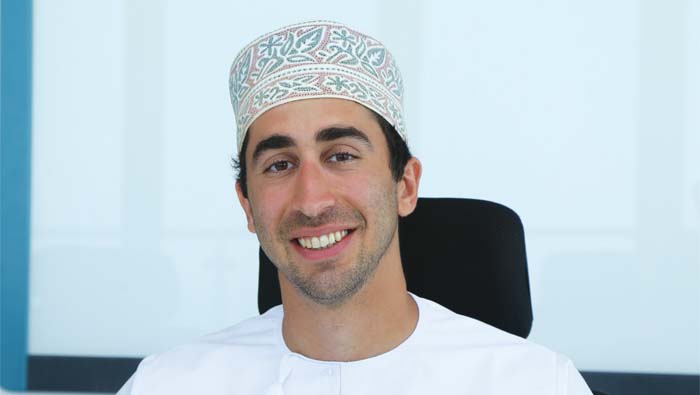

This is not a story about choosing between medicine and entrepreneurship. It is about understanding that sometimes, to care better for the patient in front of you, you must first fix the system around them, emphasized Dr Ahmed, speaking exclusively with The Arabian Stories.
Long before boardrooms, pitch decks, and acquisitions, there was Muscat. For Dr Ahmed, Oman was not just where he grew up, it was where he learned how to see people. “The foundations of who I am were laid in Oman,” he reflects, shaped by “the way people spoke to each other, showed respect, and valued relationships over transactions.”
That ethos came alive through his father, a cardiologist at the Royal Hospital in Muscat. As a teenager on work experience, Dr Ahmed watched medicine practiced not as a technical exercise, but as a deeply human one. His father knew patients beyond their charts, their children, their hobbies, their stories. “Medicine, in his hands, was about trust and connection as much as it was about diagnosis,” he recalls.
Read More
- Oman, Azerbaijan push ties as Foreign Minister meets President of the National Assembly
- Oman, Qatar explore leading practices in settling commercial and financial disputes
- Global experts convene in Oman for inaugural archaeology conference at SQU
- Oman’s Shura Council holds official talks with Azerbaijan’s Speaker of Parliament
- Oman implements mandatory professional accreditation for industrial sector workforce
Even everyday moments carried lessons. A “quick” grocery run at Madinat Qaboos would stretch into long conversations, greetings, and warmth. “Growing up around that taught me… that communication isn’t a soft skill, it’s the skill,” he says.


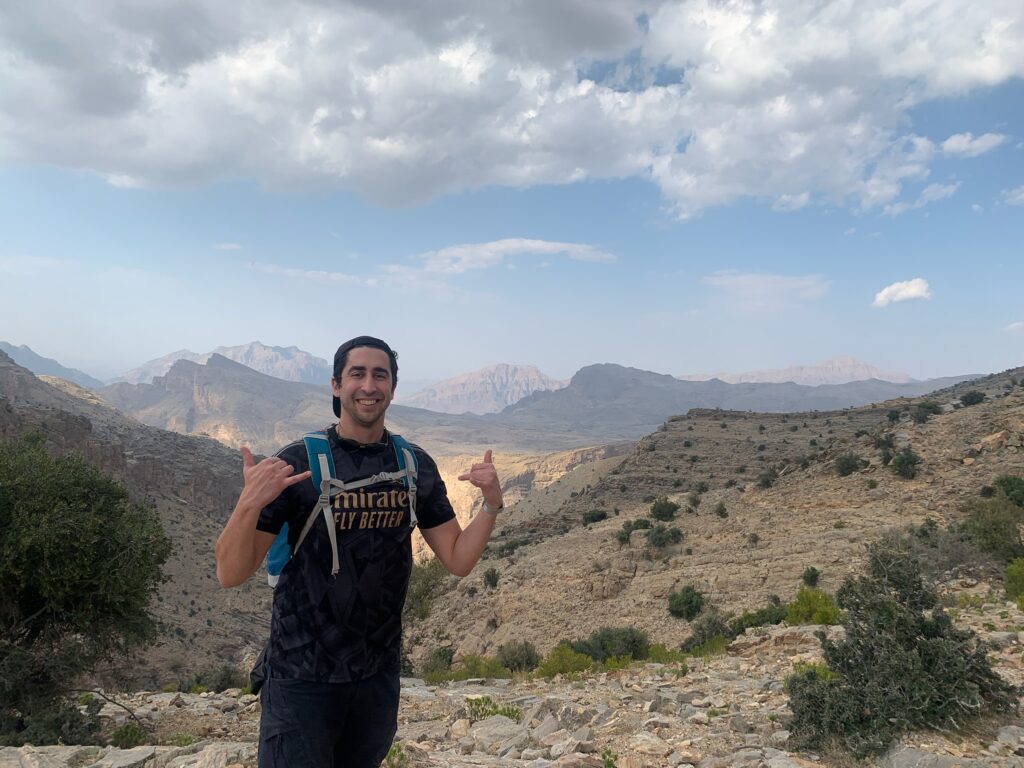
Those values were reinforced at the British School Muscat, where curiosity and confidence were encouraged, and later during the Connecting Cultures Expedition in Jabal Akhdar, a formative trek that brought together voices from around the world. Sitting around fires debating politics, education, and culture, often across multiple languages, taught him how to listen and find common ground. “That experience,” he notes, “taught me how to engage across difference.”
It is no coincidence that these early lessons would later underpin how he navigated the NHS and entrepreneurship.
Despite founding one of the UK’s most impactful healthcare platforms, Dr Ahmed never stopped being a doctor. He continues to work across both the NHS and HCA Healthcare UK, driven not by obligation, but purpose. “Being a doctor remains an honour,” he says. “I work because I love the job.”
The pivot toward entrepreneurship was not an escape from patient care, but an ethical reckoning with a broken system. As a junior doctor, he watched the same ritual unfold every Friday: frantic calls, bleeps, and messages begging clinicians to cover weekend shifts. The inefficiency drained morale, time, and money, resources that should have gone toward patient care.
“It felt wrong,” he admits, “that so much energy was being spent firefighting staffing gaps rather than caring for patients properly.”
In 2015, inspired by the rise of platforms like Uber and Tinder, he and co-founder Nick asked a simple but radical question: If we can match rides and dates with apps, why not doctors and shifts? From that frustration, Locum’s Nest was born.
Today, more than one in two doctors in the UK use the platform, which is on track to save the NHS over £1 billion by 2028. “That’s a scale of impact that no single clinician could ever achieve alone,” Dr Ahmed says, underscoring the power of systems done right.
Yet, he is clear-eyed about the trade-offs. “No system… can ever replicate the purity of the one-to-one doctor patient relationship,” he reflects. During the Covid-19 pandemic, he returned full-time to the wards, working through some of the most intense weeks of his life. “I don’t recall a single weekend during the pandemic where I didn’t find myself working on the wards.”
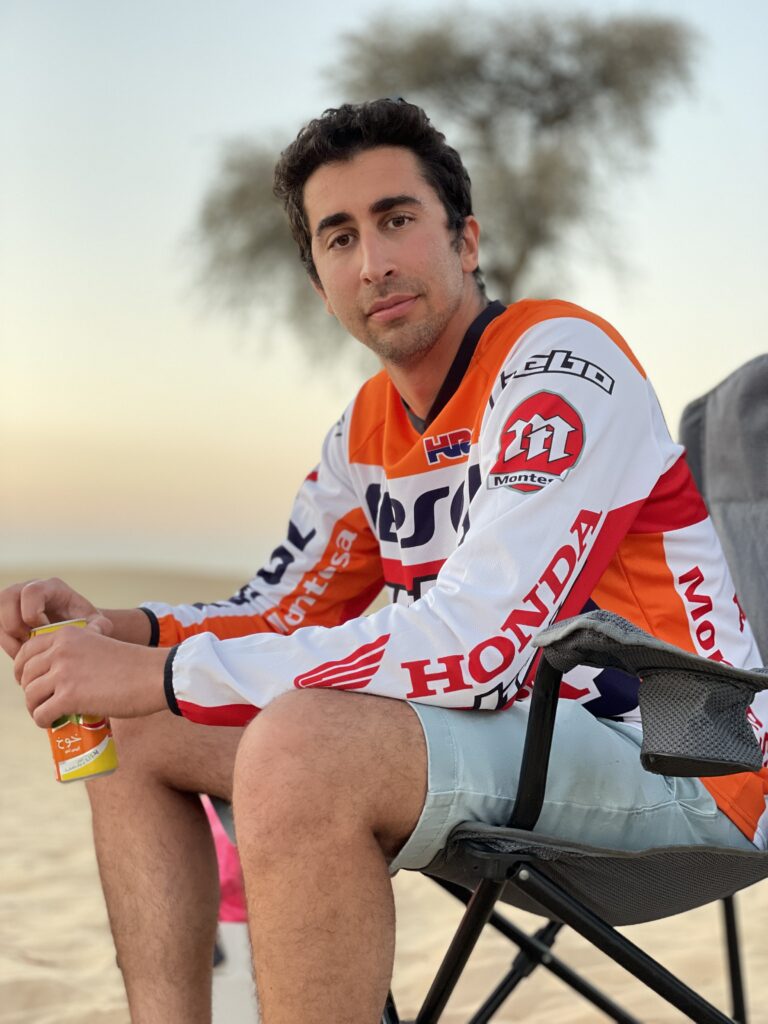
Medicine, he says, remains his escape, a space of focus and presence, not unlike motorsport, another of his passions. Both demand total attention, respect for risk, and resilience.
One of the hardest lessons in building Locum’s Nest was shedding the belief that healthcare systems are too complex to change. “There’s a narrative that innovation has to be slow and heavily compromised,” Dr Ahmed explains.
What made the difference was credibility. Locum’s Nest was built from within by clinicians who understood the system’s pressures intimately. That insider perspective revealed a surprising truth: healthcare challenges are remarkably similar worldwide. Workforce shortages, inefficiencies, poor matching of skills to demand, these are logistical problems, not cultural impossibilities.
“Oman is no exception,” he notes. “In fact, it has huge potential to be a healthcare leader across the GCC.” With strong foundations and talent, meaningful change is not just possible, it is scalable.
The acquisition of Locum’s Nest by Aya Healthcare may look glamorous in hindsight, but the road there was paved with doubt. Between 2017 and the exit, uncertainty was constant. Healthcare startups are notoriously unforgiving, with failure rates approaching 98 percent.
Looking back, Dr Ahmed credits timing and people as much as grit. A six-month head start before workforce management became a national priority, a co-founder with complementary skills, and mentors who opened doors at critical moments all shaped the journey. Winning a pitch competition at INSEAD set off a chain reaction, introducing key team members and investors who would sustain the company’s growth.
The personal cost was real. “I lost sleep, gained weight, lost friends, and spent far less time with family than I wish I had,” he says candidly. Even the acquisition overlapped with one of life’s biggest moments: welcoming his first child just two weeks into the M&A process.
“It was demanding, exhausting, and deeply humbling,” he reflects. “But absolutely all worth it.”
Early backing from IDO Investments, now part of Oman Investment Authority, challenged the idea that innovation capital flows only one way. “I’m incredibly proud that Locum’s Nest delivered a successful exit and a meaningful return for IDO,” Dr Ahmed says.
For him, Oman’s role is evolving from passive investor to active global shaper. The talent, capital, and intent are aligning. “Oman absolutely deserves a seat at the table,” he insists, pointing to a new generation of founders and funds making bold decisions.
His commitment is personal. “I love Oman,” he says simply. “I would genuinely love to help in any way I can… supporting founders, advising funds, or building bridges between ecosystems.”
Years from now, when Locum’s Nest is part of a larger global system, Dr Ahmed hopes young Omani founders see past the headlines. “Press releases talk about exits and scale,” he says, “but they don’t show the uncertainty, the self-doubt, or the years of quiet work.”
More importantly, he wants them to believe they have an advantage. Oman’s stability, curiosity, and long-term thinking are powerful assets in a world obsessed with speed. “Success isn’t about perfection or certainty,” he reflects. “It’s about showing up consistently, choosing to act when things feel unclear, and trusting that the values you grew up with can travel further than you ever imagined.”
In that sense, Dr Ahmed Shahrabani’s journey comes full circle, back to Oman, back to relationships, and back to the simple idea that care, when scaled with empathy, can change not just systems, but lives.





