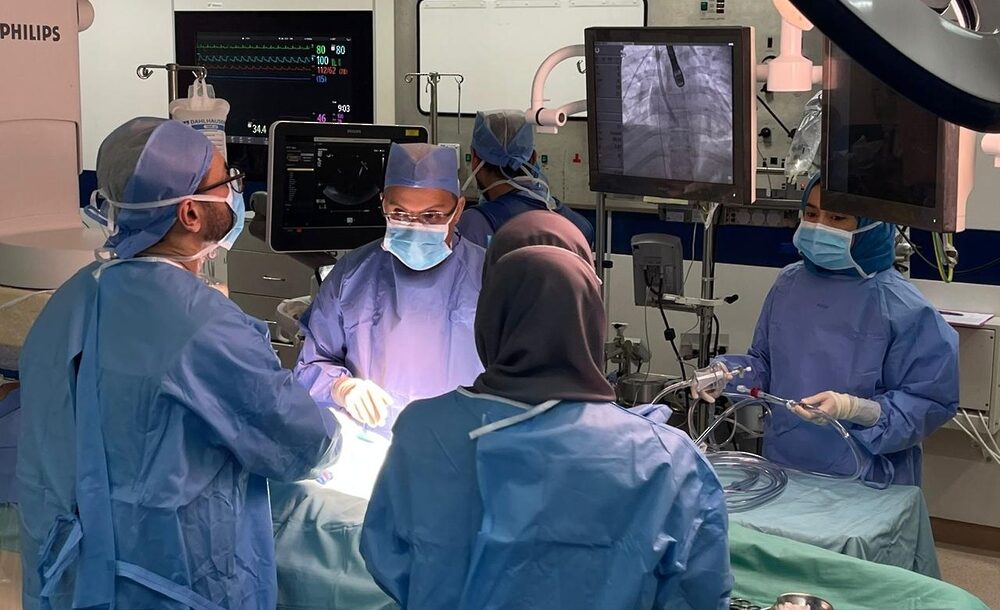

MUSCAT – The hospital also received 72,122 referrals from other health institutions, reflecting the integration of Oman’s healthcare system at the national level.
Dr. Amad bin Khamis Al Araimi, Director General of the Royal Hospital, told the Oman News Agency that the facility has implemented an advanced model for specialized healthcare, underlining its position as a national reference centre and its commitment to health sustainability, innovation, and quality of service in line with Oman Vision 2040.

The hospital carried out 82,004 radiology examinations, including 1,316 referred cases, and performed 4,437,964 laboratory tests, including 224,621 external samples, reinforcing its role as a national support centre for accurate diagnostics. Endoscopy services included 7,621 procedures, alongside 17,580 day procedures, which improved service efficiency and patient experience.
Read More
- Travel agency representative in Muscat jailed, agency shut for a year over cancelled trips
- Oman’s CDAA urges mountain safety after foreign national critically injured in Jabal Shams fall
- Oman’s media must adapt to AI while upholding accuracy, minister says
- Oman forecasts thunderstorms from October 25 as low-pressure trough approaches
- Oman, UK agree to deepen defence, investment and technology partnership
Royal Hospital continued to lead in organ transplantation, performing 52 transplant operations, including 32 kidney and 20 liver transplants, following the highest international standards.
Several pioneering achievements were recorded in 2025, including the first laparoscopic sleeve gastrectomy without surgery, the separation of conjoined twins, Oman’s first human heart transplant, and the first artificial heart transplant. The hospital also broadcast a live aortic valve replacement surgery during the GIS Valve Conference in Dubai, introduced Oman’s first 18F-PSMA molecular tomography service, and performed the first wireless dual pacemaker implantation via catheterization. Thermaltake technology was used for the first time in the Sultanate to treat endometriosis without traditional surgery.

In a major advancement for local diagnostics, the hospital successfully localized molecular tests for colorectal cancer (KRAS, NRAS, BRAF), previously conducted abroad with a wait time exceeding three weeks. Other notable achievements included removing a rare malignant liver tumour from a three-year-old child and performing the region’s first telesurgery between Muscat and Kuwait.
At the institutional level, the hospital conducted 429 surgical operations in coordination with the Medical City for Security and Military Agencies and supported training and surgeries in hospitals across Oman, including Khasab, Sultan Qaboos University Hospital, Sur, Jalan Bani Bu Hassan, Ibra, and Rustaq. Paediatric surgery campaigns reduced waiting lists by 30 percent for 1,000 targeted cases.
In terms of quality and accreditation, the hospital achieved the highest standards in nuclear medicine from the International Atomic Energy Agency, completed localization of HLA testing for organ transplants, received international recognition as a reference centre for food allergies, and won the Excellence Award at the World Hospital Congress in Geneva 2025.
Royal Hospital also published 154 scientific papers in international peer-reviewed journals and completed a full digital transition in patient transfer requests. New digital services, including WhatsApp communication for hospital residents, medication tracking systems, smart waiting solutions, and electronic prescriptions, enhanced patient experience and improved communication efficiency by 90 percent.
Dr. Al Araimi pointed out that the hospital’s achievements in 2025 reflect its vision to provide integrated, high-quality, patient-centred care while supporting other health institutions nationwide. He noted that these efforts reduce referrals, localize services, and enhance the overall efficiency of Oman’s health system.
Looking ahead, the Royal Hospital plans to deepen digital transformation, expand national and international partnerships, strengthen scientific research, and further develop professional competencies to sustain its leadership in national healthcare and support the objectives of Oman Vision 2040.





