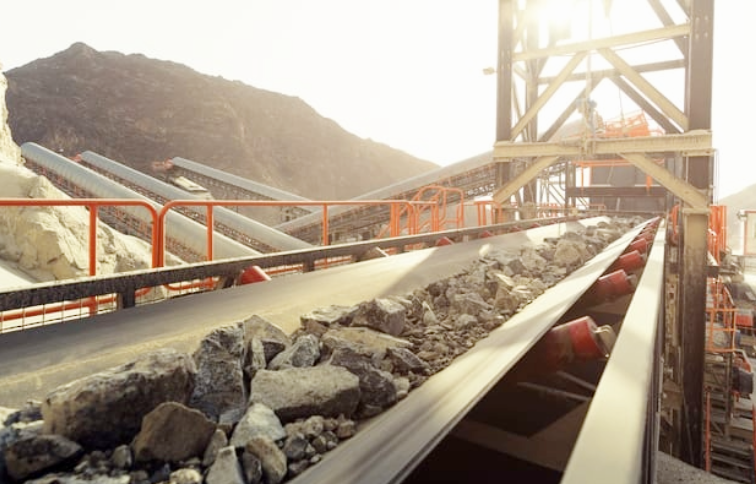

MUSCAT : Airborne geophysical and geochemical surveys conducted by Oman Mining Development Company have identified geological evidence of key ores including gold, copper, zinc, lead and chromium. The findings point to fertile mineral-bearing environments that now require detailed exploration to determine the size and quality of potential reserves.
Engineer Matar bin Salem Al Badi, Chief Executive Officer of Oman Mining Development Company, said the indicators highlight “promising exploration opportunities” across the Sultanate, while stressing that the sector is still in the technical study phase. He noted that confirming commercially viable quantities of any mineral, including gold, depends on completing detailed exploration in line with internationally recognised standards.
In a statement to the Oman News Agency, Al Badi said official reserve estimates would only be announced after meeting global benchmarks such as Australian or Canadian reporting standards, which are widely accepted by banks and investors. “It is still too early to announce precise quantities of gold or other minerals before these thorough studies are completed,” he said.
Read More
- Oman ranks 54th globally in Corruption Index, holds 4th spot in Arab world
- Lulu opens new hypermarket in Oman’s Al Qurum
- First batch of Karwa buses delivered for concession areas in Oman
- His Majesty Sultan Haitham receives credentials of 12 Ambassadors
- Iran’s security chief heads to Qatar after consultations in Oman
He explained that the mining sector witnessed a major regulatory shift between 2017 and 2023, with the adoption of a new investment model similar to the oil and gas sector. The model focuses on allocating large concession areas, making large-scale aerial geophysical surveys, covering thousands of square kilometres, more economically viable than the smaller survey areas used in the past.
Oman Mining Development Company, the investment and development arm of the sector, currently holds 14 mining concession areas spanning around 24,000 square kilometres. Since launching intensive exploration work in 2022, the company has conducted aerial surveys covering more than 16,000 square kilometres, drilled over 100,000 metres, and analysed more than 80,000 samples through ground-based geochemical surveys and satellite studies.
According to Al Badi, the company’s recently approved strategy aims to reduce investment risk by providing accurate geological data, attract international investors and partnerships, and promote the responsible development of mineral and rare earth resources.
The focus remains on metallic and precious minerals such as gold, copper, zinc, lead and chromium, while industrial minerals are being developed through large-scale, economically viable projects. One of the flagship initiatives is the Shuwaimiyah industrial minerals project, which includes a dedicated marine export berth and targets production of 23 million tonnes of limestone and gypsum in its first phase, rising to 40 million tonnes in the future.
Community acceptance and environmental responsibility are central to project sustainability, Al Badi said, adding that the company has invested in best-in-class global practices, including dry processing technology for mining waste to protect groundwater and surrounding ecosystems.
The company is also working to build a strong local mining services ecosystem by localising specialised laboratories, drilling, and surveying companies. This approach, he said, aims to create an integrated mining industry in Oman, spanning academic research, exploration, processing and specialised services, with some local companies already providing services across GCC markets.
The company’s strategy is built around three key sub-strategies. The first focuses on industrial minerals through specialised industrial hubs such as the Duqm Industrial Center, centred on salt and silica industries, and the Shalim Industrial Center for limestone and gypsum-based industries. The second targets chromium ore, stretching from Shinas to Wadi Bani Khalid, with plans to re-establish Oman as a global chromium exporter and develop ferrochrome production facilities in Sohar.
The third sub-strategy involves systematic exploration across three major geological belts: the Samail belt, rich in copper and gold-bearing ophiolite rocks; the Hawasina belt, which also hosts copper and gold deposits; and the southern Mahout region, where exploration for zinc and lead is currently underway.
To further maximise value, Al Badi announced plans to establish the Omani Metals Trading Company, a specialised trading arm authorised to market gypsum and chromium ores starting June 2026. The move aims to expand market access, enhance returns, and increase Oman’s global market share in these commodities.
Addressing rare earth minerals, Al Badi said exploration remains at an early stage, with initial indications suggesting possible presence, though quantities are yet to be confirmed. He revealed that more than RO 20 million has been invested in exploration over the past two years.
While the mining sector’s contribution to the national economy remains modest compared to oil and gas, Al Badi said efforts are underway to raise its share to around 10 per cent of GDP by 2040, in line with Oman’s economic transformation plans.
Among the most significant upcoming projects is the copper development in Yanqul, where work is underway to establish the Sultanate’s first copper production project. Trial operations are expected to begin by the end of 2026. The project is estimated to hold reserves of 22.9 million tonnes of copper ore, alongside ongoing development at the Sohar mines, marking a major step forward for Oman’s mining ambitions.
For all the latest news from Oman and GCC, follow us on Twitter, Instagram and LinkedIn, like us on Facebook and subscribe to our YouTube page, which is updated daily.





