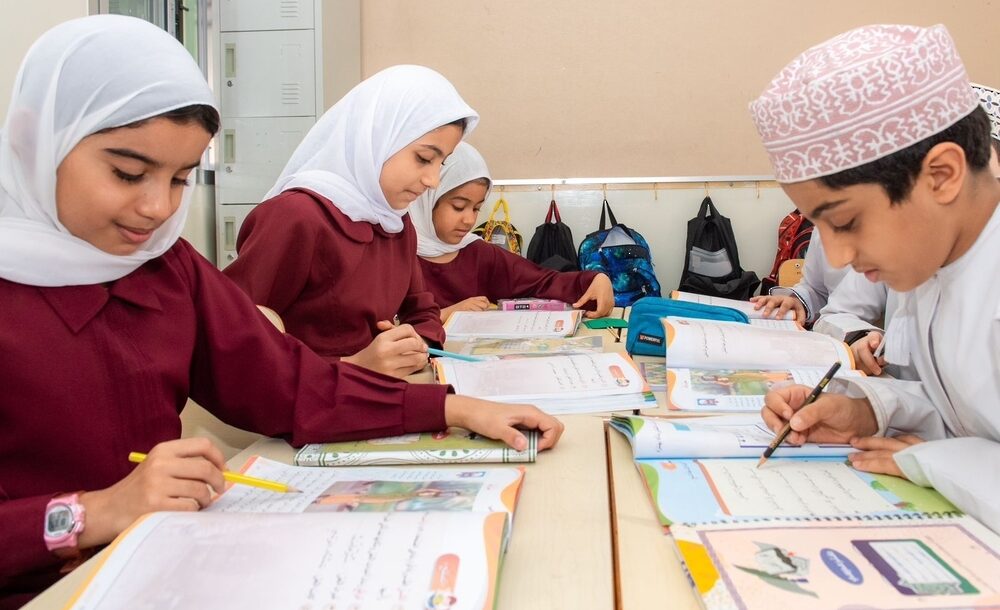

Muscat: The latest statistics show an increase of 1,200 Omani children from the previous year, with the gender ratio standing at 104 males for every 100 females. Omani children accounted for 85 percent of all children in the Sultanate, forming a strong base of the national population pyramid.
Projections indicate that the number of Omani children will reach 1.3 million by 2040, underscoring the need to continue strengthening health, education and social support systems to meet future demographic demands.
Breaking down the 2024 age distribution, the 5–9 age group constituted the largest share at 32 percent, followed by 10–14 years at 28 percent, 0–4 years at 27 percent, and the 15–17 group at 13 percent.
Read More
- Oman Chamber of Commerce and Industry gears up for elections with digital, remote voting systems
- Oman Civil Defence issues emergency response advisory for radiation incidents
- Oman installs over 40 directional signs to boost tourism in North Al Sharqiyah
- BP Oman, Oman Sail launch third edition of ‘Sail Free’ programme
- Oman authorities seize fishing vessel using banned nets, 12 expatriates detained
Health indicators showed a slight decline in live births, totaling 63,187 Omani births in 2024, down 2 percent from the previous year. The crude birth rate also decreased from 22.0 per 1,000 Omani population in 2023 to 21.2 in 2024.
Despite this dip, childhood health coverage remained exceptionally strong: immunisation rates for children under one year reached 100 percent for tuberculosis, 99.8 percent for the triple bacterial vaccine and oral polio, and 99.6 percent for hepatitis and Haemophilus influenzae type b.
In early education, the number of children enrolled in nurseries fell to 6,683 in 2024, a 13 percent drop compared to the previous year.
Economic indicators showed notable engagement among older children, with 1,864 Omani youths aged 15–17 owning businesses in 2024, down 7 percent year-on-year. Of these, 29 percent were involved in construction. Meanwhile, land ownership among children aged 0–17 increased slightly to 15,145 plots, marking a 1 percent rise.
On the social protection front, 1,236,501 children benefited from the general childhood benefit scheme. Additionally, 9,441 orphaned children and 14,295 children with disabilities received dedicated support during the year.





