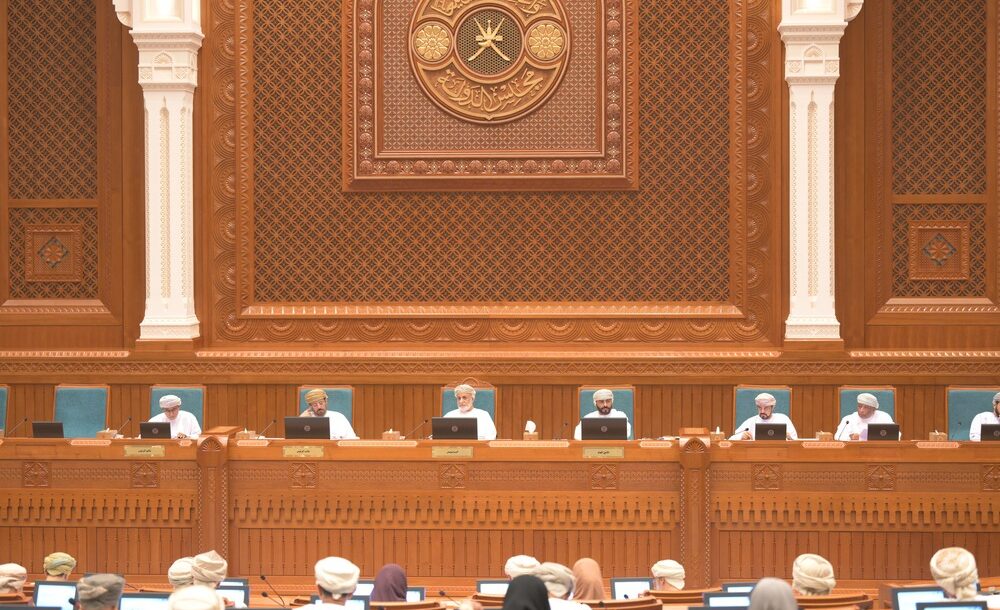

MUSCAT – The Council reviewed “Real Estate Registry Law,” the “Draft Law Amending Certain Provisions of the Arbitration Law in Civil and Commercial Disputes (Royal Decree No. 47/97),” and the “Civil Society Organizations Law.”
The session also looked into the Special Committee’s study on “Mechanisms for Diversifying Income Sources in Oman” and examined the General Secretariat’s report on the Council’s activities.
Held under the chairmanship of His Excellency Sheikh Abdulmalik Abdullah Al Khalili, Chairman of the State Council, the session discussed the Legal Committee’s opinion on the Real Estate Registry Law, referred by the Council of Ministers.
Read More
- Oman officials inspect oil pollution impact at Ras Madrakah beaches
- New tourism projects in Oman’s Al Dakhiliyah Governorate reach up to 94% completion
- Oman confirms start of Rabi’ al-Awwal on August 14
- Oman activates emergency response to curb oil spill after tanker grounds near Hallaniyat Islands
- Oman’s Transom expands into Algeria with Air Algérie partnership
The draft law focuses on several key aspects, including: Strengthening legal protections for property owners and beneficiaries; Regulating registration procedures and real estate transactions and enabling digital documentation and issuing electronic title deeds linked to relevant government systems, aligning with Oman’s national digital transformation strategy.
The Council also reviewed the Social and Cultural Committee’s opinion on the Civil Society Organizations Law, which includes substantive provisions regulating the work and objectives of civil society institutions. The draft law aims to enhance their role in serving society through associations, NGOs, professional societies, volunteer teams, and expatriate clubs, while addressing challenges under the current legal framework.
Additionally, the Council examined the Draft Law Amending Certain Provisions of the Arbitration Law in Civil and Commercial Disputes, assessing its impact on arbitration parties and local/international arbitration centres. The amendments align with modern trends in comparative arbitration laws, reinforcing Oman’s position as an attractive hub for commercial dispute resolution. The revisions are expected to boost confidence in arbitration mechanisms, create an investment-friendly legal environment and support Oman’s adoption of best practices in justice and litigation, in line with Oman Vision 2040 objectives.
The session concluded with discussions on the Special Committee’s study on income diversification mechanisms, which identifies challenges to financial sustainability, inefficiencies in revenue streams, and potential solutions to enhance fiscal resilience. The study proposes measures to stabilize public finances in the 11th Five-Year Plan including legislative and governance reforms.
The Council also reviewed reports submitted by its committees and members, alongside the General Secretariat’s activity report.





