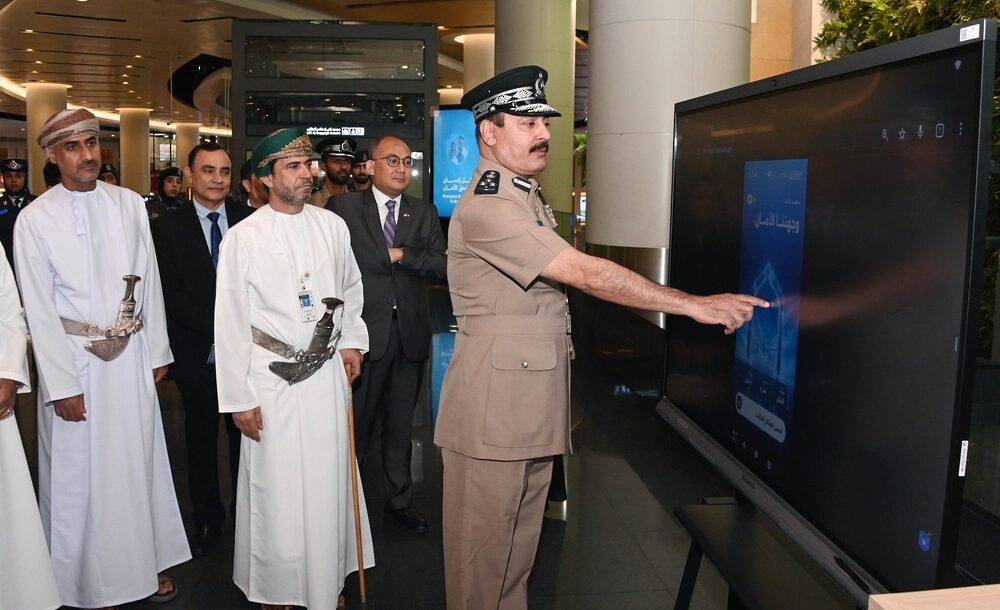

MUSCAT: The opening of the office comes within the framework of efforts exerted by the National Committee to Combat Human Trafficking to enhance awareness of workers’ rights in the Sultanate of Oman, intensify efforts aimed at preventing human trafficking crimes, provide direct channels to guide arriving workers and inform them of their rights and obligations, and facilitate their access to relevant authorities to obtain support and assistance when necessary.
The project is being implemented in two phases. The first involves installing a digital screen dedicated to the committee’s website – available in 13 different languages – to display publications and awareness materials related to workers’ rights in the Sultanate of Oman, as well as providing contact numbers for embassies of various countries and the committee’s hotline, enabling workers to obtain necessary information and communicate with relevant authorities when required.
The first phase is limited to providing awareness and instructional content via the digital screen.
Meanwhile, the second phase involves assigning an employee from the Ministry of Labour to communicate directly with arriving workers and verify basic data related to their work in the Sultanate of Oman, including the employer’s name and agreed-upon salary, to familiarize them with their rights and obligations and raise their awareness regarding work conditions.
Brigadier Jamal Habib Al Quraishi, Director General of Inquiries and Criminal Investigation and Vice Chairman of the National Committee to Combat Human Trafficking, emphasized that the opening of the office represents a qualitative step in awareness, unifying national efforts to curb the crime of human trafficking, and protecting human rights and dignity.
For his part, Jassim Hamoud Al Malki, Director General at the General Federation of Oman Workers and Member of the National Committee to Combat Human Trafficking, told Oman News Agency (ONA) that opening this office reflects an important development in the concept of worker protection. True protection does not begin when a violation occurs, but rather starts from the moment a worker gains accurate knowledge of their rights and knows the safe path to reach competent authorities. Hence, this initiative represents an investment in prevention from the first moment a worker arrives in the Sultanate of Oman.
He explained that the qualitative addition of this office lies in granting the worker the opportunity to obtain information from an official, reliable source instead of relying exclusively on the employer or recruitment intermediary. It also shifts awareness from a phase following the start of the employment relationship to the reception phase, allowing the worker to learn about their rights and obligations in a language they understand, while receiving adequate guidance and detailed information on mechanisms regulating labor relations and procedural pathways to report any case of exploitation or human trafficking.
He stressed that the presence of the office at Muscat International Airport reinforces integration among the efforts of government entities and institutions concerned with protecting workers and all individuals by allowing them the opportunity to display awareness and educational materials, disseminate contact methods, and introduce their mandates through the office. The opening of the office confirms that combating human trafficking is not limited to intervention after a violation occurs, but begins with awareness, prevention, and facilitating access to protection.
Regarding the office’s contribution to raising arriving workers’ awareness of their rights and obligations and preventing the risks of exploitation and human trafficking, he noted that the office contributes to raising awareness by providing clear and simplified information to workers in their languages, addressing their fundamental rights and legal obligations, thereby helping them understand the nature of the employment relationship and distinguish between legitimate practices and practices that may constitute exploitation.
He stated that among the key topics emphasized are introducing basic rights at work, the worker’s right to receive their agreed-upon wage, understanding the terms of the employment contract, working and rest hours, and grievance mechanisms, in addition to awareness regarding the risks of withholding passports, coercion, threats, and deception related to the nature or conditions of work.
He pointed out that the importance of this awareness stands out given that some workers may arrive without sufficient knowledge of the laws and procedures in force in the Sultanate of Oman. Therefore, empowering workers with knowledge upon arrival constitutes a primary element of prevention, helping them detect indicators of exploitation early and seek help before a problem escalates.
Al Malki indicated that the fundamental value of the office lies in making information and guidance directly and easily accessible to workers, whether through interacting with the digital screen, scanning electronic codes, downloading mobile applications belonging to relevant entities, or accessing printed guidance leaflets and contact and reporting channels for competent authorities.
He noted that having a dedicated employee at the office enhances this role, answering direct inquiries and verifying basic inputs regarding recruitment and employment contracts.
Regarding the availability of materials in 13 languages, he affirmed that it represents a core element in the success of the initiative, as language barriers are among the most prominent challenges that might prevent workers from knowing their rights or being able to request help. Multilingualism does not merely achieve wider dissemination of information, but enhances the worker’s understanding of awareness message contents, reduces the likelihood of deception and misunderstanding, and helps reach workers from various nationalities and cultural and educational backgrounds. The committee took into account selecting languages according to the most recruited nationalities in the Sultanate of Oman.
The Director General at the General Federation of Oman Workers and Member of the National Committee to Combat Human Trafficking, reaffirmed that combating human trafficking is an integrative responsibility requiring cooperation among relevant entities according to their competencies. The National Committee to Combat Human Trafficking plays a pivotal role in coordinating relevant national efforts to combat this crime, formulating national policies and plans in this field, and following up on their implementation.
He explained that the General Federation of Oman Workers is considered a key entity in dealing with labour grievances and disputes, monitoring compliance with legislation regulating labour relations, and playing an important awareness role through trade unions in private sector establishments, as well as coordinating with trade union federations in labour-sending countries, exchanging information, and cooperating with them in combating human trafficking.
He noted that embassies and diplomatic missions of labour-sending countries contribute to educating their citizens, providing consular assistance within their mandates, and coordinating with competent Omani authorities when necessary.
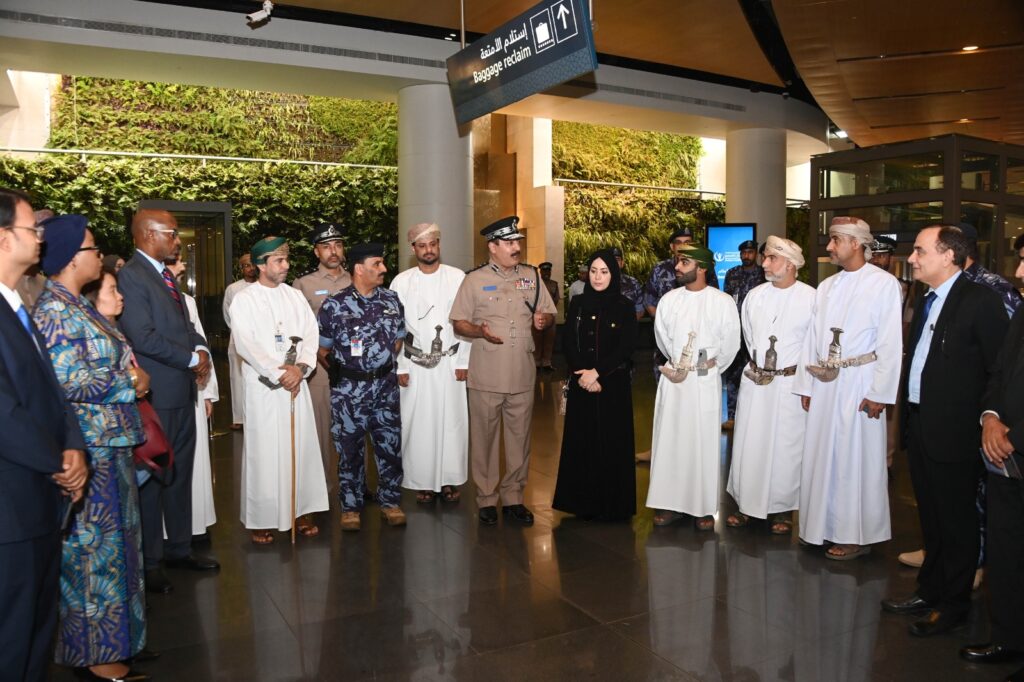
The opening was attended by a number of ambassadors accredited to the Sultanate of Oman, along with several officials and representatives of relevant entities.
Read More
- His Majesty Sultan Haitham issues Royal Decrees on national symbols, facility protection and multinational tax
- Misleading health ads in Oman could draw RO 1,000 fines, licence suspension or cancellation
- Muscat Expressway works to begin by November; changes to office hours under study
- Oman’s CDAA urges caution over cigarette butts and waste burning amid dry, windy conditions
- Oman’s Nama Dhofar Services conducts recruitment exams for 200 job opportunities





