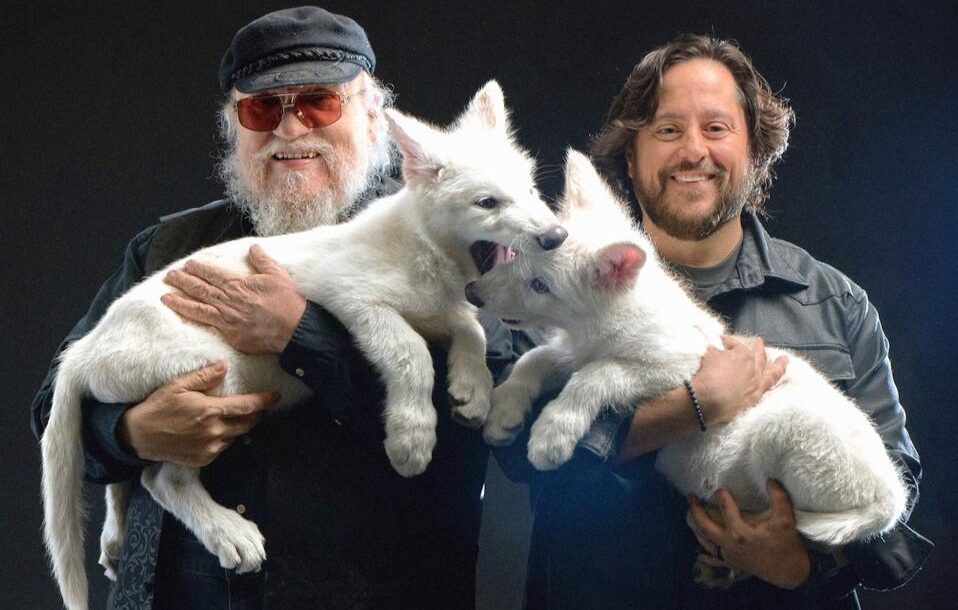

Austin: On April 7, biotech firm Colossal Biosciences made headlines with a howl from the past.
The announcement, backed by viral videos of howling furballs, sparked excitement and awe online, especially among all those die-hard Game of Thrones fans out there. But beneath the surface of this furry feat lies a much deeper—and more divisive—story.
To understand what Colossal actually accomplished, we have to go down the DNA rabbit hole. The dire wolf’s genome is 99.94% similar to its modern cousin, the gray wolf. Sounds close? Not really. That 0.06% difference translates to 1.47 million base pair variations—enough to distinguish them as completely different species. In fact, dire wolves have even been reclassified from Canis dirus to Aenocyon dirus, a separate lineage that likely diverged from modern wolves long before they howled at the same moon.
Read More
- Dhofar Municipality announces temporary traffic diversion on Sultan Qaboos Street
- Oman to host World Cancer Summit 2025 as OCA marks 25 years of service
- CPA conducts over 365,000 inspections in 2024, recovers RO 3 million for consumers in Oman
- Awareness sessions to be held for the disabled, their families
- Auto Show: Is this the most powerful SUV?
Colossal’s strategy? Use CRISPR gene editing to modify gray wolf embryos at just 20 spots across 14 genes—mostly to mimic size and fur characteristics. Then, implant them into surrogate dog mothers.
A 2021 study suggested that dire wolves weren’t just big wolves but an entirely different branch of the canid family tree. Their behaviors, roles in the ecosystem, and evolutionary lineage may have been vastly different from today’s wolves. That reclassification — from Canis dirus to Aenocyon dirus — underscores how little we may truly know about the species we’re trying to recreate.
It’s a remarkable feat of genetic engineering. But is it really a win for conservation?
Not quite. Critics argue that projects like this promote the illusion that extinction is reversible. When flashy biotech promises to reverse millennia of ecological loss with lab-edited lifeforms, it risks undermining real conservation work. The concern? That we’ll stop trying to save endangered species today because, well, we can just bring them back tomorrow.
The project taps into the controversial and captivating idea of de-extinction — the resurrection of vanished species through advanced genetic technologies. Colossal, which has also promised to bring back the woolly mammoth and dodo, argues that reviving extinct animals could help restore ecosystems and promote biodiversity.
But here’s the kicker—while millions are being funneled into recreating ancient predators, their modern counterparts are under fire. Literally. Gray wolves, the dire wolf’s closest kin, are still being hunted across parts of the globe. In Spain, protections for wolves north of the Duero River were just overturned. In Australia, dingoes—key to controlling invasive species—are persecuted much like the now-extinct thylacine, which Colossal also aims to “de-extinct.”
Meanwhile, proven conservation tools—like protecting habitats, curbing invasive species, and halting deforestation—remain underfunded. Why invest in dull but effective when you can invest in DNA drama?
Even if we could bring back the “real” dire wolf, should we? Earth today is nothing like it was 12,000 years ago. The prey they hunted, the forests they roamed, and the climate they thrived in have all changed — dramatically.
Introducing genetically edited proxies into modern ecosystems could have ripple effects. These new predators might compete with existing species, spread unfamiliar diseases, or destabilize already fragile food webs. In trying to repair the past, we might end up rewriting the future in unpredictable ways.
Colossal says its mission is to “secure the health and biodiversity of our planet’s future.” But real security comes not from reanimating ghosts of the past, but by protecting the life that still surrounds us.
These dire wolves might make for compelling headlines and social media stardom, but they also raise weighty ethical and ecological questions. In the quest to “de-extinct,” we must ask: Are we reviving life — or creating a new kind of fiction dressed in fur?





