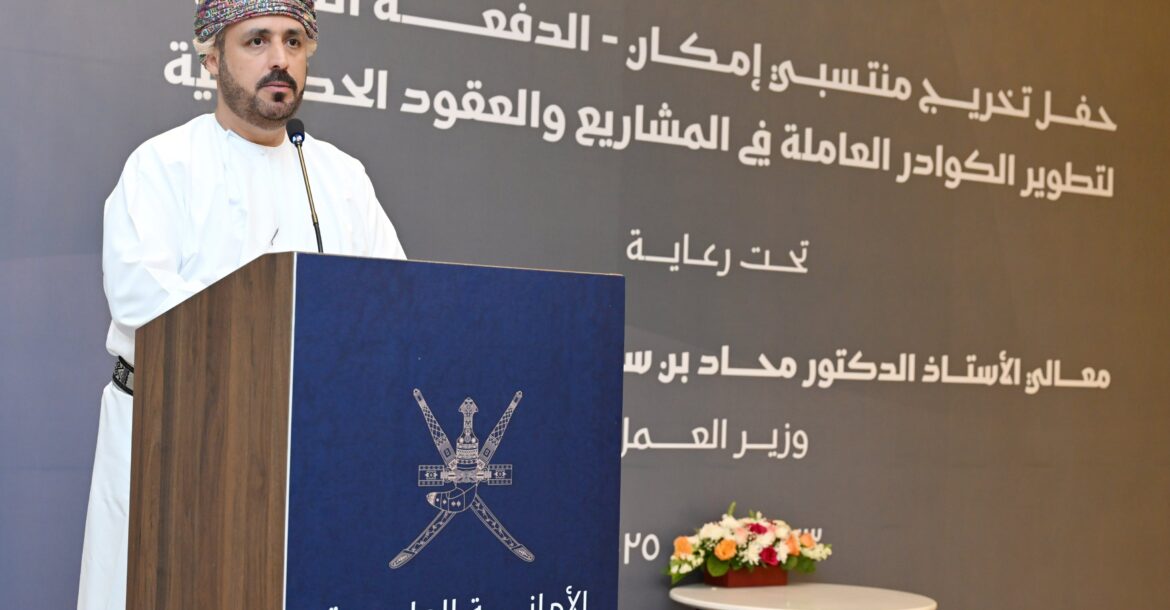

Muscat: A six-month initiative aimed at enhancing the efficiency of government project management and contracts, the graduates, representing 20 government entities, successfully completed training designed to strengthen their professional and technical skills.
The ceremony was held under the patronage of His Excellency Dr Mahad bin Said bin Ali Baowain, Minister of Labour, who praised the program’s role in developing national competencies and improving project execution standards.
The Imkan 2 program focused on workshops, field visits, and specialized training to refine engineers’ skills in managing construction, supply, and technology projects. It also emphasized enhancing local content in government projects, reducing delays, and improving risk management.
Read More
- His Majesty Sultan Haitham returns home after state visits to China, Brunei
- Oman’s digital economy contributes 9% to GDP as investments reach RO 1.3 billion in 2025
- Muscat Municipality announces traffic diversion on Al Khuwair service road from November 4
- Oman clarifies expat recruitment rules after agency talks
- Oman police arrest two over vehicle theft, number plate tampering and resisting officers in Seeb
His Excellency Eng. Badr bin Salem Al Maamari, Secretary General of the Tender Board, highlighted that Imkan 2 plays a crucial role in aligning with Oman Vision 2040 by ensuring the efficient execution of development projects.
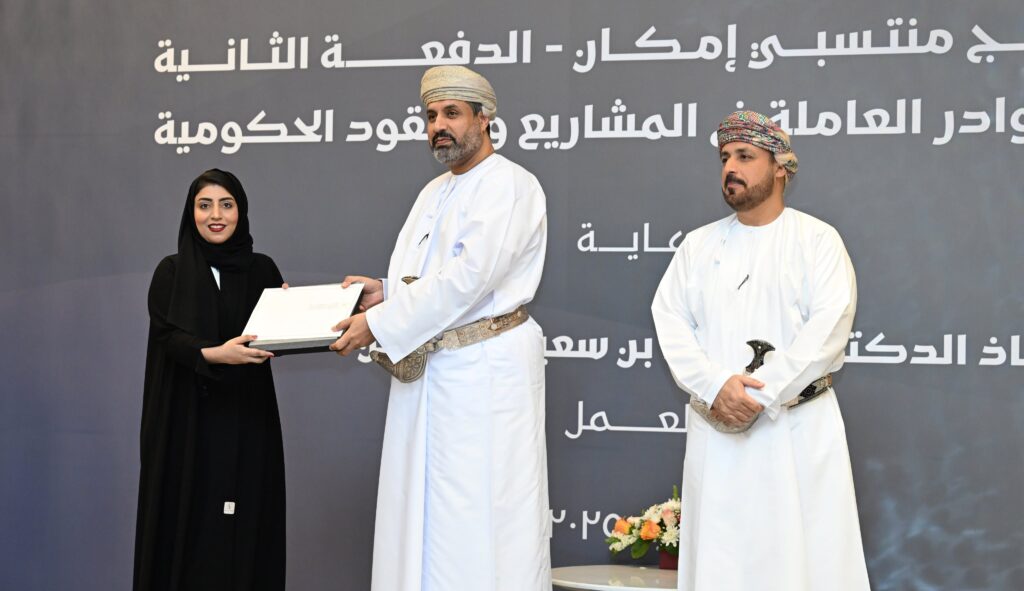
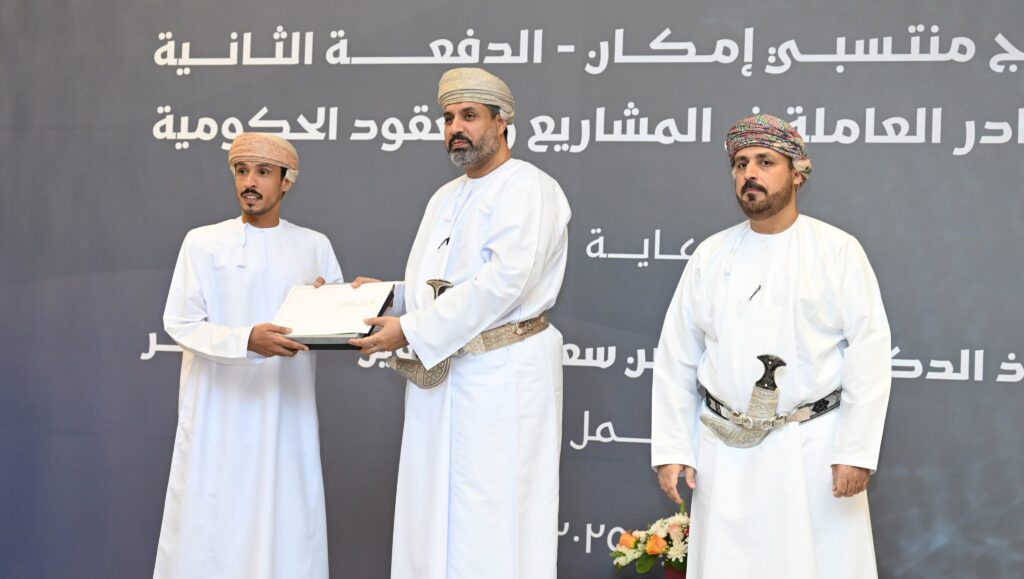

Participants were trained in digital analysis tools, artificial intelligence, and data-driven decision-making to enhance efficiency in project evaluation and implementation.
Abdullah bin Saif Al Hosani, Advisor for Talent and Project Development at the Tender Board, emphasized that the program creates an integrated platform for government project managers, helping standardize project quality systems based on national and international benchmarks.
Building on the success of Imkan 1, the second phase expanded its reach by establishing a database of 1,028 engineers, of whom more than 400 are directly involved in government projects. The initiative prioritizes major infrastructure projects, including schools, roads, bridges, ports, hospitals, and urban developments.





