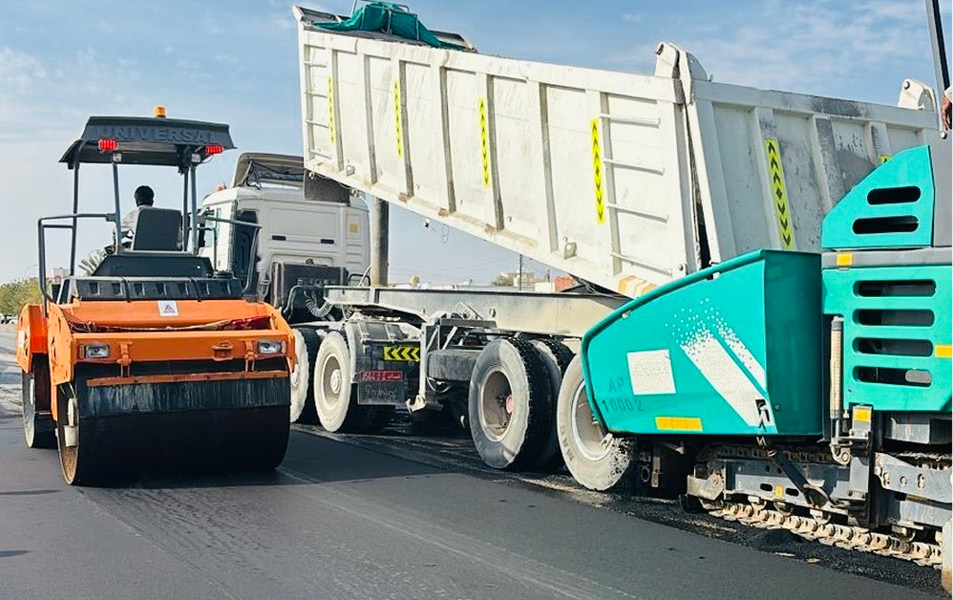

MUSCAT : The project employs rubber-modified asphalt—a blend enhanced with rubber, styrene-butadiene polymers (SBS), glass fibres, and nanomaterials—to create roads that are more flexible, resistant to cracking, erosion, and thermal effects.
Abdul Aziz bin Fahd Al Nusairy, Director of the Roads Department in North Al Sharqiyah Governorate, explained, that this new paving technique is designed to extend the life of our roads while significantly reducing recurring maintenance costs. By integrating recycled tires and plastic waste into our asphalt, we not only build stronger roads but also cut down on environmental pollution.
The experimental pavement in Bidiyah aims to set a benchmark in modern road construction. The rubber-modified asphalt improves shock absorption, reduces noise, and withstands heavy traffic, making it ideal for busy public roads. Moreover, its production helps lower carbon dioxide emissions by repurposing rubber pellets and plastic waste, marking a significant stride toward sustainable infrastructure development.
Read More
- Oman, Iran agree framework for safe shipping corridor through Strait of Hormuz
- Thunderstorms, strong downdraft winds sweep parts of Oman
- Saudi Crown Prince sends written message to His Majesty Sultan Haitham
- Oman FM arrives in Tehran, discusses safe passage of ships through Strait of Hormuz
- CPA seizes 1,668 soft drinks, 177 expired juice cans in Oman
Officials describe this project as a “real treasure in the world of modern roads,” highlighting its dual benefits of durability and environmental responsibility.
For all the latest news from Oman and GCC, follow us on Twitter, Instagram and LinkedIn, like us on Facebook and subscribe to our YouTube page, which is updated daily.





