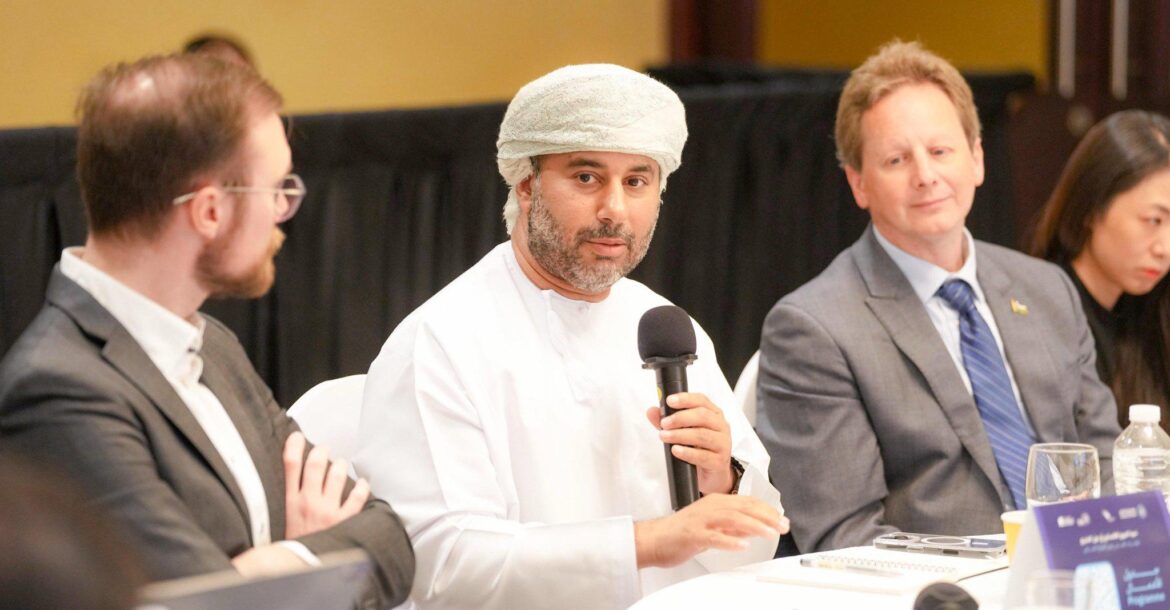
Muscat – Rather than succumbing to the challenges, GCC countries have seized the opportunity to fast-track its diversification efforts, said His Highness Sayyid Dr. Adham bin Turki al Said, Chairman of the Economic Committee at the Oman Chamber of Commerce and Industry (OCCI).
“The past years, which witnessed a sharp decline in oil prices, created a deficit in the budgets of the GCC countries and affected the credit rating, which prompted our countries to turn this crisis into an opportunity to intensify efforts to diversify the economy,” he stated.
His Highness was addressing the symposium titled ‘Economic Diversification in the Gulf States: Measurement Indicators and the Role of the Private Sector’, which was organised by the Economic Committee of OCCI in collaboration with Konrad-Adenauer-Stiftung’s Regional Programme Gulf States and Smart Portal for Investment and Consulting.
The symposium focused on assessing economic diversification efforts across the region, drawing attention to the urgent need for diversification in the wake of the region’s oil dependency and the global energy crisis. Experts from Oman, Germany, the GCC and other countries participated in discussions to evaluate progress and identify challenges.
Oman’s 2040 Vision has identified key sectors for diversification, including industry, logistics services, food security, and tourism, with potential expansion into health, education, and information technology.
His Highness Dr. Al Said stressed the crucial role of the private sector in driving this transformation, recognising the numerous opportunities available within these emerging sectors such as logistics, food security, tourism, and manufacturing. The government also sees health, education, and information technology as potential growth areas.
The symposium aimed to address the challenges and realities of diversification in the Gulf, exploring metrics like the composite index for measuring progress and maximizing the impact of the “Economic Diversification Platform.”
Working papers presented during the event shed light on the realities and challenges of diversification across the Gulf region, including the development of a composite index to measure the success of diversification efforts. This index will help decision-makers identify areas of progress and improvement, enabling them to craft more effective policies.
The roundtable discussions that took place on the second day of the symposium included sessions on “Growth in the Gulf States: Key Variables for Understanding the Economies of the Gulf Cooperation Council Countries,” “How to Measure Economic Diversification in the Gulf States,” and “The Composite Index for Measuring Economic Diversification in the Gulf Cooperation Council Countries – Areas for Improvement.” These discussions aim to provide valuable insights that will help shape the future of the Gulf’s economic landscape.
Read More
- Oman oil price drops by 5.45 US dollars
- Oman’s manufacturing sector targets RO 10.7 billion contribution by 2040
- Asia-Pacific airlines including India may keep fares high despite easing jet fuel prices as demand stays resilient: S&P
- Bank of Beirut to exit Oman after 20 years, depositors given 60 days to settle accounts
- Omantel’s Otech, DeepAstra launch sovereign AI platform in Oman





