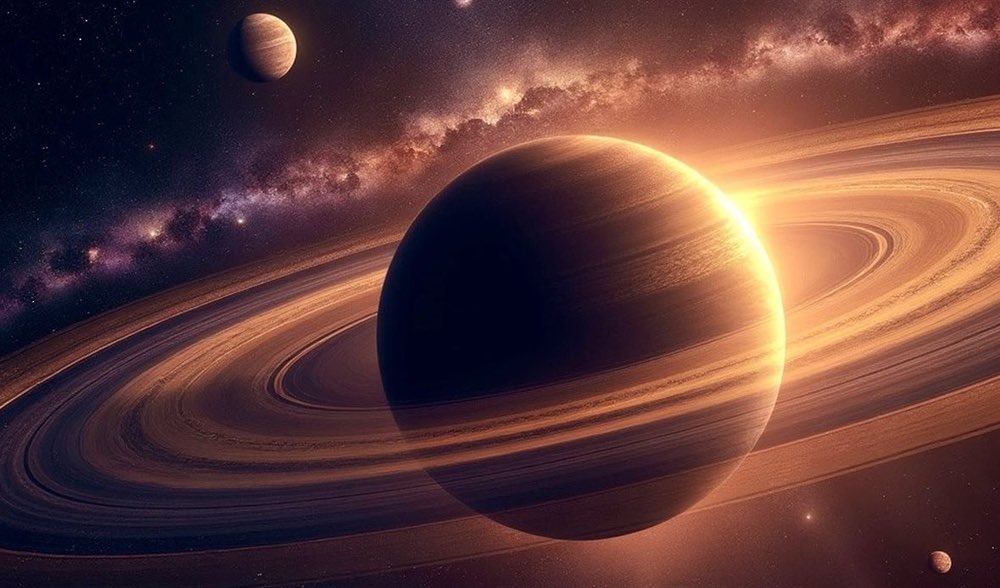

Muscat: The Sultanate of Oman is gearing up for a dazzling cosmic display as Venus reaches its maximum brightness tomorrow evening, illuminating the western horizon just after sunset.
Wasal bint Salem Al Hinai, Vice President of the Community Communication Committee at the Omani Society for Astronomy and Space, explained that Venus is the third brightest celestial body after the Sun and Moon, boasting an apparent magnitude of -4.52. This brightness makes it about 30 times brighter than Sirius, the brightest star in the night sky.
Al Hinai pointed out that Venus will be in a crescent phase, reflecting a large amount of sunlight due to its position relative to the Earth and Sun. “During this period, the planet will be at its closest point to Earth, which makes it brighter and clearer—especially for those viewing with telescopes, where the dense clouds of its surface become visible,” she added.
Read More
- Oman, Iran agree framework for safe shipping corridor through Strait of Hormuz
- Thunderstorms, strong downdraft winds sweep parts of Oman
- Saudi Crown Prince sends written message to His Majesty Sultan Haitham
- Oman FM arrives in Tehran, discusses safe passage of ships through Strait of Hormuz
- CPA seizes 1,668 soft drinks, 177 expired juice cans in Oman
According to Al Hinai, the spectacle will remain visible in Oman’s evening skies until mid-March, gradually disappearing on March 16. It will then reappear on the eastern horizon by late March as the “morning star.” This is a golden opportunity for both amateur and seasoned astronomers to witness one of the most striking celestial scenes, she remarked.
Venus is classified as an inner planet because it orbits the Sun closer than Earth does. This proximity means the planet cannot be seen all night like the outer planets; instead, it appears either before sunrise in the eastern sky or shortly after sunset in the west. Ancient civilizations also paid special attention to Venus, calling it the “morning star” and the “evening star,” as its predictable appearances made it a significant cultural symbol.
A unique aspect of Venus is its intensely thick atmosphere, composed mainly of carbon dioxide with traces of nitrogen and sulfuric acid, reflecting about 75 percent of sunlight. While this reflective layer accounts for Venus’s mesmerizing brilliance, it also causes extreme global warming, making Venus the hottest planet in the solar system with surface temperatures of around 467°C—enough heat to melt lead—and an atmospheric pressure 92 times stronger than Earth’s.
Despite extensive studies, Venus still holds many mysteries, according to Al Hinai. She also mentioned that NASA and the European Space Agency are preparing future missions to unveil its hidden secrets and to understand how this planet—so similar in size and composition to Earth—became a world of scorching temperatures and crushing pressure.





