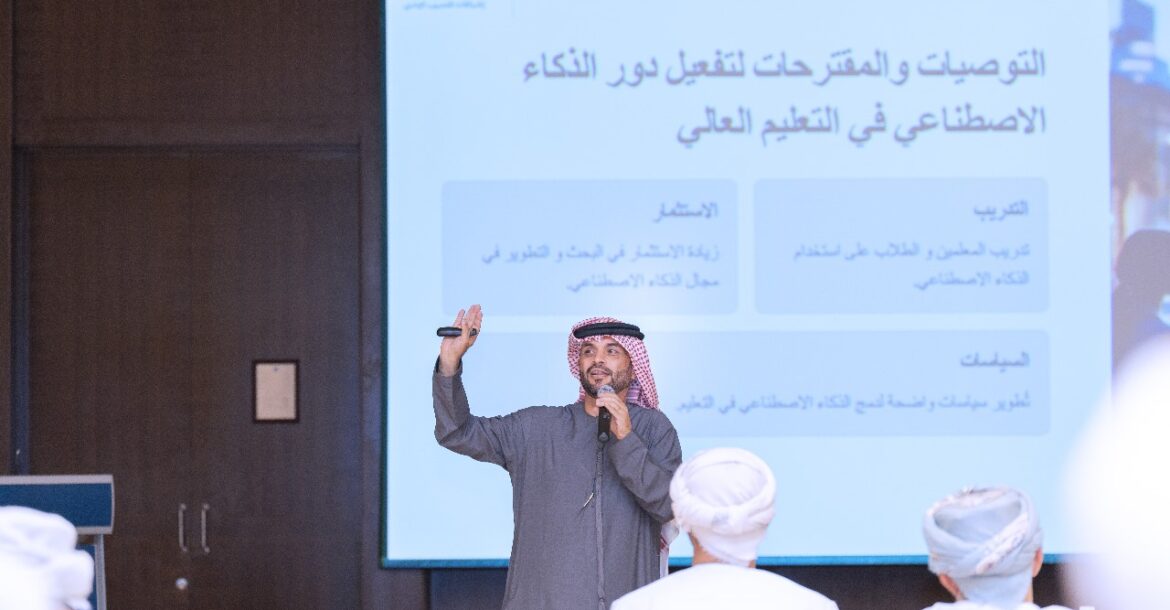

Muscat: Urging the University of Technology and Applied Sciences (UTAS) to pursue micro-credentials in line with labour market needs, this forum’s pivotal goal was to keep academic institutions at the forefront of rapid digital transformations.
In its closing statements, the two-day event—organized by UTAS—stressed the importance of creating comprehensive policies and frameworks for AI-focused initiatives. Forum participants advocated for continuously upgrading core technical infrastructure, crafting a clear roadmap to embed AI in every facet of university life, and fostering stronger links with industrial sectors to bolster AI’s role in workforce development.
The forum spotlighted the need to develop human capital by equipping faculty, staff, and students with AI competencies, while also guiding universities to invest in AI tools that streamline human resources and employment processes. Participants emphasized expanding partnerships with leading local, regional, and global institutions in cutting-edge technologies, aiming to transfer advanced expertise into academic and societal applications.
Read More
- Oman, UK sign letters of intent on space and AI in education
- His Majesty Sultan Haitham expresses confidence in stronger Oman–UK ties
- His Majesty Sultan Haitham, British PM discuss stronger ties and regional security
- Oman, UK unveil over £1 billion investment plans, deepen security and trade ties
- HH Sayyid Theyazin attends British Omani Society’s golden jubilee reception in London
Over two days, keynote speakers showcased how artificial intelligence can refine higher education, from improving administrative efficiency and powering scientific research to designing modern academic programs that empower graduates with future-proof skills. Discussions also highlighted the merits of smart learning platforms that offer customized content, accurate assessments, and instant feedback—key elements in elevating students’ learning journeys.
Presentations covered a range of topics, with five working papers that included “Artificial Data and Artificial Intelligence as Catalysts for Digital Innovation,” “Artificial Intelligence towards an Innovative Educational Future,” and “Microsoft Solutions for Artificial Intelligence in Education.” Additionally, participants explored real-world applications in the private sector through “The Journey of Artificial Intelligence in OQ Group” and examined strategies for building a leading AI-focused university in “Artificial Intelligence between Reality and Fantasy.”
A field visit to the Special Economic Zone in Duqm took attendees to Duqm Port, the fishing port (Samak Factory), the dry dock, and the Karwa car factory.





