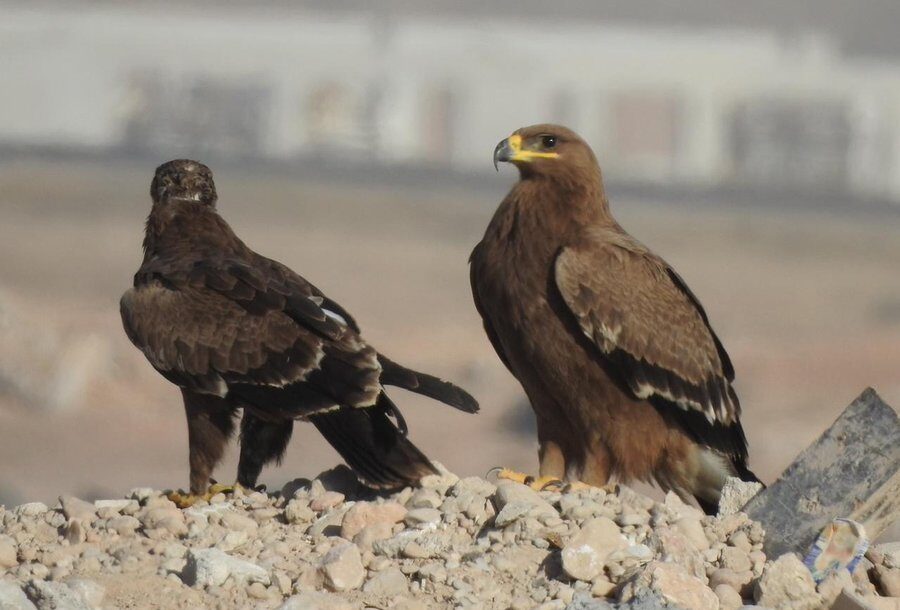

MUSCAT : Fueled by habitat loss, poaching, environmental pollution, accidental poisoning, and collisions with electric poles, as study conducted by a research team from the Environment Conservation Office at the Environment Authority highlights the mounting environmental pressures in Dhofar Governorate and calls for swift policy measures to safeguard wildlife.
The study’s key findings indicate that Dhofar faces significant ecological challenges, prompting calls to develop conservation policies aimed at curbing negative impacts on local habitats. Mohammed bin Ghanem bin Nabhan Habis, Environmental Systems Supervisor at the Environment Authority, explains that the steppe eagle is a migratory species passing through Oman during migration seasons. Surviving on carrion, rodents, medium-sized mammals, birds, reptiles, and insects, these birds of prey often venture into waste disposal sites, exposing them to plastic and chemical poisoning risks.
Researchers focused on three waste disposal sites in Dhofar, where the highest recorded number of steppe eagles reached 1,122 in 2019. The study, which compared data over winters from 2018 to 2022, underscores the urgent need for targeted conservation efforts.
Read More
- Oman, Iran agree framework for safe shipping corridor through Strait of Hormuz
- Thunderstorms, strong downdraft winds sweep parts of Oman
- Saudi Crown Prince sends written message to His Majesty Sultan Haitham
- Oman FM arrives in Tehran, discusses safe passage of ships through Strait of Hormuz
- CPA seizes 1,668 soft drinks, 177 expired juice cans in Oman
For all the latest news from Oman and GCC, follow us on Twitter, Instagram and LinkedIn, like us on Facebook and subscribe to our YouTube page, which is updated daily.





