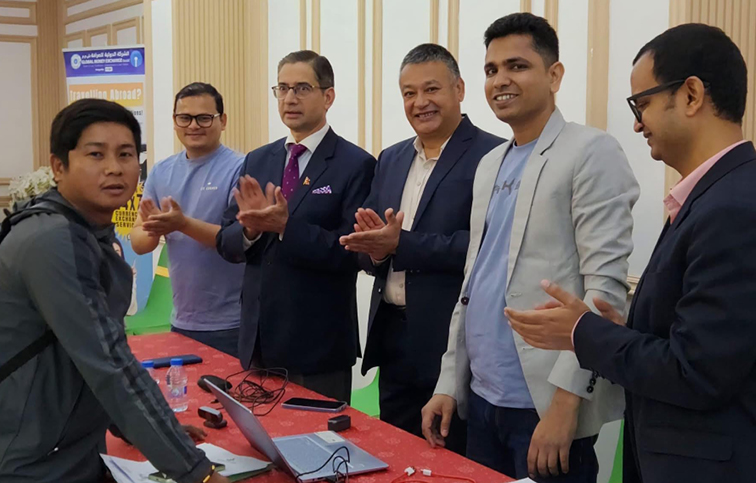

Muscat – Nepali workers currently employed in Oman without a labour permit can now obtain the necessary legalisation at the Embassy in Muscat. To begin the process, workers must create a profile through the Foreign Employment Information Management System (FEIMS), upload required documents, submit an online application, and attend the Embassy in person for biometrics (photo and fingerprinting).
This marks the first-ever live enrolment process for the legalisation of labour permits for Nepali workers abroad.
The Embassy began the process on January 31, 2025, with a special programme held in Salalah, Oman, which ran through February 1, 2025. The event was the first of its kind, offering a range of services including labour awareness sessions, financial literacy training, enrolment in the social security fund scheme, and passport and consular services.
His Excellency Dornath Aryal, the Ambassador of Nepal to the Sultanate of Oman, along with Surya Bahadur Khatri, Director General of the Department of Foreign Employment, officially inaugurated the legalization of labour permits for Nepali workers. The initiative is expected to bring considerable benefits to workers, in line with Nepal’s policies for supporting its labor force abroad.

During the program, the Ambassador shared an overview of the Embassy’s past achievements and the ongoing initiatives aimed at supporting Nepali workers in Oman. He expressed optimism that the new labour permit legalization service would enable workers to access various benefits provided by the Government of Nepal. The Ambassador also stressed the importance of contributing to the social security fund, sending remittances through legal channels, and respecting the laws, culture, and traditions of Oman. He engaged with the attendees, addressing their questions and concerns.
On February 3, 2025, the Embassy organised another program at Nepal House in Muscat to continue the labour permit legalisation process. During the event, H.E. Aryal and Director General Khatri discussed key topics such as labour rights, economic diplomacy, and the concerns of Nepali workers. Various representatives from Nepali organizations, banks, and social activists provided feedback and raised concerns, which were addressed during the interactive session.
Read More
- His Majesty Sultan Haitham returns home after state visits to China, Brunei
- Oman’s digital economy contributes 9% to GDP as investments reach RO 1.3 billion in 2025
- Muscat Municipality announces traffic diversion on Al Khuwair service road from November 4
- Oman clarifies expat recruitment rules after agency talks
- Oman police arrest two over vehicle theft, number plate tampering and resisting officers in Seeb





