
MUSCAT : Today, the Ministry of Transport, Communications, and Information Technology, in collaboration with the National Center for Statistics and Information, commenced the “Digital Economy Contribution to GDP Survey Project,” which will continue until May 2025.
This project, conducted for the first time, aims to estimate the contribution of the digital economy to the Gross Domestic Product (GDP) and determine the added value of the Information and Communications Technology (ICT) sector. Additionally, it seeks to identify the added value of digitally only provided financial and insurance services. The survey targets establishments operating in ICT sector activities of various sizes (large, medium, small, and micro) as well as digitally only provided financial and insurance services. The survey’s target sample includes approximately 1,300 establishments across all governorates of the Sultanate. The survey will use 2023 data from these establishments as its reference.


H.E. Dr. Ali Al Shidhani:
Read More
- Omani Brand AMTUR Gold & Diamonds expands to Qatar with opening of 14th branch
- Development Bank Sustainability expert joins Duqm Summer Podcast Series
- Oman refinery output falls 3.7% to 129 million barrels
- GCC stock trading rises 19.5% as markets record $618 billion in deals
- Oman Air creates first-ever Chief Guest Experience Officer role
The survey results will provide accurate and systematic data to calculate progress indicators in the digital economy.
Dr.Yousef Al Riyami:
All data collected in this survey will remain confidential under the Statistics Law, and we urge everyone to cooperate with the survey teams.
Measuring Progress
H.E. Dr. Ali Al Shidhani, Undersecretary of the Ministry of Transport, Communications, and Information Technology, emphasized the importance of this survey, stating that it will provide indicators to measure progress in achieving the objectives of the National Digital Economy Program. The program aims to increase the digital economy’s contribution to GDP by 10% by 2040. The survey will offer accurate data enabling policymakers and decision-makers to work based on systematic methodologies.
Furthermore, the survey results will facilitate local, regional, and international comparisons of the digital economy’s contribution to GDP on a regular basis. It will also create a reliable data foundation for conducting economic studies and research, supplying researchers with essential statistics on the digital economy for use in academic and economic studies.
H.E. Dr. Al Shidhani added, “This survey will focus on measuring key indicators, such as the digital economy’s contribution to GDP and calculating various activities within the targeted digital economy establishments. These include the added value of ICT activities, the average number of employees, average spending on salaries and wages, operational and transfer expenses, investment in assets, and revenues.”
Data Confidentiality
Dr.Yousef bin Mohammed Al Riyami, Director General of National Statistics at the National Center for Statistics and Information, assured that all individual data collected from this survey will remain confidential in accordance with the Statistics Law issued by Royal Decree No. 55/2019. The law states that individual data collected in any statistical operation is confidential and may only be published in aggregate form. No individual or government or non-governmental entity is permitted to access this data, nor may it be used for non-statistical purposes.
“We urge all targeted establishments to cooperate with the survey teams, as this project supports national goals to enhance the digital economy,” Al Riyami stated.
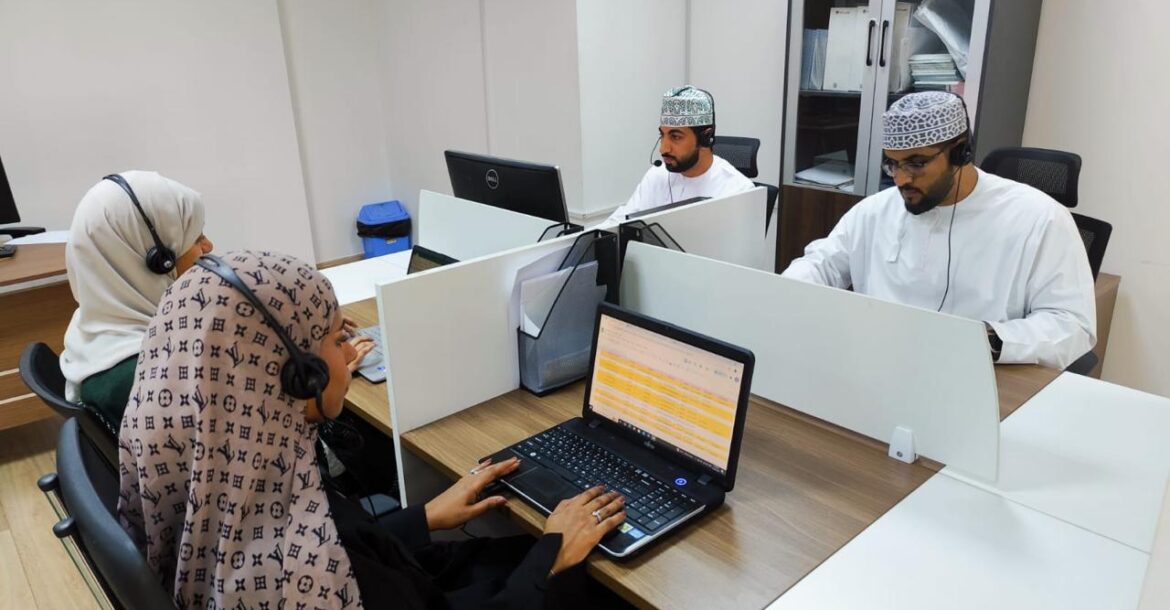
He explained that the data collection process for establishments included in the sample will follow three methods: telephone interviews through the survey’s dedicated contact center, providing establishments with a self-completion link to disclose the required data, and conducting field visits.
It is worth noting that the digital economy is an economic system primarily reliant on digital technologies. It encompasses all economic activities conducted online or through technology, including sectors like e-commerce, digital financial services, and information technology. The digital economy contributes to improved efficiency, increased innovation, and the creation of new job opportunities, thereby enhancing economic growth and leading to a sustainable future.





