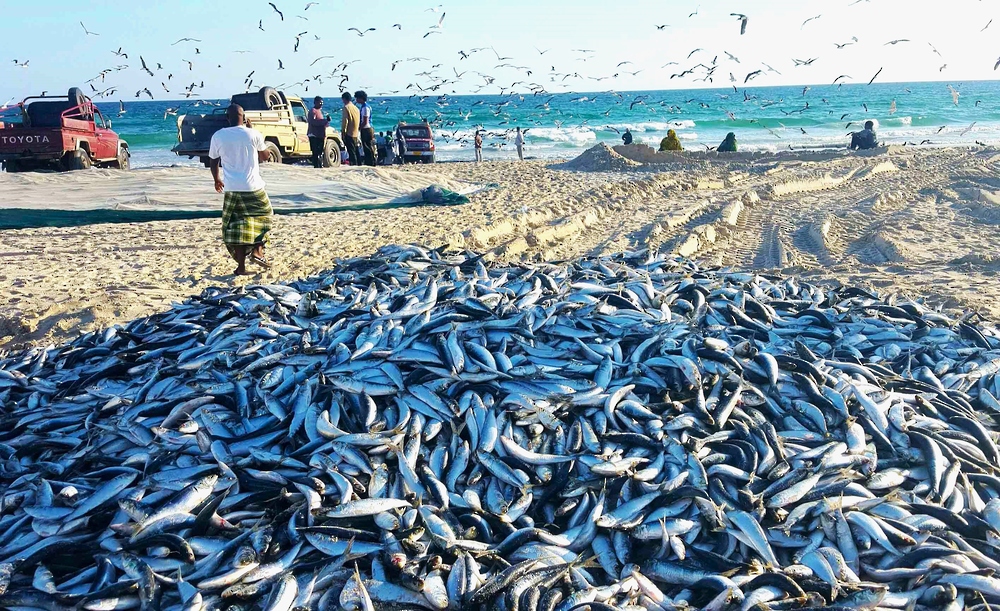

MUSCAT : Using traditional fishing nets called “al-Jarif,” fishermen operate in organized groups known as “al-Daghiya,” led by seasoned leaders who oversee the intricate process. Salem bin Saeed Al Baraka, a veteran fisherman, reflects on the evolution of sardine fishing, noting the transition from ropes called “Saifa” to modern nets known as “Greef.” These nets, woven in the fall, span approximately 100 meters in length and require up to 40 workers to operate.
The season not only brings economic benefits but also demands meticulous preparation, as fishermen repair gear and assemble equipment to ensure a successful harvest. According to Hani bin Salem Batmira, a young fisherman, sardines are vital to the livelihood of Dhofar’s fishing communities, despite challenges such as high waves following the autumn season.
The catch, including a unique variety called “Eid Al-Ula,” is transported to local markets, exported, or dried for use as animal feed or organic fertilizer. Sardine production in Dhofar saw a 133% increase in 2023, reaching 49,651 tons compared to 21,290 tons the previous year, according to the General Directorate of Agricultural Wealth, Fisheries, and Water Resources.
Read More
- Oman’s military medical city uses robotic system to remove kidney tumour
- Six jailed in Oman over Mazoon Dairy embezzlement and bribery case
- Oman deepens China ties, elevates Brunei relations in His Majesty Sultan Haitham’s Asia visits
- HH Sayyid Bilarab patronises Royal Guard of Oman’s Annual Day celebrations
- Oman partners with Visa to attract high-spending luxury travellers
For all the latest news from Oman and GCC, follow us on Twitter, Instagram and LinkedIn, like us on Facebook and subscribe to our YouTube page, which is updated daily.





