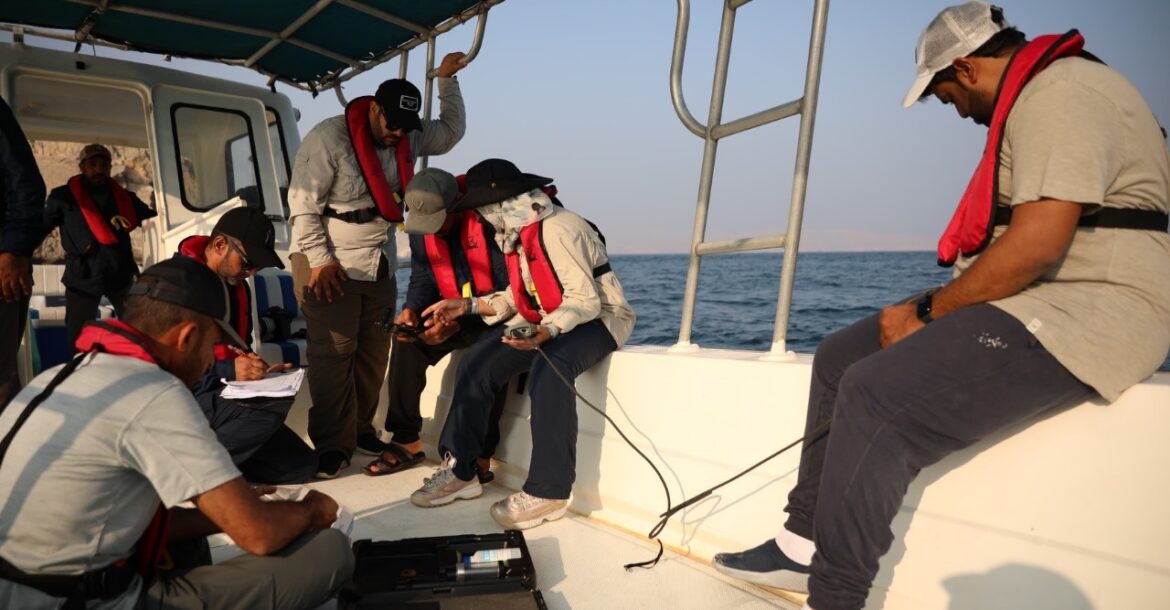

Muscat – The fieldwork, initiated in the Wilayat of Khasab, will continue until October 31, with the goal of building a comprehensive database on marine mammals within the Musandam National Park Nature Reserve and mapping the distribution of species across the area.
Engineer Aida bint Khalaf Al Jabri, head of the project team, emphasised the significance of the initiative, stating, “This project aligns with the survey and monitoring programs outlined in the management plan for the National Natural Park in Musandam Governorate. The team will monitor marine mammals by scanning the water with binoculars and observing surface disturbances, dark objects, or birds congregating in specific areas—signals often associated with fish that attract marine mammals.”
She explained that the project team records essential data such as sighting locations, dates, times, species, group sizes, and behaviors. High-quality cameras, drones, and GoPros are used to capture images and videos. Additionally, physical factors like depth and wind speed are measured, and marine mammal sounds are recorded using specialized equipment.
Hamad bin Salem Al-Hussaini, Environmental Systems Technician, highlighted the diverse marine mammal population in Oman due to its strategic location. He emphasized the Environment Authority’s commitment to studying marine mammal presence and reproduction to ensure their protection.
The project has witnessed significant participation from local fishermen, who have contributed valuable data through their observations and documentation. Previous phases of the project revealed the presence of a wide range of marine mammals, suggesting a food-rich environment that supports their diversity within the reserve. These findings reinforce the importance of ongoing conservation efforts to maintain the ecological balance of Musandam’s marine habitats.
Read More
- TAS Special Report: Al Khuwair roadworks turn daily commute into an ordeal
- Oman joins Gulf states in railway agreement to link six countries
- Oman’s Shura Council reviews call to regulate expatriate remittances
- Oman’s foreign minister, UN envoy discuss Yemen de-escalation and peace efforts
- Oman targets 30% medicine self-sufficiency within a decade, minister says





