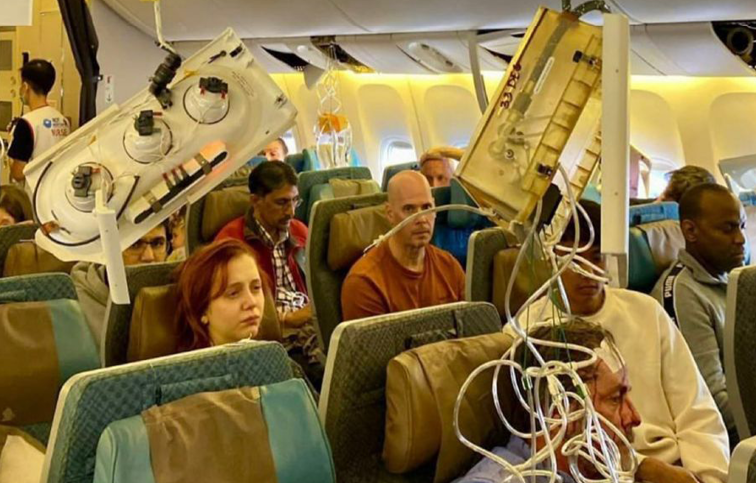

Bangkok: The unexpected turbulence struck without warning, highlighting the challenges pilots face in anticipating such events. Experts attribute this incident to Clear Air Turbulence (CAT), a phenomenon often called the “invisible danger of the skies.” CAT, undetectable by radar, has become increasingly frequent and severe, raising concerns about aviation safety.
A recent study by the University of Reading found a 55 per cent increase in CAT incidents over the North Atlantic since 1976, with climate change identified as the primary cause. Rising temperatures due to global warming are significantly increasing turbulence across transatlantic flights.
Professor Ramalingam Saravanan of Texas A&M University explained that global warming in the troposphere and cooling in the stratosphere are enhancing vertical wind shear at cruising altitudes, where airplanes typically fly. This increase in wind shear contributes to more severe turbulence.
Read More
- His Majesty Sultan Haitham congratulates Singapore President on National Day
- Thunderstorms, rockslides hit parts of Oman’s Hajar Mountains as wadis see runoff
- Dhofar to host major Food Security Forum as Oman pushes investment, sustainability
- Oman completes 86.7% of National E-Commerce Plan
- Why Oman is now among the world’s top three for Quality of Life Index
The incident on flight SQ321 underscores the growing impact of climate change on aviation. Scientists have analyzed over 40 years of climate data, revealing a 55 per cent rise in severe turbulence, which can cause serious injuries. Even light and moderate turbulence has increased by 17 per cent and 34 per cent, respectively.





