
MUSCAT : Pandemics, crises and disasters have ravaged humanity throughout its existence, but epidemics still remain one of the most devastating and dire consequences on human life. The COVID-19 pandemic is only one case of such humanitarian crises and their cross-sectoral socioeconomic implications. The pandemic has had devastating impacts on health security, in the first place, and on people’s lives, in the second place. During the pandemic, pharmaceutical security emerged as an existential element of human life, and attention was directed towards pharmaceutical companies that rely on research and development to save humanity from epidemics and deadly diseases as many struggled to secure the vaccine due to favoritism, lack of influence and other reasons.
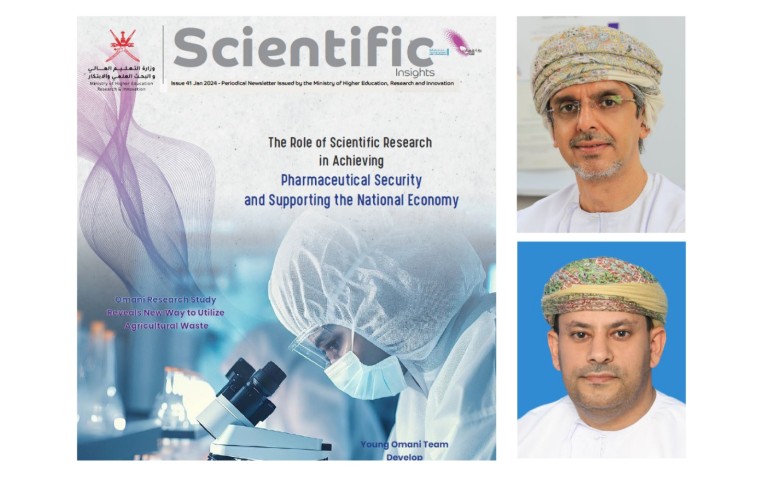
One of the biggest lessons we have learned from the pandemic is the importance of pharmaceutical security in general, and especially in our country. With this in mind, we raise the issue of pharmaceutical security in the Sultanate of Oman to try to answer a serious of questions, including: What role does scientific research plays in achieving pharmaceutical security and supporting the national economy? How to improve the pharmaceutical industry in the Sultanate? What are the enablers for achieving pharmaceutical security? All these questions, among others, are answered in latest issue of Scientific Insights magazine published by the Ministry of Higher Education, Research and Innovation.
The Importance of Pharmaceutical Security
Read More
- Bank of Beirut to exit Oman after 20 years, depositors given 60 days to settle accounts
- Omantel’s Otech, DeepAstra launch sovereign AI platform in Oman
- Oman’s oil prices slide below $92 as global markets rebound
- With the new school year approaching, plan for your child’s education with BankDhofar
- Nifty, Sensex end lower as Iran sanctions, high crude and rising bond yields weigh on sentiment
Pharmaceutical security is of great importance, and in fact is no way less significant than food security. They are two sides of the same coin, as we cannot survive without food nor eat without good health. Pharmaceutical security is defined as a country’s ability to secure a sufficient amount of essential medicines, which society needs for all its segments, whether in ordinary times or in times of crises and disasters. In this regard, Prof. Dr. Haider Ahmed Al Lawati, Professor at the College of Science at Sultan Qaboos University, says: Pharmaceutical security is one of the main objectives that countries aim to achieve. However, they face great challenges in that respect. Pharmaceutical security is not only about the provision of sufficient quantities of medicines, but also about local production of pharmaceuticals and non-reliance on foreign imports. This can be achieved by supporting the local pharmaceutical industry, so that local products can compete with imported products.
The Role of Scientific Research in Achieving Pharmaceutical Security
Research and development are essential in the pharmaceutical industry and key to achieving pharmaceutical security. Dr. Mohammed Hamdan Al Rubaie, Director General of Pharmaceutical Affairs and Drug Control at the Ministry of Health, states: Scientific research plays a critical role in drug discovery and development and has a direct impact on national pharmaceutical security. At the same time, it supports the national economy by promoting innovation, creating employment opportunities, and driving economic growth through the pharmaceutical and biotechnology industry. In addition, investment in scientific research is not only a matter of public health, but also a vital strategic and economic necessity.
Furthermore, Prof. Dr. Haider Al Lawati adds that scientific research in the field of pharmaceutical manufacturing is considered one of the most challenging research fields, as it is both time-consuming and highly expensive. Thus, it is almost exclusively limited to highly ranked global universities and international companies. Arab and gulf countries suffer from a lack of serious research in this field. Most pharmaceutical companies in the Arab world are generic drug manufacturers that do not rely on scientific research in pharmaceutical production. Pharmaceutical companies can be divided into two main categories: innovator drug companies and generic drug companies. Generic drugs are not new drugs, but rather drugs manufactured after obtaining a permit from the research company to produce them or they are no longer protected by production rights.
Enablers for Achieving Pharmaceutical Security
The local pharmaceutical and medical supplies industry is a key economic and strategic player in the manufacturing industry in the Sultanate of Oman, given its major role in improving the quality of healthcare and achieving pharmaceutical security. Within this framework, Dr. Mohammed Al Rubaie says that achieving pharmaceutical security and developing the pharmaceutical industry in Oman requires a multifaceted approach that covers regulatory, economic and infrastructural aspects, which can be detailed as follows:
- Strengthening the regulatory framework, as the first step towards achieving pharmaceutical security, by establishing a strong regulatory system that ensures pharmaceutical companies’ adherence to international quality standards, such as Good Manufacturing Practices (GMP) and Good Distribution Practices (GDP) to monitor the quality, safety and efficacy of pharmaceutical products.
- Promoting local pharmaceutical manufacturing to reduce dependency on imports and enhance pharmaceutical security by providing incentives (tax exemptions, grants, etc.).
- Enhancing human resources development and continuous professional development of qualified health professionals working in this field.
- Investing in R&D.
- Improving transportation and logistics infrastructure to facilitate pharmaceutical transport.
- Strengthening international cooperation with pharmaceutical organizations and regulatory agencies around the world to ensure adherence to international standards and global best practices.
- Improving intellectual property legislation to protect the rights of drug innovators and encourage investment in R&D.
Dr. Mohammed Al Rubaie adds: A key objective of Oman Vision 2040 is to attract investments across various sectors, including the pharmaceutical and medical supplies industry. As part of its efforts to achieve pharmaceutical security, the Ministry of Health aims, through the Directorate General of Pharmaceutical Affairs and Drug Control, to promote and facilitate investments in the local pharmaceutical and medical supplies industry, increase self-sufficiency in the pharmaceutical industry, improve the industry in line with global requirements and ensure the quality, safety and efficacy of pharmaceutical products. This can be achieved through:
- Strengthening the regulatory framework to ensure the safety, quality and efficacy of pharmaceutical products.
- Accelerating the procedures followed for licensing and establishing local factories.
- Adopting simplified drug registration procedures.
- Implementing strict pharmacovigilance and quality control measures to monitor and maintain compliance across the supply chain.
- Cooperating with the relevant authorities to develop industrial estates or pharmaceutical manufacturing zones to provide the necessary infrastructure and support.
Dr. Haider Al Lawati believes that a huge multi-million budget must be allocated to scientific research in this field and clear legislation regarding human clinical trials of new medicines must be enacted. Efforts also must be made to attract investments from top pharmaceutical companies.
Pharmaceutical R&D
As for companies relying on pharmaceutical R&D in Oman, Dr. Mohammed Al Rubaie maintains that although the pharmaceutical industry in Oman is still in its nascent stages, many promising initiatives and continued growth opportunities are emerging, especially under the current trends towards attracting investment into the sector and achieving pharmaceutical security.
The national pharmaceutical companies usually conduct continuous R&D of their own products. In 2015, Oman had two pharmaceutical manufacturing companies, one in Rusayl Industrial Estate in Muscat Governorate and the other in Salalah Industrial Area in Dhofar Governorate, in addition to a medical supplies manufacturing factory in Salalah and a pharmaceutical raw materials manufacturing factory in Al Buraimi. In line with the government’s efforts to drive growth in this sector, Royal Decree 35/2015 Promulgating the Law Governing the Practice of the Pharmacy Profession and Pharmacy Enterprises was issued. Under this law, the Directorate General of Pharmaceutical Affairs and Drug Control underwent restructuring. A department concerned with pharmaceutical manufacturing and a directorate concerned with medical supplies control were created. Existing local companies have worked on expanding their business into GCC countries, MENA region, Africa, CIS countries, Southeast Asia and Europe. They have also obtained accreditation from major international organizations, such as the United States Food and Drug Administration (FDA) and the European Medicines Organization (EMA). This was achieved through cooperation with international pharmaceutical companies, academic institutions and research institutes to gain access to relevant scientific expertise and resources. By 2020, another raw materials manufacturing factory (with a high production capacity) was completed, which is considered as the first of its kind in the GCC region.
Currently, the number of manufacturing factories under construction in Oman is about 15 local factories, including a vaccine factory and several intravenous solutions/dialysis solutions projects. These factories are the first of their kind in Oman. Several applications have been also submitted to establish pharmaceutical and medical supplies factories, including an insulin manufacturing factory.
To read more about this topic, this article and other interesting articles can be accessed through Scientific Insights, a scientific journal published every three months by the Ministry of Higher Education, Research and Innovation, which is available online through the ministry’s official social media channels in Arabic and English.





