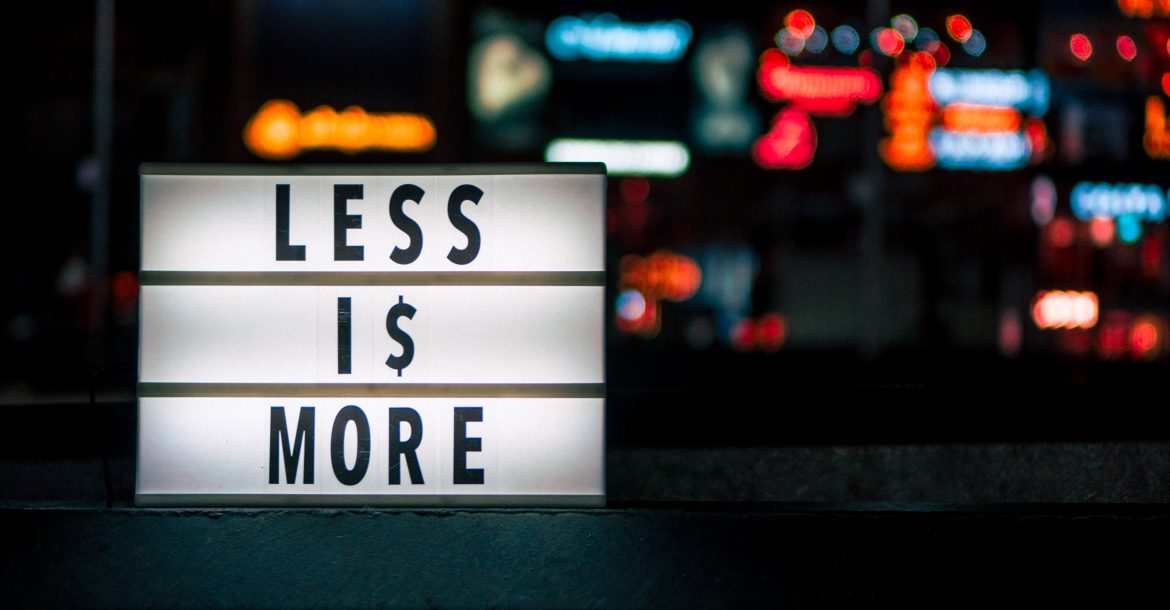

We have often heard stories from our elders who claim that life “during their times” was so much easier – even without all the fancy technologies of today. Despite their limited resources, they say, they had a content satisfactory life. We often tend to label all such recollections of the past as clichéd romanticism. But if we take a moment to really ponder, is there an insight from their stories we can imbibe?
Studies have shown that everyday decision-making, like what to wear, what to eat, and what to watch on Netflix can induce anxiety. In our consumption culture, as we accumulate more stuff and possessions, we are also increasing, on an almost daily basis, the choices we need to make. The abundance of options often confuses the mind to the extent that making a decision seems impossible. Dr. Vishton, Associate Professor of Psychology at William and Mary, states that “having too many options can cause loops of confusion.”
In addition to physical clutter, we now own an ever-expanding collection of digital clutter through the daily accumulation of digital data in various formats. Decision-making, thus, is becoming more stressful and energy-intensive.
Read More
- Before MBAs and marketing: Timeless business lessons from Prophet Mohammed
- What Shakespeare knew about economics before economists did
- Respect is earned, not expected: Rethinking the teacher-student relationship
- Never underestimate a woman who enjoys her own company
- Rethinking schooling in the age of Artificial Intelligence
American writer Kyle Chayka says that “stuff is the enemy of happiness, not because it overcrowds our spaces, but also starts a vicious cycle of equating our happiness with that particular stuff.”
Therefore, perhaps the limited options and choices may have indeed helped the previous generations live a more content life.
Adding value to life through lifestyle minimalism
The Japanese concept of minimalism, rooted in Zen philosophy, aims for inner peace through simplicity, focusing only on the essentials. “Ma” is another Japanese concept that focuses on the emptiness, the pause, as a space for reflection and growth.
While a Zen-level extreme minimalism may not be practical for most of us, we can all benefit from one aspect of it: lifestyle minimalism.
There is an inherent beauty and serenity in order, structure, and clean spaces. The universal appeal of this is evident in the global fame that Japanese author and tidying expert Marie Kondo received for her book The Life-Changing Magic of Tidying Up (2011).
Clutter accumulates not just dust but also takes up energy and time and leads to several negative emotions like stress, confusion, mood changes, and trouble focusing. An organized, clean space helps to feel grounded and balanced.
Yet, it is still a challenge to say no when a fancy item catches our eye. One reason we accumulate so much could be the misplaced meaning and importance we give to material possessions to feel happy or successful. Another could be a “fear of missing out” (FOMO) – whether it is a new trend in clothing, the latest tech device, or any of the numerous attractive items lining the stalls in online or brick-and-mortar shops. But if we shift the focus back to our life, relationships, and the values we seek to live by, it is easier to mitigate the trap of materialism.
So, the next time before you swipe your card at a billing counter, do yourself a favor and ask these questions to yourself –
- What value is this item bringing to my life?
- How does this purchase make me feel?
- Am I filling a real need or an emotional void by buying this thing?
- Am I ready to eliminate something else from my life in its stead?
And as for the stuff that is already taking up space in our homes and digital devices, the solution is continual and planned decluttering. Review your possessions periodically, asking –
- Do I still need it? Is it serving me any value?
- Am I keeping it for a just-in-case scenario?
- Can I upcycle or recycle this?
- Can I give this away to someone who needs it and will have a better use for it?
- If it has served its purpose, can I throw it away?
Understanding the impact of minimalism on peace and well-being, nowadays, decluttering has moved beyond a household chore to a self-care routine itself. It also serves to truly connect with and value our time and resources and practice mindful, sustainable living.
Take Away
We are already living in hectic times, and the least we can do for ourselves is to have a free mind and clear living spaces. Though an entirely minimalist lifestyle may not be everyone’s cup of tea, practicing some of its principles, such as decluttering, can give much-needed grounding and peace. If we are what we own, then lifestyle minimalism teaches the art of adding a conscious definition to our lives.
Dr. Baby Sam Saamuel is a well-known business mentor, management consultant, social entrepreneur and turnaround specialist.





