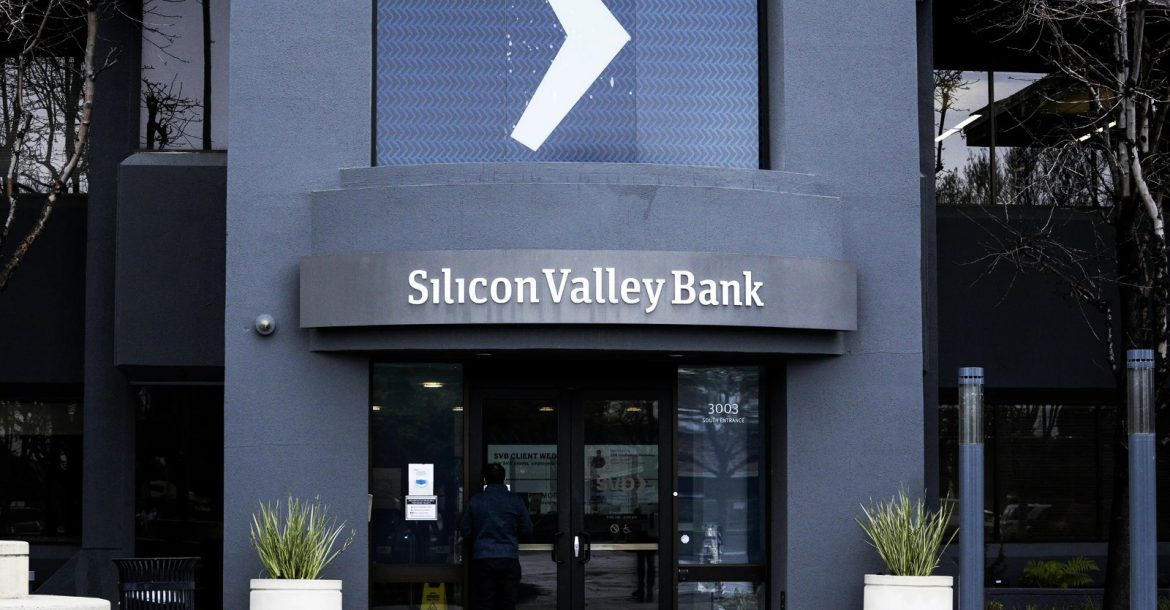

Is Silicon Valley Bank comparable to Lehman Brothers? Does this appear to be a new financial crisis like what we faced in 2008?
In order to analyse a field, it is imperative to understand its history. In addition to being a member of the FDIC (Federal Deposit Insurance Corporation), Silicon Valley Bank is a member of the Federal Reserve.
In terms of Silicon Valley Bank’s evolution or milestone, it is important to understand that the Bank’s history indicates that it began functioning in 1983 after being created by Bill Biggerstaff and Robert Medearis; it began trading stocks in 1984 in an over-the-counter setting.
Read More
- Before MBAs and marketing: Timeless business lessons from Prophet Mohammed
- What Shakespeare knew about economics before economists did
- Respect is earned, not expected: Rethinking the teacher-student relationship
- Never underestimate a woman who enjoys her own company
- Rethinking schooling in the age of Artificial Intelligence
During 1987, it began trading under the symbol “SIVB” on Nasdaq. In 1993, John Dean was appointed president and CEO, and the premium wine practice was established in 1994. It is estimated that around $38.5 million was raised in cumulative trust preferred in 1998.
It has been reported by several sources that Silicon Valley Bank’s financial crisis occurred after it failed to raise $2 billion in capital to stabilize its finances.
What led the bank to this point?
Furthermore, depositors withdrew their money because of rumors, suggesting the bank was insolvent.
Asset and Liability Management (ALM), which is the sensitive area in banking, will lead to collapse once the bank fails to understand and practice it. It will be a serious problem in ALM if there is a mismatch. It became apparent that Silicon Valley Bank’s assets were locked in a slightly longer-term investment, preventing them from immediately liquidating their investments and returning depositors money.
A financial mismatch is a dangerous factor, and banks are built to deal with it, hence I will focus on the mismatch between assets and liabilities in the Silicon Valley Bank case study. Bank deposits are the main source of funds for banks, and while some may have longer terms, the vast majority can be withdrawn without prior notice, at any time. In contrast, making loans is the main way in which banks use funds, and most loans have a life in the range of one year for commercial loans, as an example, and 10-30 years for mortgage loans.
Compliance, Internal Audit, and Risk Management are all important control functions for protecting banks against collapse. It was revealed from the sources that Silicon Valley Bank did not have a Chief Risk Officer in 2022. How did the bank come to the decision to make the CRO position vacant?
Having read one of the Guardian articles concerning Silicon Valley Bank’s crisis, it was mentioned that the management was hiding something; didn’t want to disclose something, or had disagreements over the risks the bank was taking. What led the management to conceal information and mislead stakeholders? Can other banks’ managements learn from such cases and safeguard their assets so that stakeholders are confident in the management?
In the case of Silicon Valley Bank, much can be learned. Firstly, the bank’s management should steer it in the right direction and all risks should be well measured and calculated. Secondly, it is also imperative that the control functions, compliance, risk management, and internal audit do not fall under the influence of anybody within the bank, as these roles should be independent. The third thing to remember is that Asset and Liability Management must be well understood and applied.
In order to make a wise investment decision, investors must be aware of their banks’ history and management over the past five years. It is crucial for investors to know the direction the bank is heading in. It is possible that the financial reports will mislead, in this case, investors should go in depth with their third eyes to find out whether the financial report is accurate.
Disclaimer : The opinions expressed within this article are the personal opinions of the author. The facts and opinions appearing in the article do not reflect the views of TAS and TAS does not assume any responsibility or liability for the same.





