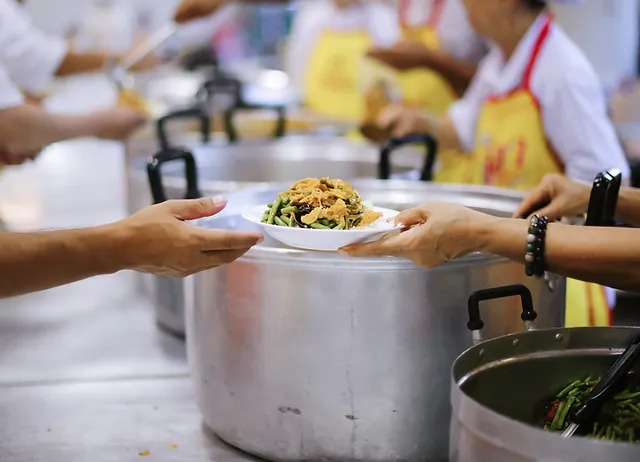

I have not seen him, I have not heard him, but he is there everywhere. I know it’s just a feeling that a little boy is staring at me through the window whenever I sit in a café or restaurant, but he haunts me. ‘Maybe he is starving… or that the delicacy on my table is from a world alien to him…’ my inner being tells me.
As I flip through the menu, I feel kind of horrified. With the delicacies known and unknown, it reads like an epic poem with words and phrases that I could not even imagine. As I wait for my order to be served, I go back to that invisible boy. I’m sure it is not just a feeling… there are such kids, and even grown-ups, in many countries I have travelled to. Some of those images of starving children that appeared in media have come to life in front of my eyes during such travels.
As I prepare myself for the fasting, in the holy month of Ramadan, which guides us through the path of holiness throughout our life, such images flash through my mind. The heartbreaking images of poverty, hunger and starvation… Why such images haunt me, I often wonder. This, naturally, leads me to another question, or rather introspection. Should we celebrate the luxury of food when there are millions literally starving?
In a few minutes, our dining table would be full. After we have our sumptuous dinner, the table will be like a battlefield… at least one third of the ordered food goes to waste, in many cases. My family and I are not an exception, though I try my level best to prevent food wastage.
Read More
- Before MBAs and marketing: Timeless business lessons from Prophet Mohammed
- What Shakespeare knew about economics before economists did
- Respect is earned, not expected: Rethinking the teacher-student relationship
- Never underestimate a woman who enjoys her own company
- Rethinking schooling in the age of Artificial Intelligence
I’m sure the very concept of Ramadan fasting is associated with imbibing the pain of others and sacrificing our luxuries. If we can keep that luxury away from the dining table and spare whatever we have saved on that count with the needy, we will be the cause of a smile over the face of another family.
Ramadan needs a long menu, I feel. I am not saying that you should not dine out; but why not invite a deprived family for dinner this time and make the dining table a space for connection and community building, thus grooming your children to empathize with the world of the lesser privileged? Certain qualities begin at home, not just charity!
As the image of the deprived boy enters my thoughts over and over again, what Booker Prize winning novelist Ben Okri wrote in his celebrated novel ‘The Famished Road’, reverberates within me: “The only power poor people have is their hunger.” Till a few years back, what he said was just part of a fiction for me, but after visiting Africa, as part of my profession, I personally realized what he said: The Famished Road is a road to reality!
On many days, I have bought food and given it to the children dwelling in a hut in the vicinity of the hotel where I stayed. They devour the food with great enthusiasm. I read a strange sensation in their eyes. Is it greed? No, it is hunger.
No, I am not a benefactor, and even the sense of empathy I have towards them is not sufficient because the life we build for ourselves is also the result of their sweat. So the little eyes haunting me everywhere is more of a reality, a warning signal about the luxuries that we practice on the dining table, when the skeletal beings beg on the pavements for a slice of bread.
When we realize this and be one with them, eating will become more of a spiritual activity than a physical fight!
How to Eat? It’s not me who has the answer. It’s the (late) Buddhist Monk Thich Nhat Hanh who said, “Don’t chew your worries, your fear, or your anger. If you chew your planning and your anxiety, it’s difficult to feel grateful for each piece of food. Just chew your food.” And he further said, “In this food, I see clearly the presence of the entire universe supporting my existence.”
Once you are able to imbibe what he said, you will also be able to bring about mindfulness in your eating habit, which makes you simpler, not just at the dining table, but in every step you take. And there happens the biggest sophistication in life, which makes you a better human being. When I realize this, I understand that the boy who peeped through the window was my own conscience, and not an apparition. There, every bite I take becomes a prayer…





