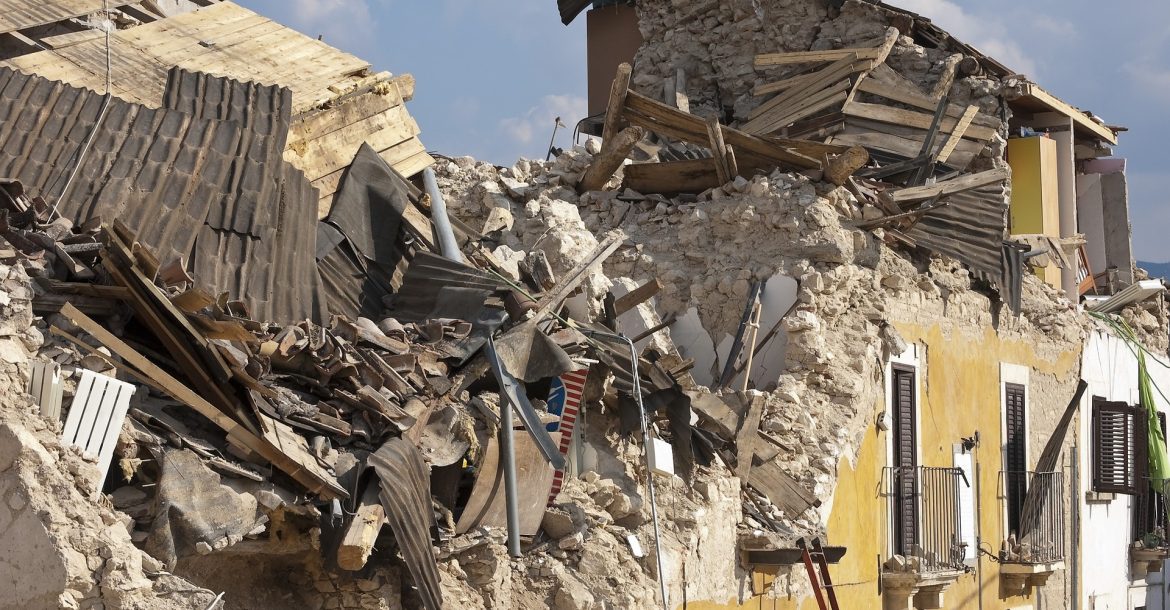

In my childhood, earthquake was something that happened only in the newspapers; however, their seismic impact was directly on us. We shared the myth of a bull that holds the globe called Earth on one horn and switches it to the other horn when it gets tired of holding it up for long, thus causing an earthquake! Stories are nice to tell and read, and it is easier to create myths than logically explain things. So we kids took such myths for granted.
Then I read a small book for kids, which was a compilation of short stories about a boy called Kunjayan. Unlike us, Kunjayan was logical to the core, and when his teacher narrated the story of the bull, as if it is pure science, Kunjayan had a simple question: If so, why do earthquakes only happen in certain places when the bull switches the Earth to the other horn?
That was the question which reverberated in me, though it took time for me to get out of the ‘bull’ story and come closer to logical answers.
Read More
- Before MBAs and marketing: Timeless business lessons from Prophet Mohammed
- What Shakespeare knew about economics before economists did
- Respect is earned, not expected: Rethinking the teacher-student relationship
- Never underestimate a woman who enjoys her own company
- Rethinking schooling in the age of Artificial Intelligence
Then I read stories about small houses in the seismic zones, which are said to be less dangerous when the catastrophe occurs. But despite this, every year earthquakes recur in certain places and the same cities and villages get devastated over and over again!
Even after escaping from the clutches of the myths to embrace reality, the same old question kept on haunting me. Why do we fail to save people from the disaster? When science is developed, why do we not have a system in place to prevent the aftermath of the disaster?
This is not the question of earthquakes alone. The scenario is similar in most natural disasters, which are only getting intense year after year – apparently because of our ‘inorganic’ approach towards development. We keep on hearing the tragedy of the people living along the coast, but no sustainable measure is taken in many places to address their problems.
The other day, when I was reading about the devastating earthquake measuring 7.8 on the Richter scale that hit Turkey and parts of Syria, killing thousands and rendering lakhs of people homeless, once again I pondered over the same old question. Yes, we have no control on natural disasters – it can befall us anywhere anytime, but there can be some measures to lessen its impact.
Are all earthquakes natural? We cannot assertively say ‘yes’! Look at Joshimath in India, where the land is cracking thus damaging the buildings. Yes, this is not because of the earthquake; this is because of the indiscriminate construction activities in the name of development, on the hilly terrain that is highly sensitive. Such disasters can definitely lead to earthquakes too; such devastation is human induced and we have to think of the ecology and topography while introducing such activities. There are mines that go deeper into the ground thus leading to similar disasters; there are huge development projects that disrupt the fragile ecosystem along the hilly terrains. All these activities can be counter-productive, but despite knowing this, we go on with our ‘development mantra’ putting humanity at risk.
There should be a global protocol to mitigate the impact of natural disasters, which can be customized in tune with the topography of each place. Also, there should be a clear system in place to prevent hazardous development activities and also the activities like mining beyond a certain limit. In order to act against such indiscriminate activities, the governments should be committed to the cause of humanity and the life at large. From dams to roads to skyscrapers, everything has a certain role in causing natural disasters. We cannot prevent development, but we can be sensitive to the ecosystem and plan things accordingly.
Also, there should be a pedagogic approach to teach the children about the importance of disaster management and how to act pragmatically in case of an eventuality. Instead of creating myths, we should induce logic in matters like this.
When there was a flood in Kerala in 2018, the problem we faced was about handling the situation in the first stage. We were not prepared to handle such a situation. If there was a system in place, we could have handled it in a better manner, even though authorities tried their best to prevent the mishap from escalating further.
Also, there should be machinery in place globally to handle an emergency situation and deploy experts on war footing. Yes, there are deployments taking place in case of disaster even now, but it could be streamlined further.
Additionally, we should consider the economic impact of disasters and set up a corpus globally. Only then we can say that wealth is also about humanity.
Disasters happen locally, but help and assistance should pour in globally. Yes, this is the time to think globally, act locally and save humanity from catastrophes.





