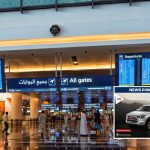
Flights waiting for signal to land… Loaded air carriers in queue in the apron to take off… Near miss air collisions… excess fuel usage… air pollution and noise pollution. Sorry, I am not gathering everything negative in one go to upset anyone. Rather I would draw your attention to a reality.
While the concentration of air carriers poses huge traffic snarls and associated issues in many overcrowded airports in some of the developed regions, there are other airports which are almost deserted. Not every airport is equal before the airline operators and authorities, if the data available with various organisations and agencies are any indication.
While surfing through the details of the flight from Muscat to India, I was surprised to see most of the flights are to the prime destinations like Mumbai, Delhi, Bangalore, Goa, Hyderabad, Kochi and Calicut.
Read More
- What Shakespeare knew about economics before economists did
- Respect is earned, not expected: Rethinking the teacher-student relationship
- Never underestimate a woman who enjoys her own company
- Rethinking schooling in the age of Artificial Intelligence
- Reeling from endless social media content? Pause the doomscroll, rewind to screen-free time
Why so many flights to the same destinations, ignoring many other airports that lay deserted? Why not an equal distribution to facilitate the passenger convenience and revenue sharing? Yes, some destinations are naturally more in demand, depending on the passenger density, but this is not the case of every single airport ignored for various reasons.
Take for example the case of Kerala, where ‘every other household’ has a person working in the Gulf, and there are four airports with international status in the state. But when we look at the actual state of affairs, most of the air carriers focus on Kochi and Kozhikode while the other two, Kannur and Trivandrum, are yet to get their slice of the pie.
Moreover, among the privileged two, Kozhikode again is less advantaged, as the airport does not have permission for wide-bodied aircraft citing concern about safety requirements, especially after the mishap in August 2020.
Then, coming to Kannur, the youngest of the lot, it is yet to get the point of call status, due to which foreign airlines cannot operate from here. This means here also the small aircraft operated by the domestic carriers land, thus causing huge revenue loss for the airport and multiple inconveniences to the passengers. Operating wide-bodied aircraft is more economical in all aspects.
For the cargo operations also it is more beneficial. But entangled in red tape, many airports are yet to rise up to the optimum utility. If Kannur is developed properly, it could cater to a huge catchment area including some part of Karnataka such as Coorg, apart from the northern part of Kerala.
If we analyse the scenario elsewhere, we could see more or less the same situation there as well. When the skies are open in most parts of the world, why we follow some archaic rules? Why are the authorities hesitant to decentralise the services to cover more destinations? If an airport has safety issues, it could be addressed in many ways instead of pushing it to revenue loss.
Since the national carrier, Air India, has been privatised, the authorities should be more open in improving the scenario to generate better revenue and offer better facilities to the passengers. But some vested interests may be playing behind the scene, if the allegations raised by the officials of these less privileged airports are any indication.
When there are better opportunities for all the airports, and more operators are roped in, it would naturally give better choice to the passengers, thus leading to healthy competition and benefit to everyone.
Further, the service would improve and also the exploitation like peak season price hike would be curtailed to a certain level. When the fares come down, naturally more people would use the service and it would benefit the operators. This in turn would improve the allied industries, thus creating more job opportunities as well.
Moreover, there should be some connecting facility for the international passengers for the local destinations. If we land in one airport and have to catch a bus or train that requires overnight travel, it is not very convenient for many. If there is a connection flight to a nearer airport, it would definitely benefit the passengers.
Of course, airline industry is a business, and business means revenue. However, if you have innovation with humanitarian values, revenue will naturally improve thus benefitting everybody without bleeding anybody.