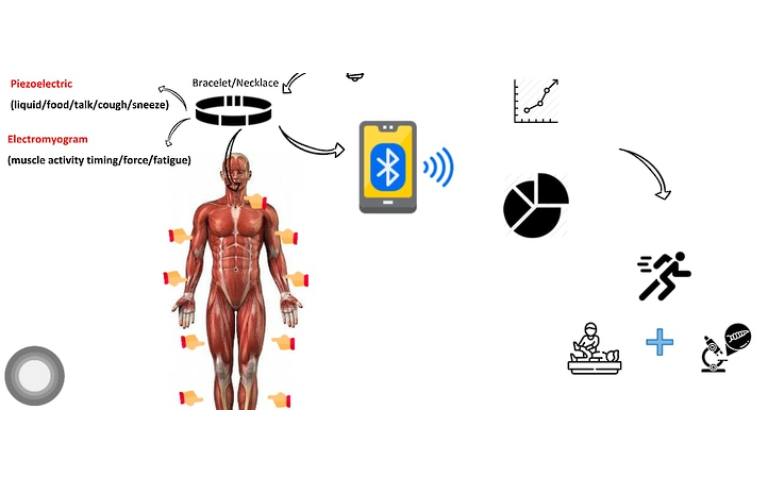

MUSCAT: Omani national Khawla Bint Ali Al Amriya has invented a smart bracelet to measure muscular effort which is an alternative to the old medical devices used for the same purpose.
The Omani innovator said, ”The innovation contains two types of sensors — the piezo, which works during the movement of the neck muscles and emits different vibrations while drinking, eating and speaking, and the individual can know the amount of water consumed. The EMG sensor measures the transmitted nerve signals to muscle and gives reading of muscle activity, time, and effort.”
She added, “All the sensors are connected to a smartphone (Android or Windows) via bluetooth or USB and are further analysed using a mathematical system.”
Read More
- Oman’s CPA shuts marble and ceramic trading firm in Rustaq over consumer complaints
- Saudi Airlines to launch direct Muscat-Riyadh flights from October 27
- Oman, Saudi Arabia to strengthen economic partnership at 7th coordination committee meeting
- Consumer Protection Authority seizes 1,236 non-compliant school products in Muscat
- Future Fund Oman invests RO 4 million in Maternal and Fetal Care Centre in Muscat
“The idea behind this innovation stemmed since the Scientific Research Council announced the Falling Walls competition. I am interested in the field of scientific research and development, and I researched for some ideas which lead me to success, especially in the digital field,” Khawla Bint Ali Al Amriya said.
She pointed out that in some hospitals, a wired device is used to measure muscle tension and is analysed by a large computer. The idea was to replace it with a bracelet that contains the same sensors used, but in a futuristic way.
The goal of this innovation is to measure muscle effort and predict the approximate amount of water and food consumed. The innovator also hopes that the smart bracelet will be available to all those who are interested in strengthening their muscles in sports, medical research, physical therapy and rehabilitation.
Speaking of the challenges she faced on her road to innovation, she said, “I faced quite a bit of difficulty in understanding the sensors and analysing the data. The lack of supportive parties for the idea was also felt. The manufacturing of the prototype was delayed.”
The aspirational innovator is keen on approaching a digital company for investment opportunities. This innovation secured third place in the ‘Falling Walls’ competition organised by the Ministry of Higher Education, Scientific Research and Innovation.





