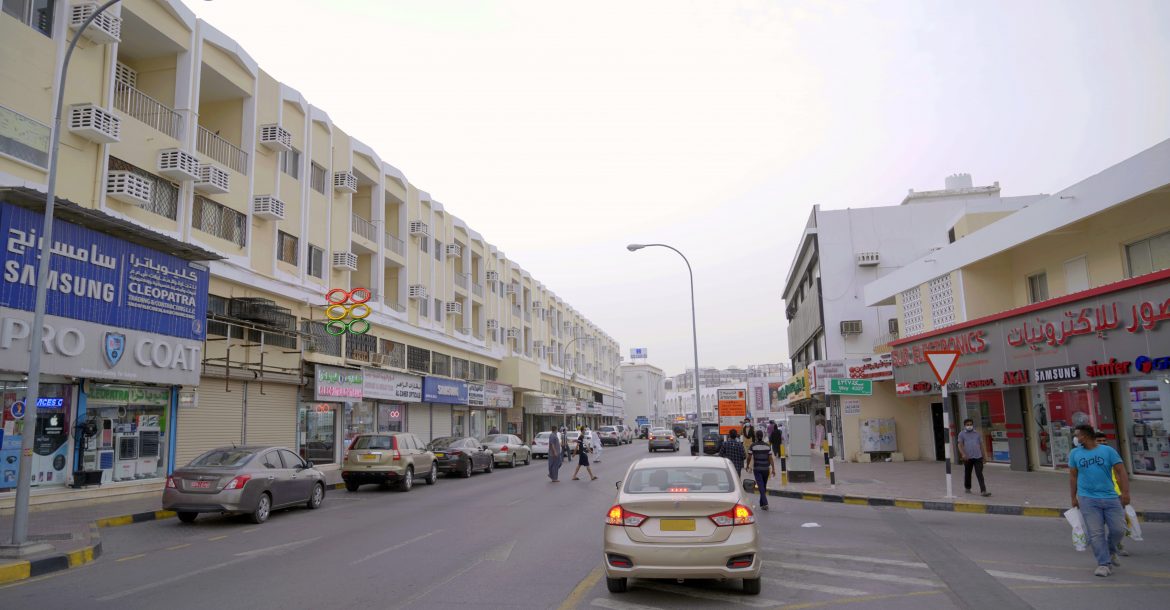

MUSCAT: Arjun Gopalan was preparing to travel to India last week to meet his ailing mother but had to cancel the trip as his passport was seized by a money lender in Muscat.
Arjun who is running a business had borrowed OMR 2,000 when he was in a financial crisis due to the pandemic last year in return for an exorbitant rate of interest. “They were asking for gold as a guarantee but since I didn’t have that, they asked me for the passport and two cheques each of India and Oman,” Arjun said speaking to The Arabian Stories (TAS).
“They told me to repay the full amount including the interest for 12 months which comes to a total of OMR 3,440 in order to get the passport and the cheques back. At this stage, that is a huge amount for me,” Arjun said.
Read More
- Omani man detained over unauthorised marriage promotion on social media
- His Majesty Sultan Haitham champions dialogue and peace in Windsor speech
- Former Times of Oman Sports Editor TK Mohandoss passes away
- His Majesty Sultan Haitham tours Royal Collection exhibition with King Charles and Queen Camilla
- Oman’s Dhank signs five development agreements worth about RO200,000
In the wake of Covid-19 crisis, loan sharks continue to victimise cash-strapped expats despite strict laws against the practice. Borrowers like Arjun are mostly from the Indian subcontinent.
Speaking to TAS, Advocate Pradeep Mannuthy, Partner and Senior Legal Adviser, Mansoor Al Fazari Law Firm said it is illegal and criminal to engage in unlicensed money transfer activities as per the Omani law. “As per the law, no person shall engage in banking business in the Sultanate as either a domestic or foreign bank, or practice any other banking activity whatsoever unless such a person has been granted a license by the Central Bank,” Advocate Pradeep informed.
Rajendran Pillai, another Indian expat took money from a private lender, who also hail from his home state in Kerala has a harrowing tale. “My business was badly affected due to Covid and had to urgently send money to India for my daughter’s marriage. I borrowed OMR 1,000 for a shorter period but the person warned me that I will have to pay OMR 120 every month. In return, I gave them my cheques and passport. It’s been 12 months and I still haven’t paid back. Now it has piled up to OMR2,440. I really don’t know when I will be able to pay back,” Rajendran said.
Advocate Pradeep explained the law: “Any person who violates the law (private personal money business) will be penalised by a fine of not less than OMR 100 and not exceeding OMR 250 for each day of violation in addition to imprisonment for a period not less than 10 days and exceeding 3 years or by one of the two mentioned penalties plus the closure of the place wherein he practices the banking business.”
Speaking to TAS, a senior Royal Oman Police (ROP) official said while it is illegal to practice such activities, “in most cases victims do not report such issues fearing backlash.”
“We urge every one to stay away from these loan sharks and where possible, inform the authorities about these individuals and groups so we can stop their insidious practices,” the ROP official said.
According to Mansoor Ali, who was a victim of loan sharks said financial predators keep a stranglehold on borrowers and their families back home. “When you fail to pay back the money, they threaten our families back home. In my case, I took a huge loan from one of the money lender in Muscat and ultimately, I gave my property back home in the name of this money lender,” Ali said. “That property was build on my hard earned money and that’s gone,” added Ali.
Meanwhile, popular social worker PM Jabir said common strategy used by loan sharks is to demand passports as collateral or to guarantee a loan. “I have come across many stories including many women who were trapped because of these money lenders. Especially in this time of the pandemic even many businessmen also fall in their traps by giving them blank cheques to borrow money,” Jabir said.
“There are many people I know pledged their property in their native place and ultimately these money lenders grabbed them. Though it usually happens to many Keralites from the Indian community, nowadays even Bangladesh nationals are victims too. I know a vegetable vendor who was shattered after he got trapped in this scam. These people (money lenders) are not even ready for negotiations. I did try few times to talk to them but they simply don’t accept. All I would like to advice people is to be careful and avoid dealing with these illegal money lenders. When you know it is a crime, don’t be forced to be a victim,” Jabir added.





