

Khartoum: Sixty people were reported to have been killed in the military crackdown in the capital Khartoum, before scores of bodies were found dumped in the river by the paramilitary Rapid Support Forces (RSF), said the CCSD, which is close to the protesters.
The death toll from Monday’s attack on the sit-in of Sudan’s pro-democracy protesters has risen to 100, after 40 bodies were recovered from the River Nile, according to the Central Committee of Sudan Doctors (CCSD), CNN reported.
Sixty people were reported to have been killed in the military crackdown in the capital Khartoum, before scores of bodies were found dumped in the river by the paramilitary Rapid Support Forces (RSF), said the CCSD, which is close to the protesters.
Read More
- Travel agency representative in Muscat jailed, agency shut for a year over cancelled trips
- Oman’s CDAA urges mountain safety after foreign national critically injured in Jabal Shams fall
- Oman’s media must adapt to AI while upholding accuracy, minister says
- Oman forecasts thunderstorms from October 25 as low-pressure trough approaches
- Oman, UK agree to deepen defence, investment and technology partnership
The head of Sudan’s ruling military council, Lt. Gen. Abdel Fattah al-Burhan, has ordered an investigation into the deaths.
The demonstrators have demanded that the Transitional Military Council, which has ruled the country since troops ousted longtime President Omar al-Bashir in April, make way for a civilian-led interim body.
Eyewitnesses said that the police and RSF shot at protesters on Monday. Several videos showed security forces beating people with sticks. The internet has been blocked in places across the country by major providers.
By Tuesday, Khartoum’s streets were quieter. Sudan is now celebrating Eid al-Fitr, a Muslim holiday marking the end of Ramadan.
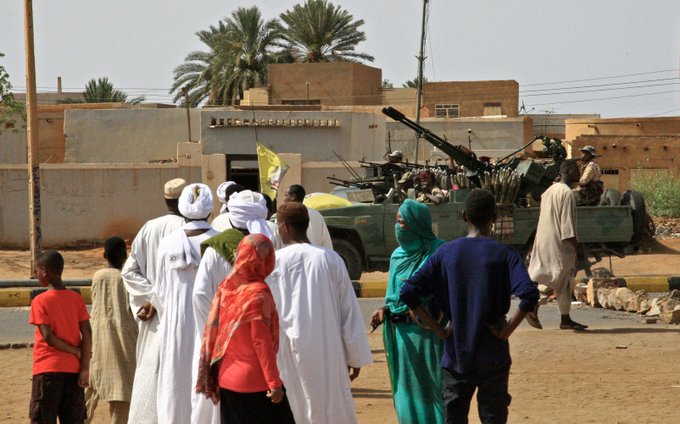
Locals block a street to stop military vehicles entering their neighborhood in Khartoum on June 4.
Despite that, the CCSD said, one woman had been killed by a stray bullet in her Khartoum home on Tuesday.

Monday’s attack has drawn international condemnation, including from United Nations Secretary-General António Guterres.
After April’s coup, the military council and opposition groups agreed on a three-year transition to democracy. But on Tuesday, al-Burhan called for national elections within nine months.
The only way to rule Sudan is through “the ballot box,” the council leader said in an address on state TV.
In a speech broadcast on Sudan state-run TV on Wednesday, al-Burhan apologized to Sudanese people and said that “all involved in the events that lead to the disruption of the protests site will be held accountable and brought to justice.”
He called on all people of Sudan “to turn the page of the past and reopen a new page to reach a better future of our country,” adding that the ruling council is willing to start fresh negotiations with opposition groups.





