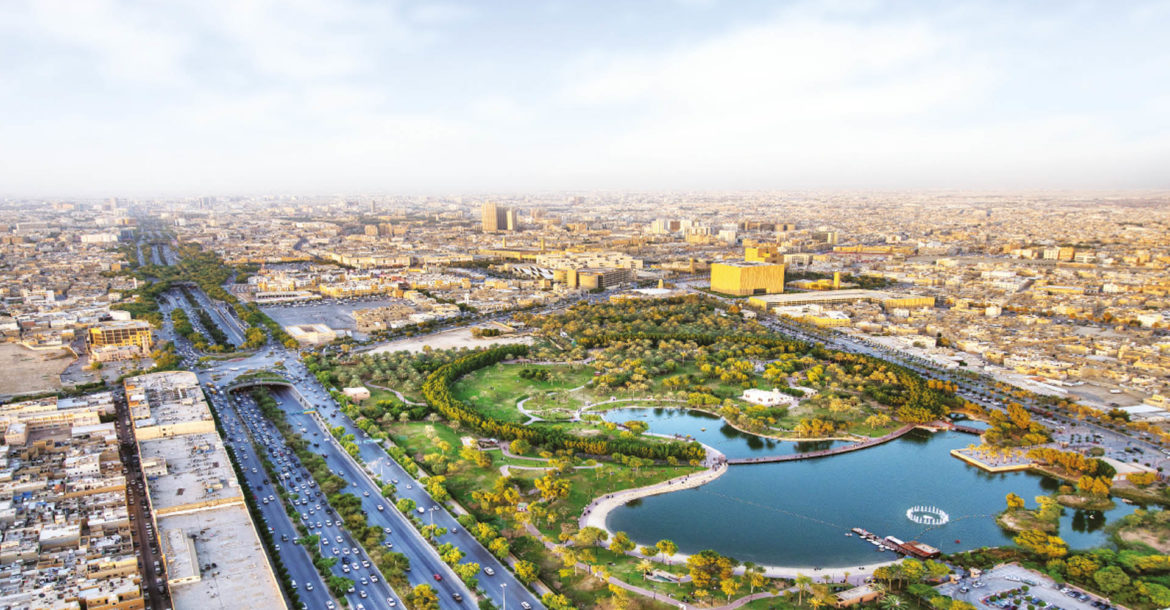
Saudi Arabia launched an ambitious $23 billion project on Tuesday to create vast open green areas in the capital, Riyadh, including the world’s biggest city park, according to Arab News.
The Saudi daily reported that construction will begin this year on four schemes — King Salman Park, Sports Boulevard, Green Riyadh and Riyadh Art — which will create sustainable communities, drive action against climate change and provide up to 70,000 new jobs.
The aim of the project is to “significantly improve the lives of its citizens, transform the city into an attractive destination and make it one of the world’s most livable cities,” the government said.
Read More
- IndiGo cancels Riyadh flights until October 31, 3 other Saudi routes until October 27 amid evolving security situation
- UAE closes all beaches in Umm Al Quwain after tanker oil spill detected
- Earthquake of Magnitude 7.0 Strikes Tibet; 16 Dead, 32 injured
- Nigeria reports first imported Ebola Bundibugyo case in Abuja: WHO
- US midterm voting begins in Texas as Democrats target historic gains
The four projects – King Salman Park, Sports Boulevard, Green Riyadh and Riyadh Art – will complement the Saudi Vision 2030’s “Quality of Life” Program and are aligned with the UN Sustainable Development Goals, to create sustainable cities and communities, while driving urgent action against climate change.
Developed with a government investment of $23 billion, the four projects will offer opportunities worth $15bn for the private sector to invest in residential, commercial, recreational and wellness projects.
As well as creating tens of thousands of new jobs, the project will also help boost efforts to improve the city’s health and wellbeing with a commitment to wellness, health, sports, culture and the arts, underpinned by a commitment to environmental sustainability.
The project will transform the environment and make Riyadh a more sustainable city, Dr. Fatma Alaish, assistant professor of ecology and environmental pollution at Jeddah University’s biology/botany department, told Arab News.
“Planting cities reduces air pollution as plants undergo photosynthesis and absorb carbon dioxide gas,” she said.
“This will decrease the amount of carbon dioxide in the air, a poisonous gas that negatively affects air quality, mixed with dangerous car emissions, and heavily contributes to global warming. With more planted green areas, there will be less pollution.
“The more you plant, the better the weather, the cleaner the air and the more sustainable life will be in cities.”
Measuring 13.4 square kilometers, King Salman Park will be the world’s biggest park, with residential areas, hotels, and will also feature a Royal Arts Complex, theaters, museums, cinemas, sports venues, water features, restaurants and an 18-hole Royal Golf Course.
The park will also boast several landmark assets, including the Riyadh Fountains and a Vertical Garden. As an environmentally sustainable urban development, it will offer opportunities for the international community in arts, entertainment and culture.
One of the world’s largest urban greening projects, Green Riyadh will increase Riyadh’s green cover with 7.5 million trees.
The massive planting project will help increase the city’s green cover from 1.5 percent of Riyadh’s total area to 9.1 percent – that is approximately 541 square kilometers by 2030.





