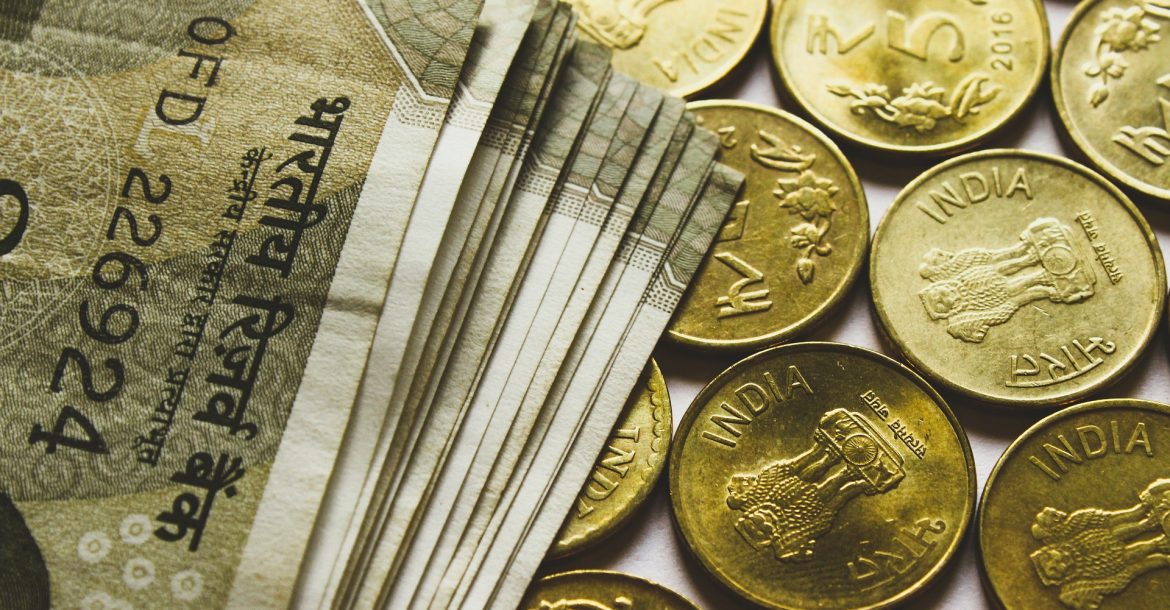

Indian Rupee has breached the psychological mark of 80 to the US Dollar and continues its downward spiral to the consternation of economists, policymakers, politicians, corporations, traders and stock markets alike. In a globalized world where economies are interconnected and interdependent with seamless capital flows and falling trade barriers, exchange rate fluctuations impacts the economy and the common man in myriad ways. Currency depreciations generally warrant interventions from the central bank and the government to stabilize the economy from a probable tailspin as it puts enormous pressure on the ‘precious’ foreign exchange reserves and widening of the current account deficit (CAD).
India, historically is a net importer economy and therefore the current account which, is a summary of the nation’s transactions with the rest of the world – net trade in goods and services, net earnings on overseas investments and net transfer payments – are always in deficit. While there is a general perception and a national discourse that a weakening Rupee is advantageous for exports making it competitive in global markets, the reality marks a point of departure. Around 40% of Indian exports are essentially ‘re-exports’, where it imports raw materials, semi-finished goods and components, adds value in pipeline and subsequently re-exports the finished product. A weakening Rupee makes the imports expensive and if it is a global intermediary good like crude oil, will cause inflation to hit across the board sectors of the domestic market. For indigenously produced goods and services that are exported, India is mostly a price-taker in global markets. A classic case is gold where India is the world’s largest importer and consumer but bullion prices are benchmarked and set in London and New York markets despite the fact, that India imports 700-900 tonnes annually at market values between $35-40 billion.
To become a price setter in global markets, requires a country to be more than a largest exporter or importer of merchandize and services, but rather entails streamlining of policies that address inherent weaknesses and challenges in the system. These include but not limited to policy predictability and continuity, transparent physical market that is organized and enables data gathering by independent agencies, robust quality assurance system benchmarked on global best practices, unrestricted trade flows, being an integral part of global value chain, strong regulatory oversight and currency convertibility. If India cannot be a price-taker in world markets for its export portfolio, then during currency depreciations, global buyers often resort to hard negotiation tactics, to lower the price, under the pretext that exporters are already benefiting from depreciating Rupee.
Read More
Structurally, India is a current account deficit economy and balance of payment (current account + capital account) surplus that corroborates the surge in dollar denominated foreign capital flows into the country. This has led to surging forex reserves and strong forex defense (months of import cover) but since it is mostly dependent on the capital account, translates into a liability rather than an asset. This is in sharp contrast to the Chinese economy as their forex reserves are an asset due to the current account surplus. China being the factory of the world, exports a wide basket of goods compared to India. When interest rates in the US were zero-lower bound due to the unconventional monetary policy initiative of quantitative easing by the Federal Reserve, capital looking for better returns have parked their funds in India.
As a consequence of the expansionary fiscal policies and Keynesian fiscal stimulus to combat the Black Swan event of Covid-19 commercial meltdown, the US economy recovered faster than other G20 nations. But, the economy is currently caught in the maelstrom of inflation which is at a 40 year high at 9.1% in the consumer price index. The US Federal Reserve has resorted to monetary policy tightening by increasing the federal funds rate (repo rate in India) to 75 basis points to tame overheating of the economy and also by removing monetary accommodation. This has led to a narrowing of interest rate margins between US and India, and subsequently Foreign Portfolio Investors (FPI) have pulled out a whopping $35 billion in net outflows from both equity and debt markets according to data compiled by the National Securities Depository Limited. This is another factor that has put downward pressure on the Rupee.
The Russia-Ukraine war has impacted global economies as an exogenous shock, causing crude prices to rise, dwindling forex reserves and the ensuing supply chain crisis has reverberated across global economies in varying magnitude. The escalating crude oil prices have increased India’s current account deficit, (due to high import prices and not import volume) and have forced the government to cut excise duty on crude oil, to rein in the spillover effects of inflation in the economy. This forfeiting of windfall revenue has bearing on the fiscal deficit, which is already overstretched to more than 9% of GDP to make provisions and earmarking for fiscal stimulus packages during Covid-19 meltdown. A currency depreciation of Rupee more often than not results in the phenomenon of “twin deficits”, worsening both current account deficit and fiscal deficit.
Rupee depreciation could engender positive gains for certain sectors of the economy like IT, pharmaceuticals, garments, tea, steel and adversely impacting oil and gas, renewable energy, automobile, FMCG, consumer electronics, cement, telecom services and aviation. A disturbing trend has developed in recent years in the form of domestic inflation rising faster than international prices due to currency depreciation. Nominal Effective Exchange Rate (NEER) and Real Effective Exchange Rate (REER) are two indices that reflect this trend. NEER measures the unadjusted value of Rupee against weighted average of a basket of major foreign currencies of trading partners and is an indicator of its international competitiveness. REER is derived from dividing by a price deflator or index of costs, adjusted to inflation differentials of trading partners currencies and rupee. While NEER denotes the relative value of Indian Rupee, REER represent the real value, the actual strength of the currency against its multilateral counterparts. Generally, NEER and REER move in tandem, but since 2019, there has been a growing divergence between nominal and real values of rupee and REER is appreciating in relation to NEER. In economic terms, this translates as the gains accrued by a depreciating rupee from export competitiveness, is cancelled out by the rising inflation costs within the domestic Indian market.
Strategic and calibrated efforts in policy initiatives are warranted to diversify risk from the capital account surplus to current account one, transitioning from liability to asset. To accomplish that, the GDP output has to significantly rise, producing a wide basket of goods and services for the global market. The government should revive the “Make in India” program or as a preliminary step to gain traction, should envisage and plan for “Make for India” that will generate jobs, revive domestic demand, creating wealth, improve national income and GDP per capita. Its imperative to implement expansionary fiscal policies in the medium-term and continue with subsidies on fertilizers and slashing excise duties on crude oil, until inflation targeting is successful. New avenues of growth have to be explored since our expenditure pattern indicates that 75-80 % are pre-fixed in the form of salaries, pensions, defense expenditures, grants to states etc. India’s economic recovery is K shaped where the rich is getting richer, the poor is getting poorer, large companies are becoming larger and small companies are becoming smaller, leading to inequitable and haphazard growth. To reverse this trend and to have an inclusive decadal growth of 7% to 8% YOY, a recovery in the private capex cycle is indispensable. This is critical because growth generated by consumer leverage without real jobs and income generation risks volatility. Reviving economic fundamentals, introducing structural changes and enkindling the animal spirits are the keys to long-term growth and progress. A visionary government invariably should be the torchbearer leading the change.





