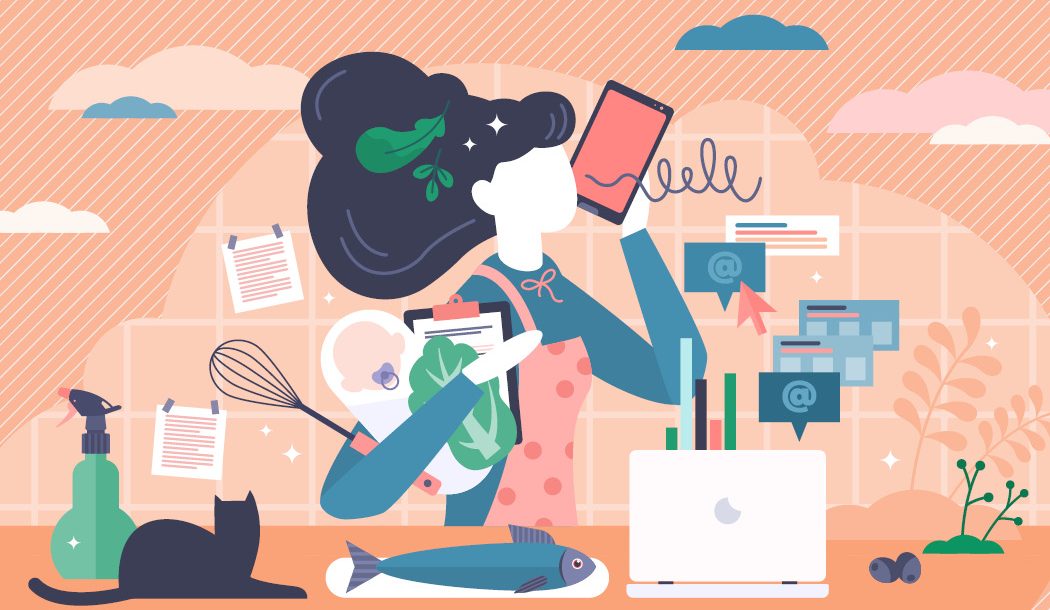

The work-from-home (WFH) revolution has given many women the first-time sense that they might actually be able to achieve the mythical state of having it all.
Having shorter or no commutes, spending less time on looks, and even less money on professional attire have given women the freedom to spend their time and money on things they really do want to do.
The ability to schedule their days so they may assist with their children’s projects in between Zoom meetings is a perk that hardworking women adore, erasing the invisible boundary between them and the stay-at-home population.
Read More
- From Runway to TikTok: How social media is changing the way fashion trends take off
- Maximalism Takeover: Why statement jewellery and loud heritage prints are outpacing quiet luxury in the Gulf
- Rest or avoiding reality? How Gen Z’s ‘Bed Rotting’ trend uncovers a global mental health crisis
- Here is why bedazzling is taking over your social media feed and has now made its way to Middle East
- How much sunlight is enough? Experts warn against overexposure
WFH – a friend or a foe?
This WFH utopia does come with a huge caveat, though. This increased flexibility creates a void that is soon filled with duties that were once more equitably shared between spouses as well as between individuals and the community they live in.
However, due to the extreme multitasking required by working from home and caring for the family and children, record levels of burnout have been reported. On a mother’s Zoom call more often than a father’s, a sobbing toddler frequently makes an appearance.
Women do laundry when they have a moment to spare between their hectic schedules. Women are disproportionately responsible for daily scheduling, schooling, and health-related decisions for their families in the face of a worldwide health crisis.
Burn out, much?
As a result, women are more prone than males to develop burnout, which has a detrimental impact on their experience working from home. The results of Deloitte’s 2022 Women at Work survey found that 53% of the 5,000 women polled said their stress levels were higher than they were a year earlier.
As much as 46% of people reported feeling overworked, and 33% took time off to attend to their mental health. 40% of women who are actively seeking new employment said burnout is the key motivator.
Most couples and families do not, however, divide the responsibility of domestic work equally. Despite the fact that both men and women work, women are more frequently expected to handle domestic duties and child care while men get to prioritise their careers.
Making work from home fairer for women
Not that women are treated unfairly by remote work per se. Instead, the circumstances surrounding our remote job are unfair. It can be improved in a variety of ways, according to experts:
By providing paid parental leave, the burden wouldn’t fall unfairly on women because both parents would learn how to care for their children. In order to ensure that both parents use their paid parental leave, it’s also crucial that it almost covers the wages they would otherwise forfeit.
Here’s another way to go about this — women’s labour would be less likely to be subordinated to men’s if they were paid equally to males. Businesses should consider just holding meetings between the hours of 10 am and 5 pm, without any weekend or lunch meetings.
The WFH concept should be a motivating factor to encourage more women to remain in the workforce than quit to prioritise family and health. For this work trend to bring positive changes in the female workforce, a thriving and positive family, social as well as work environment is detrimental.





