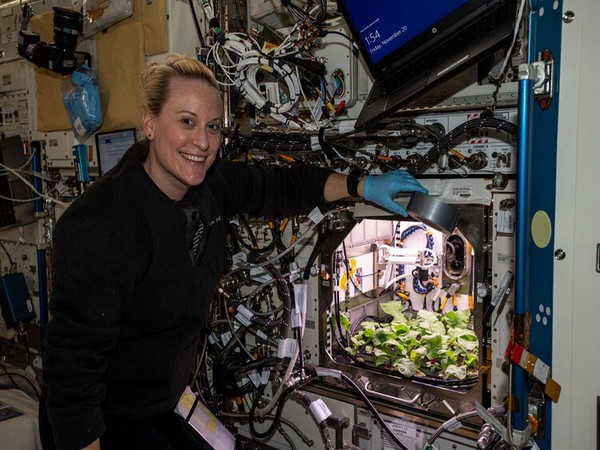

WASHINGTON (US): Located in Europe’s Columbus module, the NASA experiment is the latest in the study of plants growing in microgravity.
With plans to visit the Moon and Mars, future astronauts will need a regular, fresh source of food as they take on these missions farther away from home. In addition to providing much-needed vitamins and minerals, growing plants in space contribute to sustainability and add a homey touch to exploration.
Growing plants in the microgravity conditions of the International Space Station has allowed researchers to fine-tune the approach: European research showed plants respond best to red and blue light, giving the Columbus module a disco feel.
Read More
- UAE residents receive missile alert as air defences respond to threat
- Massive fuel depot fire in Iraq injures around 30, burns 3 million litres of gasoline
- Pakistan Supreme Court orders former Prime Minister Imran Khan to be moved to the hospital over health concerns
- Wildfire crisis deepens across Europe as France launches €12mn aid plan
- Indians in Qatar can now send funds directly to UPI-enabled bank accounts in India through Qatar Post outlets
Because plants no longer have gravity to root them to the soil, the seeds are grown in ‘pillows’ that help evenly distribute fertiliser and water to the roots.
Radishes were chosen because it is a model plant; they have a short cultivation period and are genetically similar to the plant most frequently studied in space, Arabidopsis. Radishes are also edible and nutritious, with this batch ready for harvest any day now. Samples will be sent back to Earth for study.
The Advanced Plant Habitat is a self-contained growth chamber requiring very little intervention from astronauts. It is equipped with LED lights, porous clay, over 180 sensors and cameras regulated by researchers at NASA’s Kennedy Space Center in Florida, USA. From there, plant growth is monitored and conditions adjusted as necessary to better distribute water and fertiliser and control moisture and temperature levels.
The next ESA astronaut to launch to the Station is Thomas Pesquet for mission Alpha. Slated to arrive in Spring 2021, perhaps Thomas will get to try another batch of space-grown greens. (ANI)
Liked this story? We’ll send you more. Subscribe to TAS newsletter and get stories delivered to your inbox. Click to get started.





