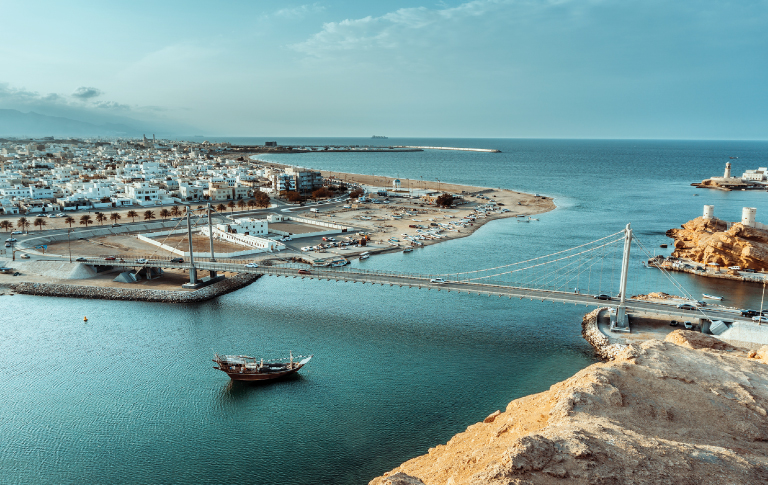

Nations are not built on brick and mortar but on the strong will and foresight of their leaders and the hard work and commitment of the people, founded on history, culture and tradition.
The story of the Sultanate of Oman is no different. From a large, barren mass ofland and people struggling to survive amid primitive living conditions some five decades ago Oman metamorphosed into one of the most happy, prosperous and peaceful countries of the world, enduring the challenges and making wise use of resources and opportunities.
Read More
- Oman’s media must adapt to AI while upholding accuracy, minister says
- Oman forecasts thunderstorms from October 25 as low-pressure trough approaches
- Oman, UK agree to deepen defence, investment and technology partnership
- Oman seeks citizens’ feedback to improve local services
- Salalah welcomes first direct charter flight from Kazakhstan
A country that had zilch basic amenities and infrastructure to the modern nation it is today that is viewed by the world with pride and joy, Oman’s transformation has been incredibly quick and smooth but well planned and efficiently executed.
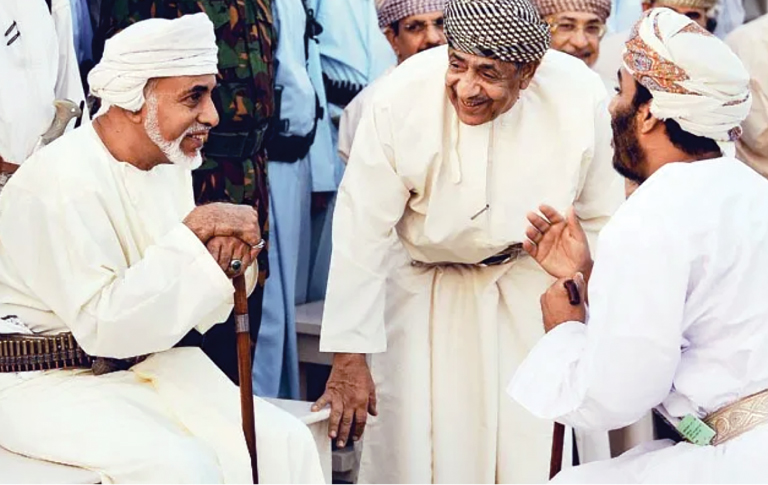
Long live the legacy
The ruler who firmly placed and led the nation on the path of progress and prosperity is no more but the nation is in the safe hands of his worthy successor His Majesty Sultan Haitham bin Tarik.
The march of the blessed Renaissance initiated by the architect of modern Oman the late His Majesty Sultan Qaboos bin Said and the glorious legacy left behind by him carries forward with His Majesty Sultan Haitham bin Tarik in the saddle.
During the last 50 years Oman has never failed to live up to the expectations of the world, confidently stepping in to successfully play the many roles it has been entrusted with or expected to, be it contributing to the maintenance of peace in the region or helping defuse an issue that threatened regional and international peace. The Sultanate has always won wide appreciation for being a neutral force in international conflicts.
With heritage sites earmarked by the United Nations Educational, Scientific and Cultural Organisation and populated by warm and peace-loving people, the Sultanate has been a star attraction for international tourists.
No wonder Oman recently bagged the World Travel Awards, considered the Oscars of Travel, for the leading cultural destination in the Middle East for the second time.
The Sultanate is looking forward to embracing platinum in the next 20 years, and further ahead, as it celebrates 50 years of Renaissance, with Vision 2040 and a slew of initiatives aimed at economic diversification and people’s all-round progress, with His Majesty Sultan Haitham bin Tariq leading the charge to keep up and better the legacy left behind by the late Sultan Qaboos bin Said.
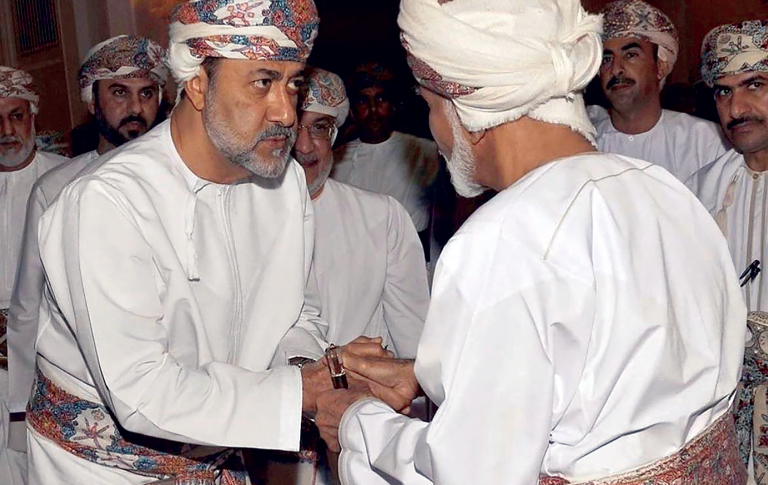
A friend to all
Oman has been following a moderate foreign policy since 1970 and established diplomatic relations with almost all countries across the world. It became a part of the six-member Gulf Cooperation Council when it was established in 1980 and supported the United Nations on various occasions. Today, Oman is looked at as a diplomatic mediator in various international disputes and Muscat has been host to many reconciliation talks.
Sliding oil prices and national plans
As a remedial measure to tackle the sliding oil prices, Oman began to divert its attention from petrodollar income to non-oil revenues in 2014 and began to sharpen its focus on tourism, mining, minerals and the like and the results have been overwhelming.
Despite a sharp drop in oil prices the government went ahead with the implementation of various economic projects and services, including the new Muscat International Airport as well as other domestic airports.
Among other projects that Oman has been pressing on with are Al Batinah Expressway, the first phase of the Bidbid-Sur road and the Duqm Economic Zone development, in addition to various economic diversification projects such as the expansion of Sohar Refinery, the Khazzan gas field, and tourism projects such as the Oman Convention and Exhibition Centre (OCEC), resorts, hotels and other facilities. The Sultanate’s economic growth was poised for momentum in 2020 just before the COVID-19 outbreak, with major non-hydrocarbon projects. The Ghazeer gas project was due to become operational and the GDP was expected to grow by 3.7 per cent in 2020 and 4.3 per cent in 2021.
Various initiatives and fiscal adjustments put in place by the government in the wake of a decline in oil prices resulted all-round positivity. Non-oil revenues contributed to around 20 per cent of fiscal consolidation while 80 per cent was from expenditure reductions.
Medium-term fiscal plan
Oman announced a Medium-Term Fiscal Plan (MTFP) for 2020-2024 in light of the fiscal challenges and the uncertainty surrounding the oil prices in order to achieve fiscal balance in the medium term without harming much of the national initiatives.
The proposed income tax on high networth individuals aims at reducing reliance on oil and other hydrocarbon products as major sources of state revenue. Being enforced in 2022, the revenues from income tax will be allocated to financing a number of social programmes while supporting the economic growth and diversification of the sources of revenue

Labour market reforms
Flexibility of the labour market is crucial to attracting global manpower and various measures are in place to reform and rearrange labour laws and regulations in accordance with the demand in the market, thanks to the unswerving efforts of the Ministry of Labour.
At the same time, the ministry is focusing on raising the living standards of the citizens and ensuring that companies employ more Omanis. The “Khibrat” programme which sponsors qualified Omanis to private companies for one full year by providing all expenses and stipend for 12 months is a milestone in the nation’s steady stride towards creating more jobs for the citizens. In the initial stage, 600 Omani youngsters will be benefiting from this pilot programme.
VAT
The Sultanate introduced value added tax under Royal Decree No 121/2020 on October 12, 2020, in accordance with the GCC Vat Treaty. Oman is joining 160 other countries in the world that impose VAT, effective in 180 days from the date of publication of the Royal Decree in the official gazette. VAT is considered a great step forward in the national revenue-raising exercise.
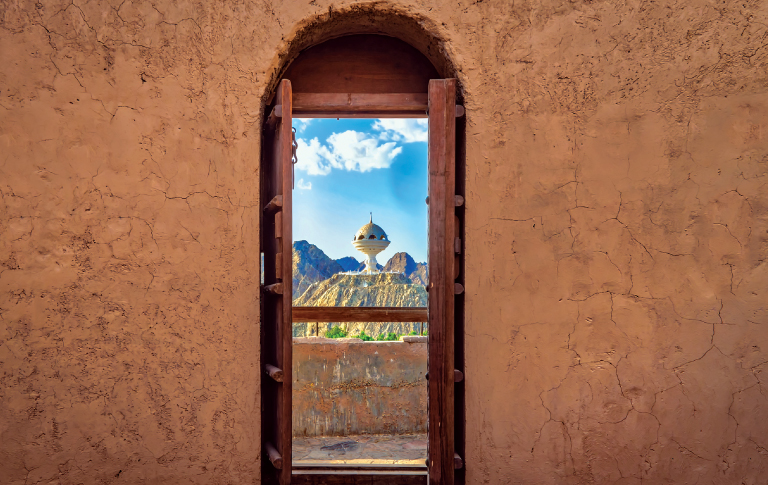
Future perfect
All these fiscal measures aim at substantially reducing the nation’s dependence on hydrocarbon revenues and strengthening the national revenue-raising framework. According to the plans, the increasing non-oil revenues will have a positive impact on the economy to the tune of almost RO 1.4 billion. The first industrial-scale green hydrogen plant coming up at the industrial port on the Batinah coast, the Royal gesture of providing free laptops to students belonging to social insurance families for the academic year 2020-2021, visa exemption for citizens of more than 100 countries to attract tourists to the Sultanate, the state-of-the-art synthetic track to support healthy living in and around downtown Ruwi are among other impressive initiatives and programmes. The progress achieved in the last 50 years is glorious and the march forward envisioned for the future is positive, impressive and firmly founded on practical parameters and the reality of the situation.
Future perfect
All these fiscal measures aim at substantially reducing the nation’s dependence on hydrocarbon revenues and strengthening the national revenue-raising framework. According to the plans, the increasing non-oil revenues will have a positive impact on the economy to the tune of almost RO 1.4 billion.
The first industrial-scale green hydrogen plant coming up at the industrial port on the Batinah coast, the Royal gesture of providing free laptops to students belonging to social insurance families for the academic year 2020-2021, visa exemption for citizens of more than 100 countries to attract tourists to the Sultanate, the state-of-the-art synthetic track to support healthy living in and around downtown Ruwi are among other impressive initiatives and programmes.
The progress achieved in the last 50 years is glorious and the march forward envisioned for the future is positive, impressive and firmly founded on practical parameters and the reality of the situation.





