
MUSCAT : South Al Batinah Governorate is witnessing a major development push across housing, education, tourism, healthcare, infrastructure and mining, with several large-scale projects underway to boost economic activity, attract investment and improve the quality of life for residents.
According to the Oman News Agency (ONA), the governorate is implementing an integrated development strategy aimed at capitalising on its geographical, economic and tourism potential while strengthening partnerships with the private sector.
H.E. Eng. Masoud bin Saeed Al Hashmi, Governor of South Al Batinah, said the ongoing projects are designed to support population growth, diversify the local economy, generate employment opportunities and advance the objectives of Oman Vision 2040.
Read More
- Oil prices slide as Middle East supply rebounds
- Oman Investment Authority President meets Uzbek investment minister to boost joint ventures
- Oman Hockey League 2026 concludes with BankDhofar as Title Sponsor
- OQEP revenue crosses RO 1 billion mark amid higher production and demand in Oman
- Food manufacturing companies on the Muscat Stock Exchange record net profits of RO 22.3 million
South Al Batinah recorded 115 investment opportunities by the end of the third quarter of 2026, reflecting growing interest in the governorate’s economic potential.
Khazaen Economic City signed 24 investment contracts valued at more than RO 89 million, while the Directorate General of Agricultural, Fisheries and Water Resources registered eight investment opportunities worth approximately RO 58.9 million.
Meanwhile, the Directorate General of Housing and Urban Planning offered 80 investment opportunities, including 53 agricultural land plots, 25 industrial and commercial plots, and two opportunities for establishing private schools.
The governorate’s Investment Opportunities Forum, held on April 6, resulted in 15 agreements and the launch of an investment guide featuring more than 150 opportunities covering over six million square metres of land.
These opportunities span tourism, entertainment, industry, agriculture, logistics, trade and services.
Commercial activity also continued to expand, with 29,759 active commercial registrations recorded by the end of September 2026, alongside 143,227 cumulative commercial licences, 22,555 industrial licences and 2,888 investment licences.
Foreign investment registrations reached 5,202, with Barka accounting for the largest share at 4,432 registrations.
The Oman Chamber of Commerce and Industry’s South Al Batinah branch also conducted more than 120 activities between 2023 and 2026, supporting entrepreneurship, digital marketing, artificial intelligence and e-commerce. Around 30,826 small and medium enterprises are affiliated with the branch.
Several integrated residential developments are progressing across the governorate to accommodate population growth and support urban expansion.
The Al Naseem neighbourhood project in Barka, covering 355,000 square metres and comprising 1,051 residential units, has reached 65 percent overall completion, with its first two phases fully completed.
In Rustaq, the Al Azm neighbourhood project, featuring 424 residential units, has also achieved 65 percent overall completion. All 269 villas offered for sale have been sold.
Other major developments include the Al Luban project in Nakhl, which will provide 1,406 housing units and has reached 17 percent completion, and the Al Multaqa project in Rustaq, comprising 310 units, which is seven percent complete.
Additional planned developments include Al Shati in Al Musannah, which aims to deliver more than 1,400 housing units, Al Amjad in Rustaq, Wakan Village in Nakhl and Nakhl Heights.
Housing assistance allocations reached RO 3.25 million in 2026, benefiting 116 recipients, compared with RO 3.8 million for 131 beneficiaries in 2025 and RO 3 million for 84 beneficiaries in 2024.
The governorate also reported approximately 59,278 real estate transactions between 2024 and September 2026, highlighting continued activity in the property sector.
The education sector is undergoing significant expansion, with five new schools expected to be handed over during the second semester of the current academic year.
Three schools are expected to be handed over for use during the academic year: Durrat Al Hashimiya School and Abd Bin Al Julanda School in Barka, each featuring 40 classrooms, and Al Abyad School in Nakhl, comprising 36 classrooms.
Construction is also progressing on Al Numan School in Barka and Al Urwa School in Rustaq. Both will have 40 classrooms each and are scheduled to begin operations in the 2027–2028 academic year.
Additional initiatives include school renovations, new classrooms, science laboratories and improved assembly facilities.
South Al Batinah is also investing in public spaces and tourism infrastructure to create attractive destinations for residents and visitors.
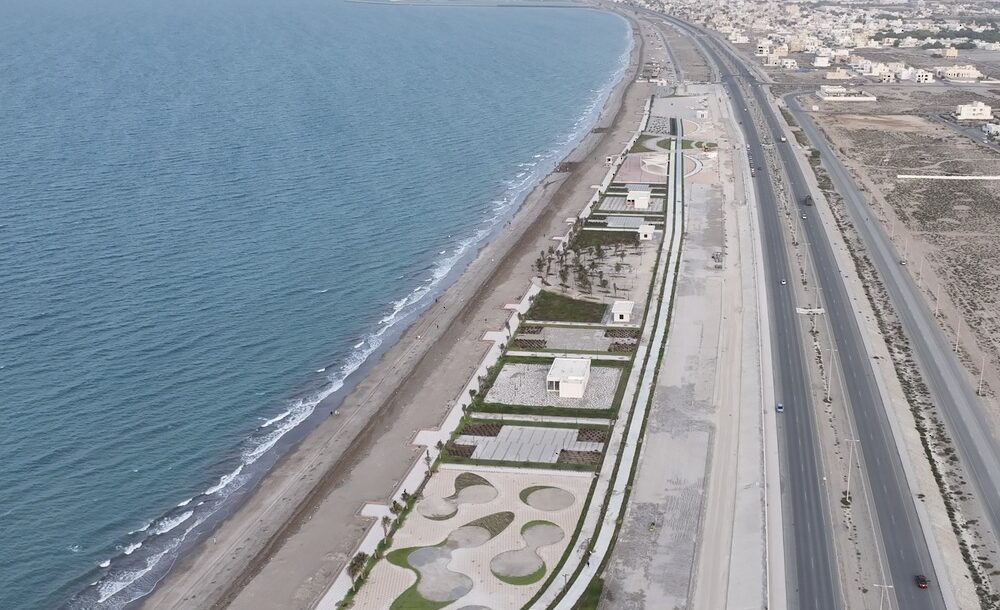
The Barka waterfront development has reached approximately 96 percent completion, while the Al Musannah waterfront project is 76 percent complete.
Other initiatives include the Rustaq city promenade, Rustaq Gate development, the third phase of Ain Al Kasfah spring development, Sands Park in Nakhl and improvements to Al Musannah Park.
These projects are expected to strengthen tourism, enhance recreational facilities and improve the urban landscape.
The governorate is home to 499 historical landmarks, including 165 ancient houses and neighbourhoods, 152 towers, 97 mosques, 47 forts, 26 walls and 12 castles.
Restoration work has been completed or is continuing at 52 heritage sites, while another 18 landmarks have been included in various restoration initiatives involving local communities.
Historical attractions such as Rustaq Castle, Al Kasfah Towers, Al Awabi Fort and Barka Fort have also been identified for investment opportunities.
Tourism infrastructure continues to expand, with 415 licensed hotel establishments recorded by the end of the third quarter of 2026, including 301 guesthouses and 83 eco-lodges.
The governorate also has 255 licensed travel agencies and tour operators, while 23 land usufruct contracts have been signed for tourism projects, including hotels, resorts, camps and tourism complexes.
Wakan Village in Nakhl emerged as a major tourism attraction, recording 129,442 visitors, representing a remarkable 224 percent increase compared with 2025.
Authorities plan to connect historical attractions through tourism routes, develop visitor facilities and encourage investment in accommodation and recreational projects, while supporting local businesses, artisans and productive families.
Healthcare institutions across South Al Batinah recorded approximately 1.78 million patient visits during 2025.
During 2026, Rustaq Hospital achieved several medical milestones, including advanced surgeries involving spinal conditions, blood vessels, colorectal procedures and ear, nose and throat treatments.
The hospital’s paediatric intensive care unit also completed 2,000 consecutive days without a central venous catheter-related infection, reflecting improvements in patient safety and specialised healthcare.
Healthcare infrastructure developments include the opening of a radiology unit at Al Awabi Health Centre, new health centres in Abu Abbali and Hay Asim, and the expansion of Nakhl Health Centre.
Digital healthcare platforms, including Shifa, Nabdh Al Shifa, Aman and Ajyal, are also being used to improve service delivery and administrative efficiency.
In another significant achievement, Barka received World Health Organization Healthy City accreditation in September 2026, recognising efforts to promote public health and community wellbeing.
Mining is emerging as another promising economic sector in South Al Batinah, supported by the governorate’s mineral resources.
The governorate currently has 35 permanent mining licences and eight temporary licences.
Mining Concession Area 14-B spans approximately 2,673 square kilometres and contains promising deposits of copper, gold, chromium, basalt and gabbro.
Since January 2026, permanent mining licences have generated OMR 267,104 in quarterly fees and OMR 19,364 in community contributions.
Temporary mining licences for government projects generated OMR 67,994 in revenue and OMR 6,713 in community contributions.
Copper exploration and extraction activities are also progressing in Rustaq.
Alongside economic and infrastructure development, South Al Batinah continues to promote sports and youth engagement.
The Summer of Sports 2026 programme featured community sporting activities, women’s sports days and sports caravans reaching villages across the governorate.
The Football Academies Forum brought together eight academies, with Al Rumais Academy emerging as champion. The Encourage Your Team 2026 amateur football league concluded with Al Maragh Youth Team winning the title.
These initiatives aim to identify young talent, encourage healthy lifestyles and strengthen community participation.
Looking ahead, the governorate will prioritise completing housing and infrastructure projects, developing educational and healthcare services, attracting investments in tourism, agriculture, industry and mining, and empowering small businesses.
H.E. Eng. Masoud bin Saeed Al Hashmi emphasised that stronger public-private partnerships, modern technologies and the sustainable use of natural and historical resources will remain central to the governorate’s development strategy.
For all the latest news from Oman and GCC, follow us on Twitter, Instagram and LinkedIn, like us on Facebook and subscribe to our YouTube page, which is updated daily.





