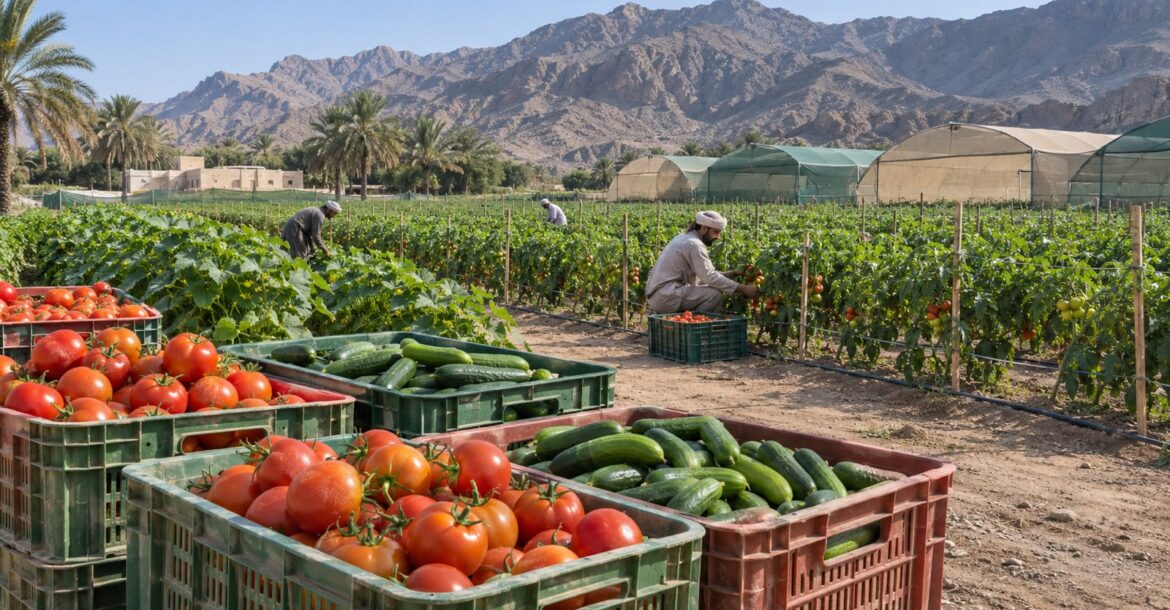

MUSCAT — Oman’s food security sector contributes about RO 1.56 billion to gross domestic product, and the government aims to increase that figure by 2030 by raising domestic production of key commodities and expanding food processing and exports, a ministry official said.
Asma bint Hamoud Al Hinai, who heads the Oman Vision 2040 implementation follow-up office at the Ministry of Agriculture, Fisheries and Water Resources, told Al Wisal radio that the 2026 Food Security Lab was an early step towards that goal under Oman’s 11th five-year plan.
The programme identified 111 investment projects worth more than RO 80 million and 16 initiatives to support their implementation, Al Hinai said. The projects form part of a wider pipeline of 376 projects registered in 2026 across crop production, livestock, fisheries and water resources, with a combined investment value of about RO 899 million.
Read More
- Six Omanis injured in deadly Fujairah road crash
- Uzbek President Shavkat Mirziyoyev to make state visit to Oman on November 16
- 110 candidates to contest 61 seats in Oman Chamber elections on Nov. 23
- Oman’s airports handle over 10.4 million passengers through September
- His Majesty Sultan Haitham seeks closer ties with Namibia in letter to president
Oman’s national food basket comprises 25 commodities across eight groups, including vegetables, fruit, red meat, poultry, fish, water and salt. The ministry is targeting higher domestic output for commodities where self-sufficiency is below 75% and expanding food processing for those where it exceeds 75%, Al Hinai said.
The ministry assessed each commodity from production inputs through to processing and export markets. Investment opportunities include fruit and vegetable production, aquaculture and commercial fishing. The ministry is also looking to link some fishing licences to seafood processing to generate more value from local catches.
Opportunities are being offered through the Tharawat, Tatweer and Invest Oman platforms, as well as through special economic zones and free zones. Three food processing agreements were signed in Khazaen Economic City at the close of the programme, Al Hinai said.
Four decisions introducing mandatory standards for selected food products were issued during this year’s programme. Al Hinai also cited regulations aimed at reducing salt and sodium consumption and said the ministry was working with companies to grow quinoa and millet under arrangements that would supply manufacturers of healthier food products.
A committee chaired by the minister of agriculture, fisheries and water resources will monitor the projects against approved schedules and targets and assess their contribution to the economy, Al Hinai said.





