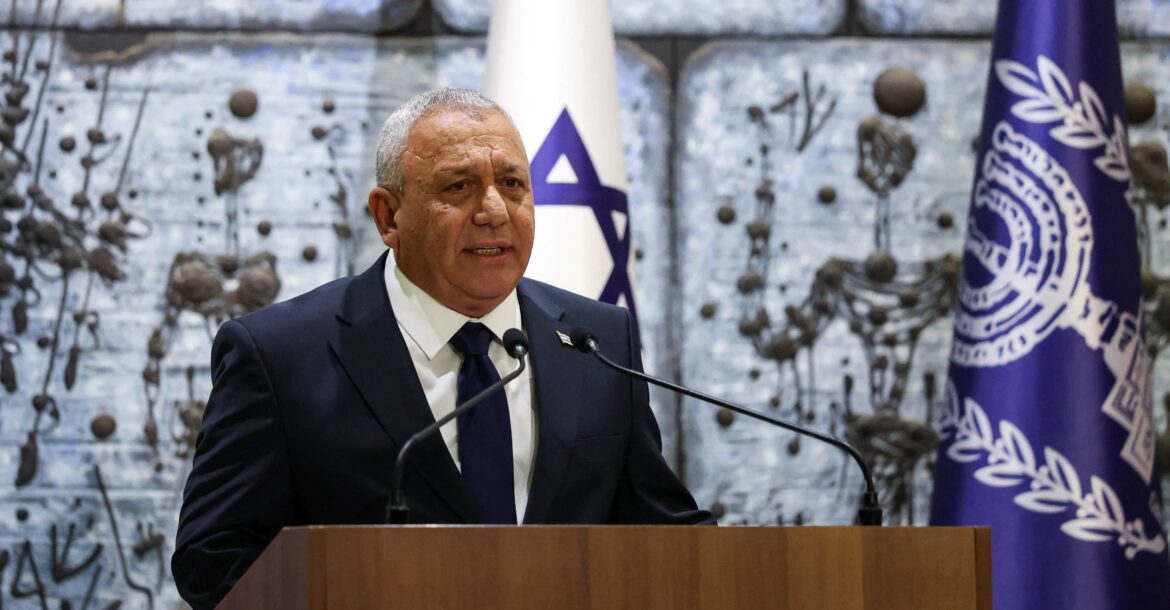

Jerusalem: Eisenkot, a former army chief and leader of the centrist Yashar party, was tasked by President Isaac Herzog on Sunday with forming a new government after securing the backing of 67 members of the 120-seat Knesset, compared to 46 supporting Netanyahu.
However, neither political bloc secured a parliamentary majority in last month’s election. Eisenkot’s four-party alliance won 48 seats, while Netanyahu’s bloc secured 53, leaving both sides dependent on support from other parties.
Eisenkot has 28 days to form a coalition, with the possibility of a two-week extension. Netanyahu will remain caretaker prime minister until a new government takes office, a process that could take weeks or even months.
Read More
- Dubai tenants can now split rent into smaller payments
- 70,000 tents flooded as Gaza faces humanitarian emergency
- Trump sees ‘Strong Desire’ to end Ukraine war as US-led talks near
- Nvidia, CEO sued over alleged ties to suspected Chinese intelligence asset
- Death toll from migrant boat sinking off Senegal rises to 34
The new parliament will see significant changes, with nearly half of its members entering the Knesset after not serving in the previous term.
A major election development was the record performance of two Arab-led alliances, the United Arab List and the Joint List, which secured a combined 19 seats following increased turnout among Arab voters.
Their strong showing could make them decisive in determining the next government. However, Netanyahu has ruled out governing with Arab parties, while several parties within Eisenkot’s bloc have also expressed opposition to including them in a coalition.
Following his nomination, Eisenkot called for a “national emergency government”, urging political parties to set aside ideological differences.
He outlined four conditions for joining his proposed coalition: recognising Israel as a Jewish and democratic state, upholding the Declaration of Independence, supporting mandatory military or civilian service for all citizens, and recognising Hamas as a terrorist organisation while committing to dismantling its military and governing capabilities.
These conditions could complicate coalition negotiations, particularly over military conscription and the participation of Arab parties.
The ultra-Orthodox United Torah Judaism and Shas parties, which together secured 13 seats, strongly oppose changes to military service exemptions for religious students. Any support from these parties could require concessions that Eisenkot’s allies may reject.
Meanwhile, the United Arab List, which won eight seats, has expressed willingness to join an Eisenkot-led coalition. The Joint List, which secured 11 seats, has offered to support a minority government from outside the coalition.
However, Avigdor Lieberman, whose Yisrael Beiteinu party won seven seats, has refused to join a minority government dependent on Arab lawmakers.
With competing demands over military service, national identity and coalition partnerships, Eisenkot faces difficult negotiations as Israel enters another period of political uncertainty.
The outcome will determine whether the opposition can form a new government or Netanyahu remains in power as caretaker prime minister.





