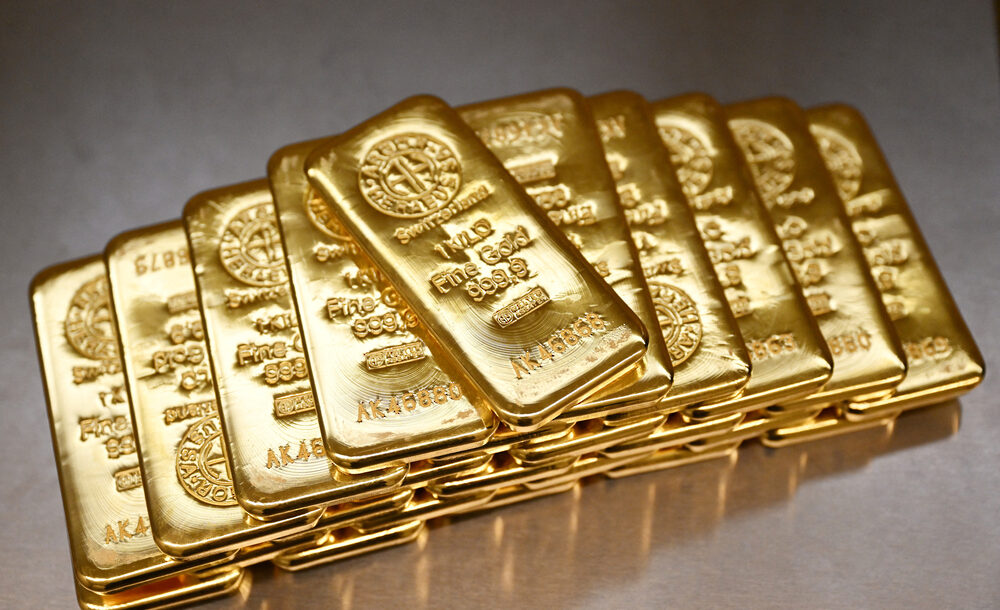

NEW DELHI : Central banks increased their gold purchases to 321 tonnes in the third quarter of 2026, surpassing recent typical quarterly buying levels and taking their total purchases during the year so far to 675 tonnes, up 6 per cent year-on-year, according to the World Gold Council (WGC).
The report stated that the strong buying by central banks came even as high gold prices weighed on jewellery consumption and demand for bars and coins across global markets.
It said “Central bank buying jumped to 321t in Q3, eclipsing recent typical quarterly buying levels and lifting y-t-d demand to 675t (+6% y/y).”
The WGC said central bank purchases in the July-September quarter were significantly higher than recent quarterly levels. It expects buying by central banks to at least match the levels recorded in 2025, following the stronger-than-expected purchases during the latest quarter.
Overall gold demand, including over-the-counter (OTC) investment, was 1 per cent lower year-on-year at 1,369 tonnes in Q3. However, cumulative demand during the first nine months of 2026 stood at 3,881 tonnes, virtually matching the record 3,884 tonnes recorded in 2025.
In value terms, year-to-date gold demand reached a record USD 566 billion, reflecting the impact of higher prices.
The LBMA (PM) gold price averaged USD 4,262 per ounce during Q3, marking the third-strongest quarterly average on record and an increase of 23 per cent year-on-year.
The report also stated that the investment demand showed different trends across categories. Gold exchange-traded funds (ETFs) reversed the outflows recorded in the second quarter and added 211 tonnes during Q3.
The WGC said these inflows appeared to be driven by growing concerns over fiscal sustainability and inflation, among other factors.
However, demand for bars and coins declined 19 per cent year-on-year to 268 tonnes as investors waited for a clearer price trend to emerge.
Jewellery demand remained under pressure from elevated prices, falling 17 per cent year-on-year to 313 tonnes. This was the weakest third-quarter jewellery demand in the WGC’s data series. Despite the decline in volumes, the value of jewellery demand edged up 2 per cent to USD 43 billion.
Gold consumption in technology increased 3 per cent during the quarter, as demand linked to artificial intelligence-related manufacturing more than offset the impact of high prices.
On the supply side, gold mine production rose 3 per cent year-on-year to 1,071 tonnes, marking a third-quarter record. However, total gold supply declined 1 per cent to 1,369 tonnes, while recycling volumes fell 8 per cent to 314 tonnes, their lowest level in three years.
Looking ahead, the WGC expects demand for ETFs, bars and coins to remain resilient, although it may face competing market pressures. Jewellery demand is likely to moderate further amid persistently high prices, while recycling is expected to remain broadly unresponsive to elevated prices.
Read More
- Sohar International signs three strategic agreements at the Investment Partnerships Horizons Conference, strengthening connections across Asia-Pacific
- Oman’s trade surplus rises to RO 6.5 billion by end of August 2026
- Oman’s Nama signs deal with China’s State Grid for 1 GW battery storage projects
- Bank Muscat at Oman Science Festival: Towards advancing community driven by innovation, technology and knowledge
- Al Mouj Muscat welcomes first residents to exclusive Jinan Island Community