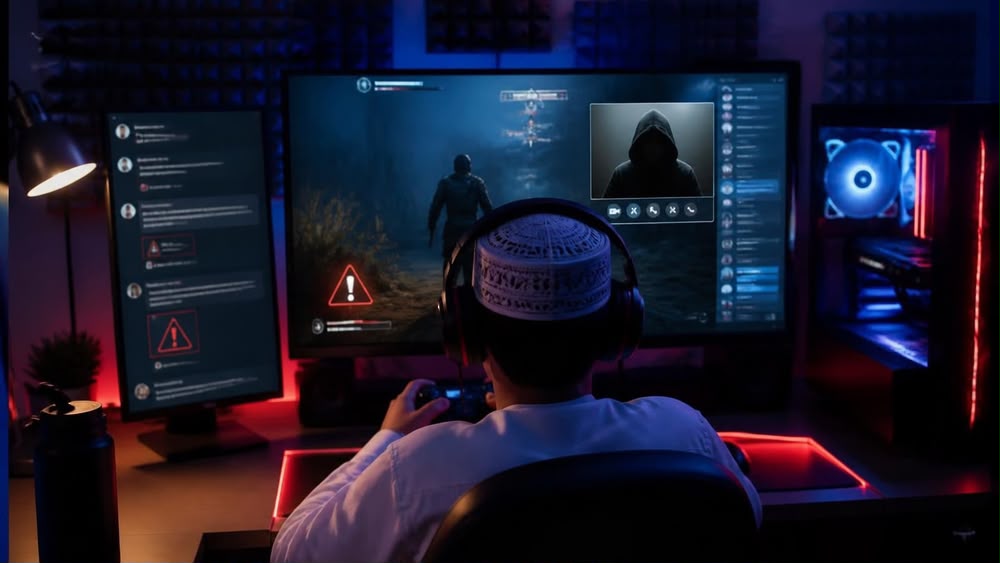

MUSCAT: Criminals are using online games and gaming chat platforms to establish contact with children and teenagers before exploiting or blackmailing them, the Royal Oman Police has warned, urging families to recognise warning signs and report incidents.
Brigadier Jamal bin Habib Al Quraishi, Director General of Inquiries and Criminal Investigation at the ROP, told the Oman News Agency that the development of video games into interactive digital communities had created opportunities for offenders to approach young users.
Offenders may first build trust before introducing inappropriate conversations or requests, he said. In some cases, children have been persuaded to photograph or film family members, with the material subsequently used to threaten or blackmail them.
Read More
- GCC remittances hit record $161 billion in 2025, highest globally
- Oman authorities apprehend three citizens over illegal hunting of protected gazelles
- CPA seizes unlicensed cosmetic products and dietary supplements in Muscat
- New private sector job opportunities announced in Oman’s North Al Batinah
- Muscat Municipality and OQ partner to develop 5,500 sqm park in Seeb
The threats can extend beyond bullying and inappropriate content to attempts to draw young people into violent or illegal activities, he added.
Al Quraishi urged parents to watch for significant changes in behaviour, including anxiety, sadness, secrecy around devices, fear of losing access to a phone, frequent lying or taking money from home.
Parents should respond calmly if a child discloses blackmail, avoiding anger, threats or blame and reassuring the child that they are not at fault, he said.
Families should preserve messages, photographs, videos and account details, report the incident to the authorities and avoid confronting or trying to track down the suspected offender themselves.
The ROP handles electronic blackmail reports seriously and confidentially, particularly those involving minors, Al Quraishi said. Its response focuses on protecting victims, preserving evidence, stopping the blackmail and identifying offenders, including those using false identities.
He also urged gamers of all ages to avoid sharing photographs or personal information that could be used against them.
Scams and stolen accounts
Cybersecurity specialist Mohammed bin Saeed Al Rubaie told ONA that multiplayer games and services such as Discord, Steam and Roblox expose users to phishing, malware, grooming and financial fraud.
Scammers may offer free virtual currencies, including V-Bucks and Robux, or rare gaming items to lure players to fraudulent login pages designed to steal account credentials or session information, he said.
Malicious software can also be disguised as cheating tools, game modifications or other untrusted downloads, potentially compromising browsers, gaming accounts, chat services and cryptocurrency wallets.
Al Rubaie warned that offenders can piece together details from usernames, voice chats and other interactions to identify a player’s real name, address, school or social media accounts. Publishing such information, a practice known as doxing, can expose users to threats and harassment.
Other risks include fraud involving in-game trading and attacks designed to disrupt users’ internet connections, he said.
He advised players to enable two-factor authentication, preferably through an authentication app where available, and use a separate gaming identity that is not linked to sensitive personal, educational or financial accounts.
Users should review privacy settings, limit messages and friend requests to people they know, avoid suspicious links and unauthorised downloads, and avoid saving bank card details on gaming platforms where possible.
Anyone facing blackmail or fraud should preserve screenshots, account names, digital identifiers and the timing of communications before ending contact with the offender, he said. Victims should avoid paying or complying with demands and use the platform’s reporting and blocking tools.
If an account has been compromised, users should change passwords, end active sessions, secure linked accounts and review connected external services.
Suspected cybercrime should be reported to the ROP or Public Prosecution, with the preserved evidence provided to investigators.
Supportive family dialogue
Social guidance supervisor Ghanima bint Sulaiman Al Shukaili said children’s desire for acceptance and belonging could make them vulnerable to approaches from strangers online.
Oversharing photographs or family information, peer pressure, curiosity, social isolation and limited family dialogue can increase the risks, she said.
She urged parents to combine supervision with conversations that help children understand online threats and feel confident seeking help.
Warning signs may include hiding screens, anxiety after receiving messages, withdrawing from activities, disrupted sleep or changes in academic performance.
No single change proves that a child is being bullied or exploited, Al Shukaili cautioned. Persistent or significant changes should prompt a supportive conversation.
Separately, Musa bin Sulaiman Al Nabhani, a computer programmer at the Ministry of Information, said the Ain platform’s children’s interface offers reviewed, age-appropriate content reflecting Omani culture and values.
Its programmes include cartoons, songs, educational material, stories and audiobooks accessible through smartphones, tablets and smart televisions, he said.
Police and specialists stressed that safer content and technical controls should be supported by family dialogue, privacy awareness and prompt reporting of suspected exploitation.





