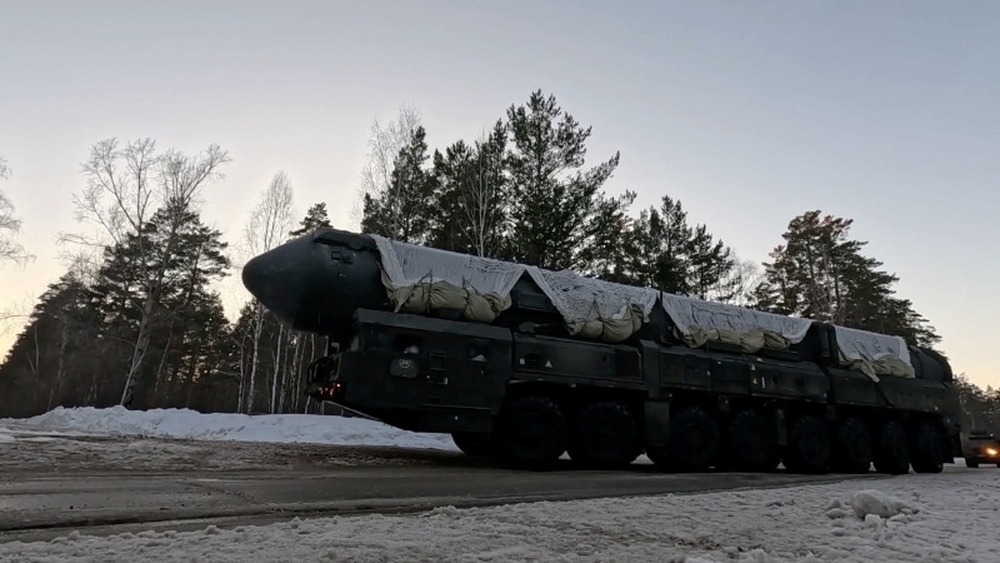

New York: United Nations Secretary-General Antonio Guterres has sounded the alarm over growing global nuclear risks, warning that expanding and modernising arsenals, increasingly forceful nuclear rhetoric and weakening arms-control mechanisms are pushing the world into a highly dangerous period.
Speaking at a high-level meeting of the UN General Assembly marking the International Day for the Total Elimination of Nuclear Weapons, Guterres said safeguards developed over decades to contain nuclear risks were increasingly breaking down.
The annual observance aims to raise awareness of the dangers posed by nuclear weapons and mobilise international efforts towards the goal of a nuclear-weapon-free world.
Read More
- Nigeria reports first imported Ebola Bundibugyo case in Abuja: WHO
- US midterm voting begins in Texas as Democrats target historic gains
- Putin proposes three-way summit with Trump and Xi to negotiate Ukraine conflict: Report
- Earthquake of magnitude 4 struck China’s Xinjiang
- Macron slams security “failures” but rejects French interior minister’s resignation amid protests
Guterres pointed to the expiration of the New START Treaty between the United States and Russia and setbacks in multilateral nuclear disarmament efforts as major warning signs.
New START expired on February 5, 2026, leaving the United States and Russia without binding limits on their strategic nuclear arsenals for the first time in more than half a century. Guterres has urged both countries to return to negotiations and establish a successor framework.
He stressed that nuclear disarmament was not optional, describing it as a legal obligation, and called on nuclear-armed states to resume dialogue, reduce the role of nuclear weapons in their security policies and adopt confidence-building and transparency measures.
Guterres also renewed calls for the Comprehensive Nuclear-Test-Ban Treaty to enter into force and warned against allowing nuclear weapons to determine humanity’s future.
He said humanity had lived under the shadow of nuclear weapons for more than eight decades and urged governments to choose dialogue, diplomacy and disarmament over confrontation and destruction.
The President of the UN General Assembly also highlighted the scale of the challenge, noting that more than 12,000 nuclear weapons remain globally, despite a substantial reduction from Cold War-era levels.
He warned that thousands of warheads remain on high operational alert and that the global nuclear stockpile could begin increasing again as states modernise their arsenals and introduce more advanced weapons.
Emerging technologies, including artificial intelligence, cyber capabilities and advanced delivery systems, were also cited as additional sources of uncertainty for nuclear command, control and decision-making.
The General Assembly President said the combination of ongoing conflicts, weakening arms-control frameworks and renewed reliance on nuclear weapons was creating a particularly dangerous environment for international peace and security.
Guterres called on nuclear-armed states to reverse the trend, warning that weakening safeguards alongside rising nuclear risks could have catastrophic consequences.
“These instruments of death must never again determine the fate of humanity,” he said, as he urged countries to work towards a future free of nuclear weapons.





