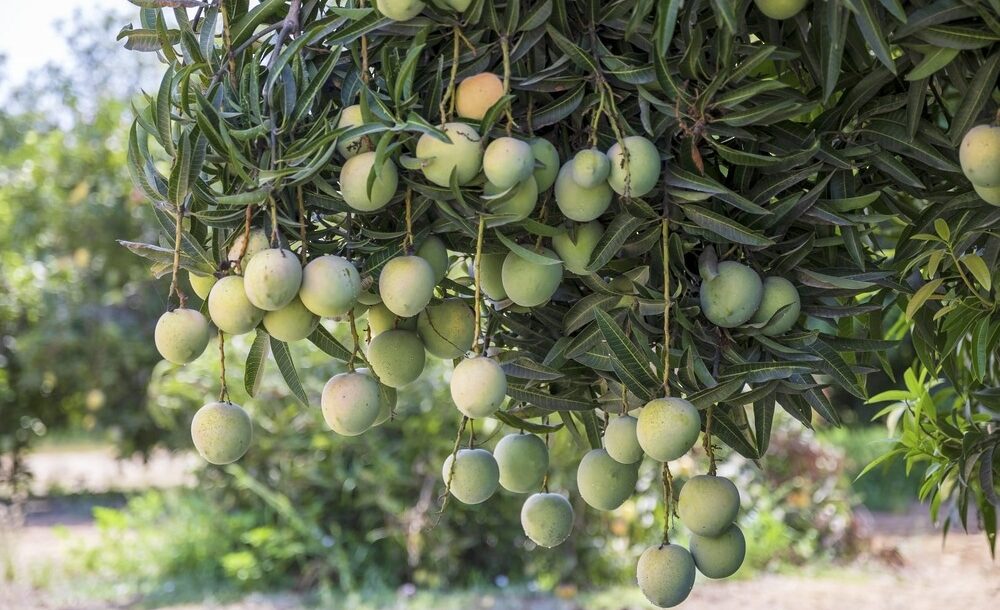

Muscat: Oman is moving to transform mango cultivation into a major agricultural investment opportunity, capitalising on strong domestic demand and a sizeable gap between local production and imports.
Oman currently imports around 46,211 tonnes of mangoes valued at approximately RO 18.7 million, highlighting the scale of the domestic market and the potential to redirect a greater share of this spending towards locally grown produce and associated industries.
Dr. Hamdan bin Salem Al-Wahaibi, Director General of Agricultural Development at the Ministry of Agricultural Wealth, Fisheries and Water Resources, said the volume of imports is an important economic indicator for investors and the private sector.
Read More
- Bank Muscat and Dhofar Insurance Company partner to offer travel, individual health, and domestic helper health insurance solutions
- Oman-UAE rail link to begin trial operations in fourth quarter of 2027, Transport Minister says
- O-Green installs world’s largest onshore wind turbine outside China at Oman’s Duqm
- Young innovators at ABM lead the way in climate action at Oman Climate Week
- Bank Muscat continues to introduce employees’ children to future career opportunities in banking
He said the next phase would focus on treating mangoes not simply as an agricultural crop, but as part of an integrated economic value chain covering seedling production, cultivation, sorting, packaging, marketing, storage, transportation and food processing.
According to Al-Wahaibi, Oman already has a strong base for further expansion. Around 3,907 acres are currently planted with mango trees, while production exceeded 17,123 tonnes in 2025.
Future growth, however, will not depend solely on increasing the cultivated area. The strategy will also focus on improving productivity per unit of land, fruit quality, water-use efficiency and the selection of commercially viable varieties, alongside wider adoption of modern irrigation systems and agricultural management technologies.
The Sohar Agricultural Research Station is expected to play a key role in supporting this expansion by studying different varieties, evaluating their characteristics, producing seedlings and transferring research findings to farms and commercial projects.
Oman’s mango gene bank currently contains 252 varieties and 708 trees collected from different governorates across the Sultanate and from 23 countries.
Research and field trials have also identified more than 30 promising mango varieties based on productivity and quality, creating opportunities for carefully planned commercial expansion that responds to market requirements in terms of quality, quantity and production seasons.
Under the mango production localisation plan for 2026-2030, Oman aims to expand the cultivated area to approximately 10,300 acres and increase production to around 44,785 tonnes.
The value of production under the plan is expected to reach approximately RO 17 million.
Al-Wahaibi said 2026 would also see the introduction of new investment opportunities in mango production, marking a shift from identifying the import gap to actively converting it into commercially viable projects.
Investment opportunities extend well beyond farms, he said, covering seedling production, agricultural inputs, irrigation systems, farm services, sorting and grading facilities, packaging, cold storage, transportation and mango-based food processing industries.
Developing these activities could increase the local economic value generated by the crop while creating new opportunities for small and medium enterprises, entrepreneurs and businesses working across agriculture, logistics, marketing and manufacturing.
Al-Wahaibi stressed that achieving the targets would require close cooperation between agricultural researchers, farmers, private-sector investors, financing institutions and marketing organisations.
Research findings and promising varieties, he said, must ultimately be translated into sustainable commercial projects supported by clear data on production, demand and market requirements.
With the local market already absorbing more than 46,000 tonnes of imported mangoes annually, investors have a clear indication of existing demand, potentially reducing some of the market risks associated with new agricultural projects.
However, locally produced mangoes will need to remain competitive in terms of price, quality and consistency of supply.
Al-Wahaibi said mangoes could become a practical example of how Oman can turn an import gap into an investment opportunity by targeting products with established domestic demand, using available research capabilities and genetic resources, and developing value chains that generate economic returns beyond the farm itself.
The broader objective is not simply to increase cultivated areas, but to build a competitive and sustainable agricultural sector that strengthens food security, creates employment and supports Oman’s wider economic diversification efforts