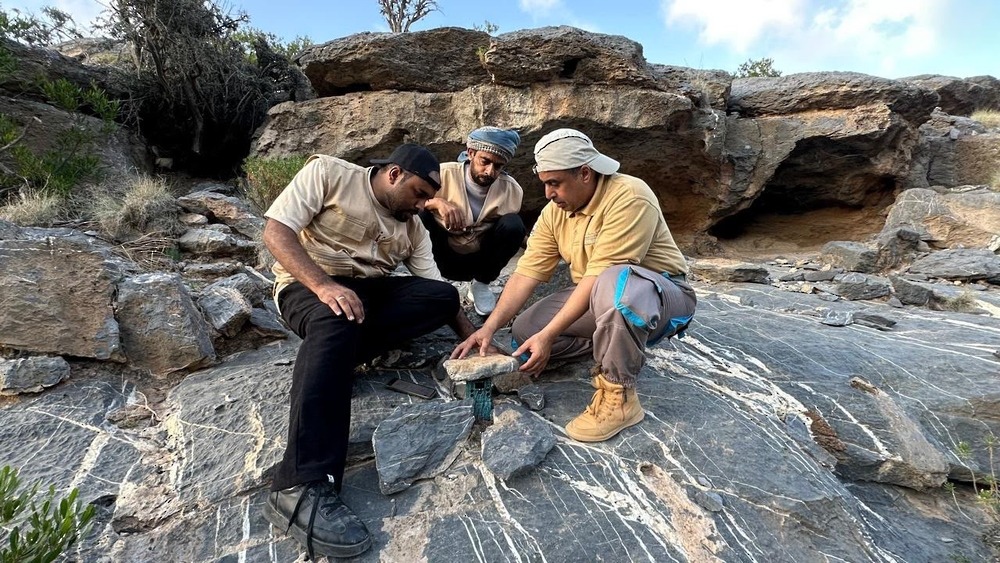

Muscat: The camp is being held at the Western Hajar Starlight Reserve under a nature-based camping system, with a programme combining field patrols, practical workshops and scientific lectures.
Participants are being introduced to the reserve’s boundaries and its central, buffer and transitional zones, while receiving practical guidance on the monitoring and protection requirements for each area.
Saeed bin Hamad Al Busaidi, head of the Al Hajar Al Gharbi Starlight Center in Al Nadab, said the camp is designed to develop the capabilities of environmental monitors through direct field experience while encouraging the exchange of expertise between participating environmental departments.
Read More
- Oman seeks commissioned artworks for new Sayyid Tarik bin Taimur Cultural Complex
- Cancelled CBSE Class 12 exams to be held again for Oman, GCC students
- His Majesty Sultan Haitham leaves for two-day state visit to Botswana
- ‘Oman continues to demonstrate remarkable economic resilience’: CBO Governor
- Oman plans new terminal at Sohar Airport, eyes flights to more destinations
He said holding the programme within the reserve gives participants an opportunity to closely understand its terrain, ecosystems and biodiversity.
Participants are working in teams across different parts of the reserve, conducting foot and joint patrols, monitoring vegetation cover and identifying potential environmental violations, particularly the cutting of old-growth trees.
The teams are also installing camera traps to monitor wildlife and identify species present within the reserve.
The programme includes practical training in the use of GPS equipment and hidden cameras, along with monitoring, documentation and reporting techniques and procedures for dealing with environmental violations.
According to Al Busaidi, the training will help improve the accuracy of field information and strengthen its use in monitoring protected areas. Sessions also examine the situations environmental monitors may encounter during their duties and provide a platform for participants to share experiences in the use of monitoring equipment and field techniques.
The Western Hajar Starlight Reserve covers around 386 square kilometres across a mountain range extending between Al Dakhiliyah, Al Dhahirah and South Al Batinah governorates.
The reserve is characterised by mountainous terrain, a semi-arid climate and low levels of light pollution. Its vegetation includes juniper, wild olive and holly trees, including several ancient trees.
It is also home to wildlife including the lynx, along with several species of birds and reptiles that form part of the area’s biodiversity.
A dedicated section of the camp focuses on the importance of protecting the night sky from light pollution. Scientific, environmental and astronomical lectures highlight the impact of artificial lighting on the visibility of stars, nocturnal wildlife and energy consumption.





