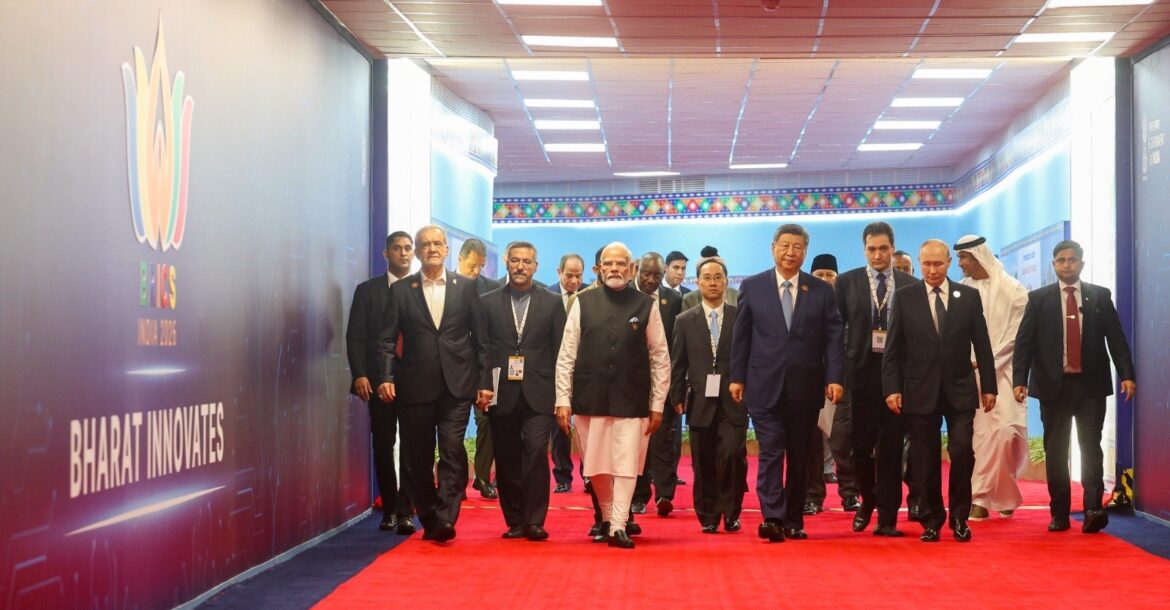

New Delhi: BRICS countries have agreed to work together to ensure the smooth flow of energy supplies, global trade and supply chains amid growing geopolitical instability in West Asia and mounting concerns over disruptions to key oil routes.
The issue was discussed during the BRICS Leaders’ Summit in New Delhi, where members also expressed concern over escalating tensions in the region and called for dialogue and diplomacy to resolve conflicts.
Speaking at a press briefing following the summit, Sudhakar Dalela, Secretary for Economic Relations at India’s Ministry of External Affairs, said energy security had featured in the leaders’ discussions.
Read More
- Oman Air creates first-ever Chief Guest Experience Officer role
- Oman accelerates AI drive with 91% growth in startups
- Oman tourism sector draws 4 million visitors, spending tops RO 1 billion
- Oman liquidity jumps 15.4% as exchange rate index strengthens
- OIA signs strategic deal with Hong Kong’s Templewater to attract tech, capital to Oman
“I think there was a question about energy supplies in the context of West Asia. I mean, these matters did come up,” Dalela said, noting that energy is already an important area of cooperation within BRICS.
The discussions came as crude oil prices surged amid fears that conflict in the region could disrupt supplies and shipping through strategically important trade routes. Oil prices briefly climbed to around $108 a barrel during the week, as markets reacted to heightened risks surrounding energy shipments from the Gulf.
Dalela stressed that BRICS members recognised the need for coordinated action to protect the movement of essential goods and energy.
“We have articulated very clearly that all of us have to work together to maintain smooth flow of global trade, supply chains and energy supplies, which are in accordance with international law, of course,” he said.
The New Delhi summit declaration also emphasised the importance of energy security, stable and diversified energy markets, resilient supply chains and stronger infrastructure, while recognising that fossil fuels continue to play an important role, particularly for emerging and developing economies.
The commitment comes at a critical time for global energy markets, with continued instability in West Asia raising fears of supply bottlenecks and further volatility in oil prices.





