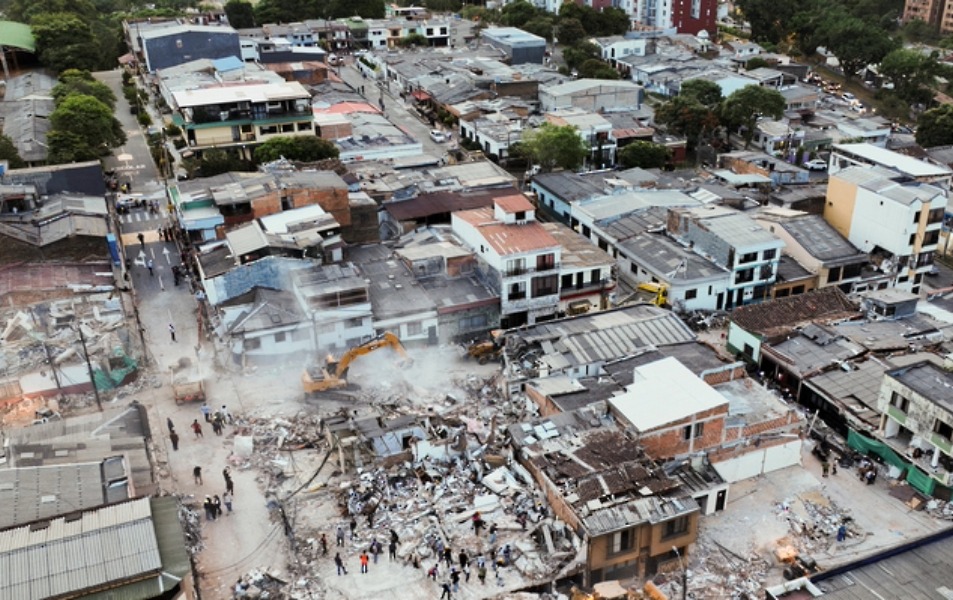

BOGOTA : The powerful earthquake struck shortly after 7.30 am on Monday, August 10, with its epicentre near San José del Palmar in the Chocó department. Cali and Pereira have emerged as the worst-hit cities, accounting for more than two-thirds of the fatalities, while more than half of those injured were reported in major urban centres.
Rescuers continued operations at collapsed buildings in both cities after signs emerged that people could still be alive beneath the rubble. In Pereira, teams focused on a collapsed hotel, while authorities in Cali also reported possible survivors trapped under damaged structures.
The earthquake has caused extensive destruction across western Colombia, damaging or destroying tens of thousands of homes as well as schools, hospitals, community facilities and roads. More than 100,000 people have been directly affected, with thousands forced into temporary shelters or left sleeping outdoors amid fears that damaged buildings could collapse.
Read More
- IndiGo cancels Riyadh flights until October 31, 3 other Saudi routes until October 27 amid evolving security situation
- UAE closes all beaches in Umm Al Quwain after tanker oil spill detected
- Earthquake of Magnitude 7.0 Strikes Tibet; 16 Dead, 32 injured
- Nigeria reports first imported Ebola Bundibugyo case in Abuja: WHO
- US midterm voting begins in Texas as Democrats target historic gains
Scores of aftershocks have added to the danger, both for rescue teams working among unstable debris and for families hesitant to return to cracked or damaged homes.
Transport links, meanwhile, have gradually begun returning to normal. Colombian authorities said operations had resumed at all but one airport by Friday morning after several airports were forced to suspend services in the aftermath of the quake.
International rescue teams have also joined the operation. Specialists from Venezuela, Argentina and Israel are among those supporting Colombian teams in the search for survivors, using specialised equipment as the critical rescue window narrows.
The disaster is also raising fears of a wider humanitarian crisis. The UN Refugee Agency warned that the earthquake could trigger fresh displacement in a country already struggling with conflict, migration and existing internal displacement.
The Norwegian Refugee Council said the earthquake had compounded already severe humanitarian needs and stressed the urgency of providing shelter, food, clean water and healthcare while restoring damaged schools and other essential infrastructure.
The catastrophe has become the first major test for President Abelardo de la Espriella, who was inaugurated on August 7, just three days before the earthquake struck. His government has pledged to work with the private sector and international partners on rebuilding hospitals, schools, homes, roads and airports as Colombia begins what is expected to be a massive reconstruction effort.
For all the latest news from Oman and GCC, follow us on Twitter, Instagram and LinkedIn, like us on Facebook and subscribe to our YouTube page, which is updated daily.





